fmka.pro

Ebbb Share New Song “Home Ground”: Listen


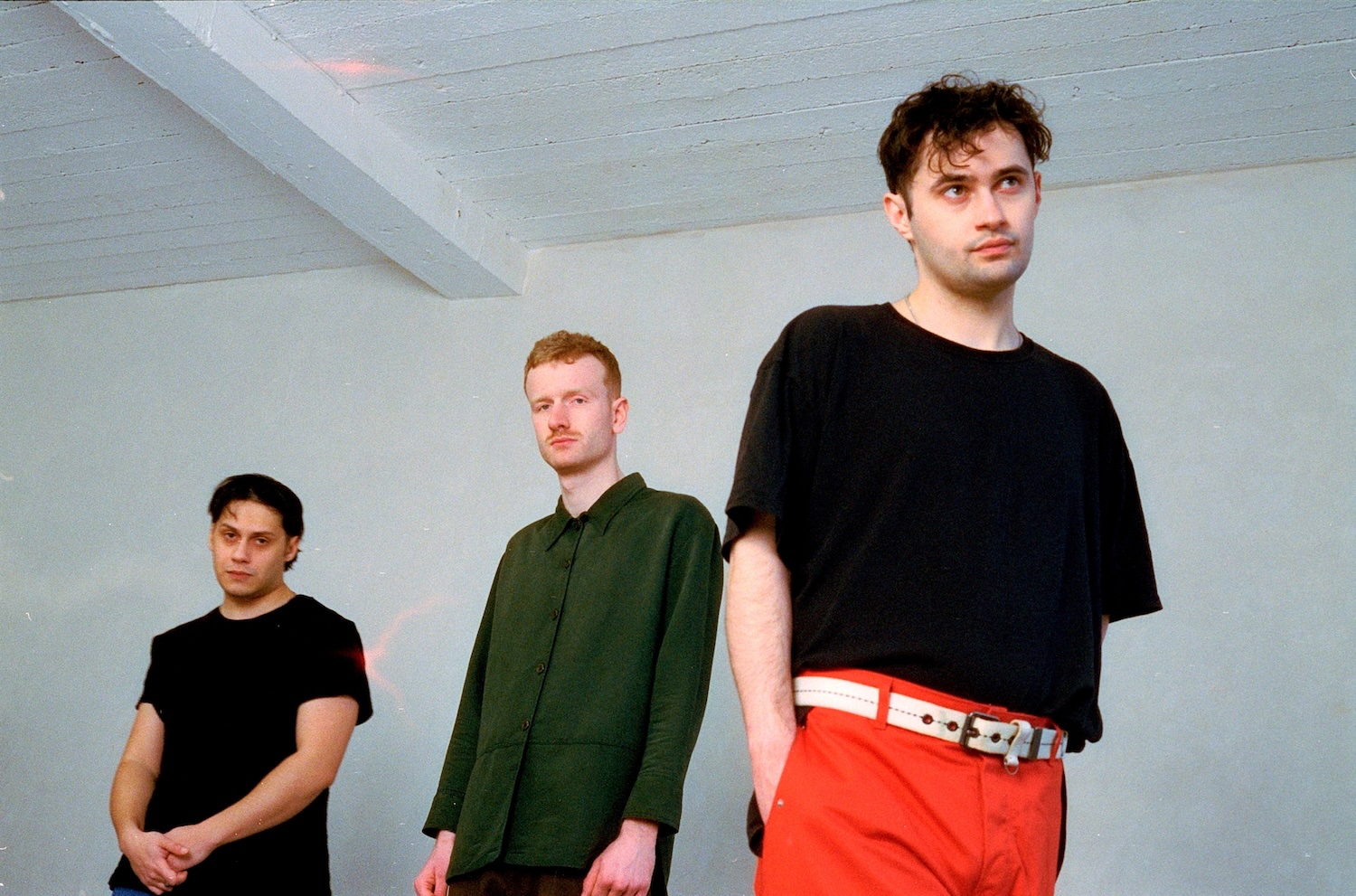
We’ve got a new dark horse contender in the hunt for the “worst band name I’ve ever seen in my life” championship. The London trio Ebbb came out of the Windmill scene, and they’re currently generating a whole lot of buzz with a series of singles on Ninja Tune records. The name is bad, but the songs are good. We posted their track “Book That You Like” a few months ago, and they’ve got a new one called “Home Ground” today.

“Home Ground” is a minimal track with a whole lot of organ sustain and some very cool vocal harmonies. It reminds me of a less-shaggy version of the Beta Band, and I like the haunted, hypnotic feeling. Singer Will Rowland says, “The lyrics explore overthinking and regret, contrasted with someone who lives free of shame or self-doubt. It actually started life as an instrumental we wrote a couple of years back. It never quite made sense back then, but we revisited it recently and rebuilt the song from the ground up and suddenly everything clicked. It felt like a bit of eureka moment where we unlocked what the song was always meant to be.” Check it out below.

TOUR DATES:
3/17 – Brighton, UK @ The Hope & Ruin
3/18 – London, UK @ Moth Club
3/19 – Bristol, UK @ The Croft
3/20 – Manchester, UK @ Gullivers
3/21 – Leeds, UK @ Mabgate Bleach
4/17 – Poznan, Poland @ Next Fest
8/09 – Neukirchen, Germany @ Skandalos

“Home Ground” is out now on Ninja Tune.


Division Of Mind & Eliminators Bring The Storm Before The Storm


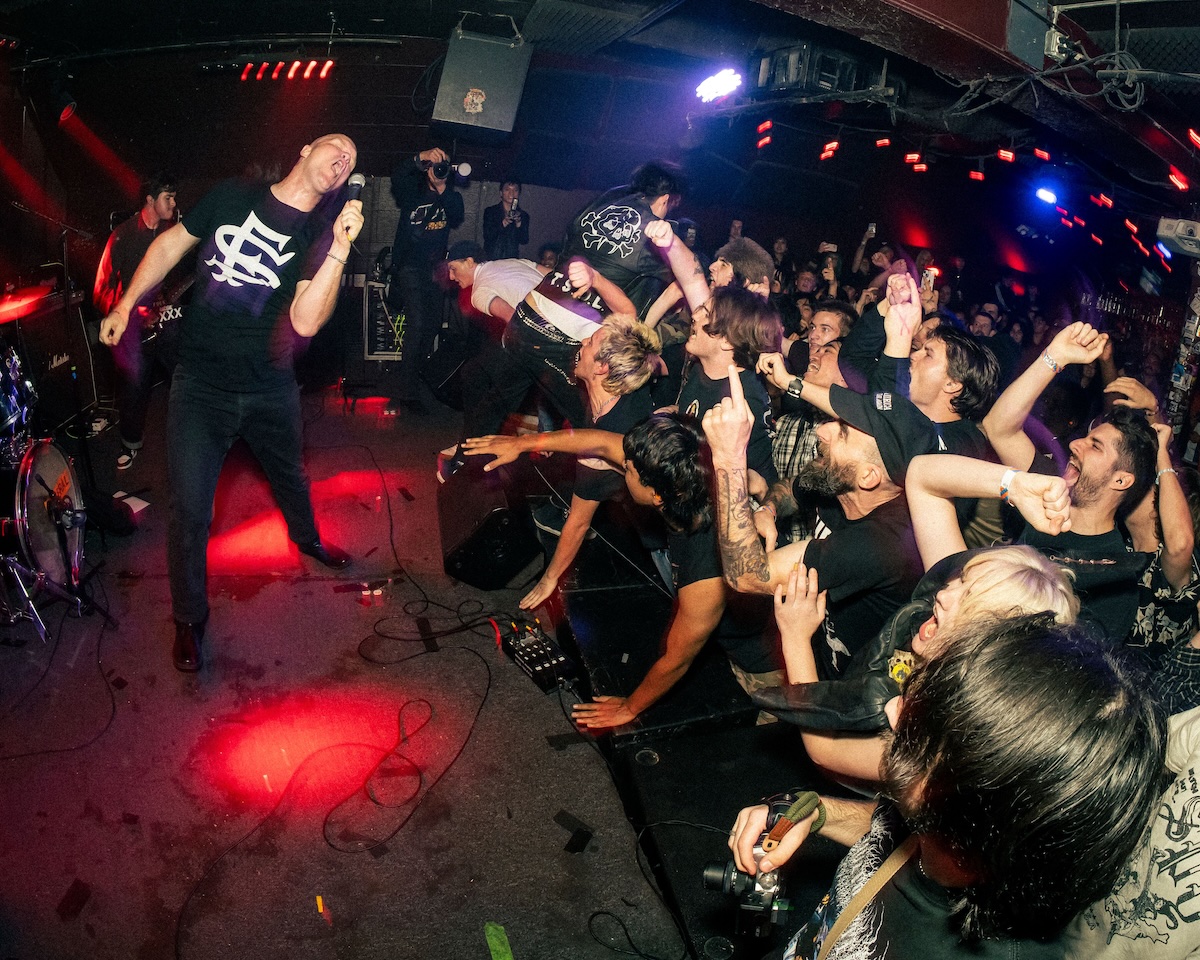
“Everyone’s a target!” That was something that Division Of Mind bassist David Jaycox bellowed during the first song of his band’s set at the Richmond venue the Camel last month. Those three words were an incitement, not an exaggeration. There’s video of DOM’s set on the internet, and it’s fun to watch, but it doesn’t come close to capturing how it felt in that room. I was by the door of the club, which is somewhat inconveniently right next to the stage, and it felt like the place was exploding. Bodies and limbs flew in every direction. The people in that room needed a violent, cathartic outlet, and that’s what a DOM show is.

Near the end of the set, Division Of Mind frontman Zachary Acosta-Lewis had a few words to say about what hardcore is, what it can do: “It’s been such a fuckin’ deluge of horror and terror and violence and horrible shit that gets beamed into that fuckin’ evil rectangle in your pocket every day.” Everyone’s a target. Allow him to continue:

The way this whole shit functions is that this entire infrastructure, this system, all these institutions that are supposed to protect you and give you your rights were designed very specifically to give you the impression that there’s no fuckin’ alternative to them, there’s no fuckin’ alternative to having your tax money go to drop bombs on fuckin’ people in Palestine and Iranians and people in fuckin’ Syria and everywhere else across this world that these companies and businesses fuckin’ bomb for profit, and everything else that makes you think you gotta work fuckin’ 60 hours a week, and you think you gotta be ready to get fuckin’ beat by ICE if you fuckin’ go outside while your neighbors are getting disappeared.

And I don’t have the fuckin’ answers! I know y’all think that shit sucks. I don’t have the fuckin’ answers. And I don’t know how to tell anybody — I’m not an activist or a protester or a fuckin’ politician or anything else. I’m just a fuckin’ hardcore kid. The thing that hardcore impressed upon me when I was a very young person was there is a fuckin’ alternative. An alternative lives in all these fuckin’ people right here.

It’s not fuckin’ perfect. It’s not gonna save the fuckin’ world. It might not actually save anything. We might all be fuckin’ dead in here. I don’t know. But the only options I ever saw when I was a fuckin’ young kid, a young adult, were people that came to spaces like these with like minds, like me, and wanted to fuckin’ have an alternative to all that horrible shit. I don’t know if it’s gonna work. I don’t know if it’s gonna fuckin’ play out. But that’s what you got. And if you’re up here in this fuckin’ room, you got that. Not a lot of people have that shit.

I did my best with that transcription, anyway. I’m sure I didn’t nail all of it, but you can hear it for yourself just past the 15-minute mark of the video below.

I love Division Of Mind’s music, a heavy and guttural chug that sometimes, at least on record, veers into dank, haunted industrial territory. But the things that keep bringing me back are those speeches, which I find genuinely inspiring, and the absolute bedlam that DOM unleash when they play. Those two things seem like they should contradict each other. They don’t.

Zachary Acosta-Lewis often talks about community, about taking care of each other and finding a place where horrible shit is not in command. He’s very good at laying it out. In his other life, Acosta-Lewis is a college professor. His mid-show speeches are passionate and elegant, and they sometimes sound like they were written out beforehand. He means what he says. But at DOM shows, people joke about beating their friends up, about killing each other. Those jokes are not just jokes. Crazy things happen at those shows. At least one person had to stagger out during their set at the Camel that night. The camaraderie and the violence exist side by side with each other. They should detract from one another, but they feed each other instead. I should be used to that by now, but I never get used to it. I’m drawn to that. I think it’s beautiful.

I’ve seen Zachary Acosta-Lewis make some version of that speech many times. Living near Richmond, I’m spoiled for Division Of Mind shows. They play in their hometown all the time, and they don’t play anywhere else very often. I started writing this column six years ago, and DOM’s self-titled LP came out just before the column began. They still haven’t released anything else since then. I keep hearing that there’s a new record on the way, and it keeps not arriving. That doesn’t matter. I’d love another one, but I don’t need it. I just need to see them get up in front of a crowd and destroy every once in a while.

This particular night felt especially combustible. People were ready for that show. The Camel can comfortably fit a few hundred people, and that place was packed out. It was the first Richmond show for Eliminators, the new San Francisco hardcore punk band led by onetime Richmond fixture Ace Stallings. Ace is still intermittently active with the stomp-ass Richmond band Mutually Assured Destruction, but he moved out to the Bay Area a few years ago, and he does a lot out there these days, booking shows and helping to plan the annual RBS Fest. Eliminators make fast, raw, mean hardcore punk, and Ace started the band specifically so that he could play shows with fellow Bay band Fentanyl.

Mutually Assured Destruction play hardcore as groove-metal, and Ace sings in a titanic Danzig-style bellow. Eliminators aren’t like that at all. They’re fast and nasty and ultra-simple, and their primitive pummel hits on a primal level. Ace is a real presence. He’s a big motherfucker who plays a lot of rugby, and you can tell. Whether he’s howling or barking, the guy has gravitas.

The Richmond show was supposed to be the opener on an East Coast weekend run for Eliminators, but things didn’t work out that way. The day after the Camel show, a gigantic arctic storm hit the eastern half of the country, burying us under snow and then ice. Where I live, schools were closed for a solid week, and I couldn’t even move my car until I used a pickax to clear out some of the ice. It’s been weeks, and the snow is only finally melting now. I was amazed that Eliminators even showed up, but being in a hardcore band requires a certain heedless level of commitment. They managed to play one more gig, a Philly matinee the next day, and then had to leave on one of the last planes back to California. When I emailed Ace for a photo just now, he said, “Hey the 2/4 shows we played were very sick!”

Those of us at the Richmond show knew that the storm was coming in, that this show might be the last communal thing we get to do for a little while. The end-times feeling extended beyond the weather. The morning after the show, I woke up to the video of Border Patrol agents murdering Alex Pretti in Minneapolis. It’s a severely fucked up time to be alive in America. Forces that used to operate in shadow are right out in the open now, not even trying to justify what they’re doing, daring humanity to stop them.

On top of all that, the Camel show happened on the same day that tickets for United Blood, the great Richmond hardcore fest that just returned last year after a long hiatus, went on sale and sold out in two minutes. That was probably the main thing that anyone was talking about at the show: Did you get tickets? And if you didn’t, how are you going to get in? What’s your strategy? (I didn’t get tickets, and I’m still trying to figure out a way in, just like everyone else.) That night, a whole lot of people in Richmond were in the right mood to go to a hardcore show, and that hardcore show popped off in a big way.

This was one of those perfect-storm shows where everything just felt right. They happen sometimes. It wasn’t a big, anticipated occasion. Other than Eliminators, all the bands on the bill were local. The Camel doesn’t quite have the clubhouse feel of the Warehouse, the great Richmond DIY venue that shut down last year, seemingly for good. (I generally don’t identify DIY venues in this column, but a ton of past editions have been about Warehouse shows. It’s one of the best venues I’ve ever been to, and its loss is felt acutely.) That night, though, the Camel was good enough. I missed maybe half of the set from seemingly very young openers No Paradise while waiting in line outside, but I did get to see all of Lose Sight, a Richmond band that also seems very young. Their Richmond Straight Edge 7″ came out on the day of the show, and it’s nasty as hell. Some of those songs already sound like anthems.

The crowd reacted to No Paradise, though seemingly not as much as No Paradise wanted. They reacted to Lose Sight and Eliminators, too. They went bugnuts for Division Of Mind, which is what happens every time DOM play and which never gets old. This was one of those nights that’s about more than the bands who play, though I liked all the bands who played. It was about the feeling in the room — the sense of having each other’s backs in a world where everyone’s a target.

Burning Lord – “Ambush”

This song is literally about medieval warfare, but it’s got so much bounce, so much swagger. Did medieval warriors have swagger? They must’ve. It just probably didn’t look much like the way we understand swagger today. At a time when maybe half of the bands on the current hardcore underground want to sound like New York in 1988, Burning Lord actually pull it off. But their version of that sound conjures images of a Derrick Henry stiff-arm with an iron gauntlet, which is a whole other thing. [From Collateral/Burning Lord split, out now on Fortress.]

Crush Your Soul – “Style Dominates”

Jay Petagine from Mindforce has one of the greatest voices in present-day hardcore. It’s a nasal Noo Yawk bark that he deploys in staccato bursts. He’s got the self-assurance of a rapper, even if he never actually raps. It works great on Mindforce’s elemental dinosaur-stomp, and it truly elevates the ignorant shit that he makes with his side project Crush Your Soul. This is the band where Jay gets to go full Merauder, at least when it’s not sample skits and random boom-bap tracks. When Crush Your Soul are at their hardest, which is what “Style Dominates” is, they hit like the Clothesline From Hell. [From Ice Water, out now on Streets Of Hate.]

Giallo – “Black Cat”

Not a Janet Jackson cover. Nasty-ass Minneapolis band Giallo named themselves after a particular form of cheap, aesthetically arresting Italian horror movie, and that cinematic style its own very specific soundtrack. The band Giallo sometimes play around with the creepy knife-edge sonic style of those pictures, and they sound cool when they do. Sometimes, they also sound like the Tasmanian Devil whirl-crashing through a series of plate glass windows, and that sounds even cooler. Their epic album-closing Stooges-core dirge somehow pulls off both of those objectives. Play it loud enough, and you will feel like you’re rolling around in gutter murk and razor wire, possibly because the power of a witches’ coven compels you. [From Tenebrarum, out now on Convulse.]

Holder – “Ruin The Best Of Me”

I’ve talked about it before. I’ve probably talked too much about it before. I still just can’t get over it — this whole new generation of crazy-young bands, like Balmora and I Promised The World, who are so dedicated to reviving the ’00s JNCO metalcore that came out before anyone in those bands was born. That stuff seemed silly and arcane when it was new, but these new bands all launch themselves into it with total conviction and sincerity, and more often than not that shit works. Holder work on the screamo side of the spectrum, but this isn’t Infant Island-type screamo. It’s vast and clean and violent. When it all surges upward and hits, I feel like someone just drove an 18-wheeler through my ribcage, straight into my heart. [From Ruin The Best Of Me double single, out now on DAZE.]

Killing Pace – “War Machine” (Feat. Antichrist Siege Machine)

Here’s my internal monologue when I’m thinking about the Killing Pace song “War Machine”: The song is called “War Machine,” right? And it’s got a guest vocalist from the band Antichrist Siege Machine. But a siege machine would be a kind of war machine, right? And then an antichrist siege machine would be a particular type of siege machine? If you’re launching a siege against Nazareth, maybe? So isn’t the title kind of redundant? And here’s my internal monologue when I’m listening to Killing Pace song “War Machine”: ARRG! RAAAH! FLUUUUR! KREEEH! BLOOOOOD! [From HCPM, out now on Triple B/Streets Of Hate.]

Knocked Loose – “Hive Mind” (Feat. Denzel Curry)

When Turnstile want to mess around and experiment, they make a prettily trippy new wave song. When Knocked Loose, Turnstile’s closest peers on post-pandemic hardcore-boom popularity, want to mess around and experiment, they dial into the Memphis-inflected gurgle-splat slam of a band like PeelingFlesh, expanding it into something bigger and deffer and bringing in a double-time rap star who can match their energy. It’s an ideal version of Judgment Night mall-metal for an age when malls have become abandoned, desiccated husks. [Stand-alone single, out now on Pure Noise.]

Loose Leash – “This Chaos”

Loose Leash are a brand-new DC band that includes ex-members of Bacchae and Give, and they haven’t even played live yet; their first gig is opening Angel Du$t’s record release show in Baltimore next week. They already rule. In this song, I hear echoes of the classic DC hardcore of generations past, the stuff where people were just ripping their metaphorical veins open and spilling their feelings onstage. There’s also a whole lot of funky low-end and some classic-rock shredding that most of their contemporaries would never attempt. It’s early, and DC bands have a habit of breaking up immediately after forming, but they could be something truly special. Keep an eye on them. [From Loose Leash demo, self-released, out now.]

Ritual Cross – “General Dynamics”

David Anthony, the great music writer and occasional Stereogum contributor, is the guitarist in this Chicago band. I’ve never met David, though were were apparently unwittingly hanging out at the first Avail reunion show, but I have a ton of respect for him. He likes a lot of ultra-deep Japanese hardcore and underground metal that I don’t understand, and I get the sense that he wouldn’t like a lot of the music that I cover in this column. That’s how it goes! We all got opinions! Ritual Cross make ultra-nasty crust and don’t put their music on streaming services. Whenever they can do anything to make their music less accessible, they do it. The vocals on this song sound like echo-drenched demon burps, and the guitars sound like surfing on a tidal wave of dumpster juice. It’s fucking awesome. [From II, self-released, out now.]

Taker – “Boots” (Feat. Jenny Woo)

I’ve heard two great oi records in 2026, and they both come from the same group of miscreants in Buffalo. First, it was Violent Way’s A Need For Something More. Now, it’s this one from Taker, a group that shares at least one member with Violent Way. I might like the Taker take even more because they sound like Scary Ramones — Too Tough To Die, if they actually were too tough and didn’t die. Shoutout to the Guided By Voices cover on this record, which is scratching a mental itch that I didn’t know I had. Also, I’d never heard of Jenny Woo before. Apparently, she comes from Canada and makes acoustic oi, which does not sound like my thing. But she bodies this fucking song. It’s wild to hear someone singing soulfully on a track like this. [From Sons And Daughters, out now on RubyDisc.]

Unreal City – “Emptiness”

Pittsburgh’s Unreal City released a beast-ass album in 2020 and then nothing else after it. They didn’t break up, though. They just went inactive for a while because frontman Joseph Sanderson, formerly of Eternal Sleep, could temporarily move to Southeast Asia and become a Muay Thai champion. That’s not me being cute with the descriptions. That’s what this guy did. Now, Unreal City are back with a metallic spine-cruncher — some real Ong-Bak shit. [From Blood Memory EP, out 3/6 on WAR.]


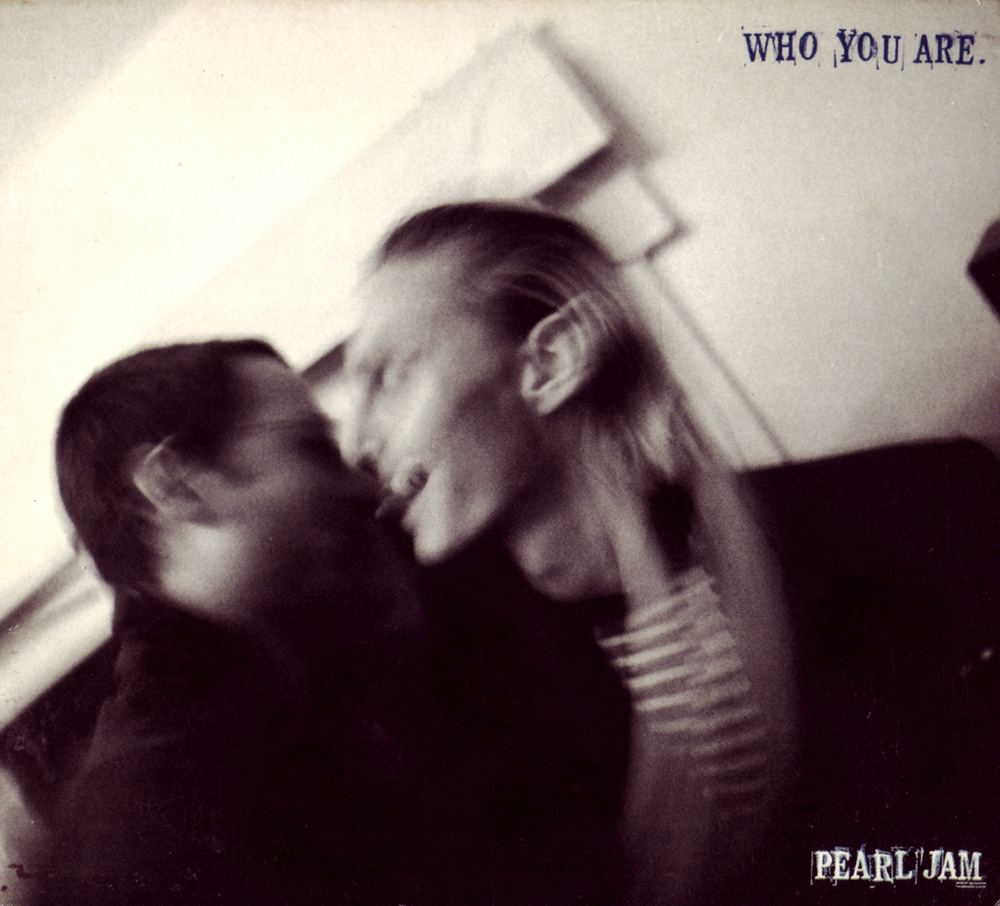
Pearl Jam’s “Who You Are”


In The Alternative Number Ones, I’m reviewing every #1 single in the history of the Billboard Modern Rock Tracks/Alternative Songs, starting with the moment that the chart launched in 1988. This column is a companion piece to The Number Ones. The column is now biweekly, alternating with The Number Ones on Mondays.

This column is so fucking weird. Sometimes, I feel like I’m writing these things right from the pit of my soul, flashing back on songs that were omnipresent when I was in high school and that have either developed into canonical classics or into barely remembered historical blips. Sometimes, though, the Billboard Modern Rock Songs chart diverges completely from my lived reality, or at least from the stuff that I can remember. The divide is never more stark than when it comes to Pearl Jam.

Pearl Jam were huge! They were bigger than Nirvana! They were easily, by far, the biggest alt-rock band of the early-’90s alt-rock crossover moment! That’s not just my memory. Numbers back it up. The sales of Pearl Jam’s first three albums were absolutely out of control. Eddie Vedder was the guy who Time put on the cover when the magazine wanted to run a big story on what the “alternative rock” hubbub was all about. Pearl Jam’s various ethical stances — their support of charitable initiatives and political causes, their refusal to make music videos after their “Jeremy” clip went supernova, their noble and failed battle against Ticketmaster — were gigantic news stories. My memory tells me that Pearl Jam were an inescapable radio presence for the first half of the ’90s. The charts, however, tell a different story.

In their insane three-album imperial stretch, Pearl Jam only sent one song to the top of the Modern Rock chart: “Daughter,” which got there for a week in January 1994. All of the other gigantic songs that they made in that run — “Alive,” “Even Flow,” “Jeremy,” “Black,” “Animal,” “Corduroy,” “Rearviewmirror,” motherfucking “Better Man” — did relatively piddling chart numbers. I couldn’t leave the house without hearing “Yellow Ledbetter” six times, but that song somehow peaked at #26 in 1994. It makes no sense! I don’t get it!

Pearl Jam didn’t make it back to the top of that chart until 1996’s No Code, remembered almost universally as the moment where they fully split away from the mainstream-sensation status and became a big cult act with a devoted audience instead. Even weirder: The band’s second #1 hit was “Who You Are,” a dreamy dirge with no chorus and a melody that I can’t retain in my brain to save my life. I must’ve heard “Who You Are” on the radio at some point, but I have zero memory of it. This song just floated past me, but here it is, amidst all these songs that will remain lodged in my brain until that brain rots into dust. It’s beyond me. Pretty cool song, though.

For a minute there, Pearl Jam were struggling. At the time, plenty of people were cynical about every stance that the band took and about extracurricular stuff like the Grammy acceptance speech where Eddie Vedder said, “I don’t know what this means. I don’t think it means anything.” (He wasn’t wrong!) In attempting to circumvent Ticketmaster, the band was only barely able to tour, playing slapped-together shows at out-of-the-way venues. Pearl Jam fought to keep things cheaper for their fans, but the fans would roll eyes at the inconvenience of traveling out to the few venues that the band was able to book. Vedder was seriously spooked by a female stalker who supposedly believed that he was Jesus. The band fired drummer Dave Abbruzzese, reportedly because he enjoyed being a rock star too much.

In retrospect, it makes perfect sense that Pearl Jam retreated the way that they did. In 1996, Rolling Stone ran an investigative cover-story exposé on Vedder without talking to the man, and the point seemed to be that he was merely acting miserable and that he’d always been a canny music-business operator who maintained a firm grip on both his image and his band. Thirty years later, Vedder is the only frontman of a big grunge band who is currently alive. Something about the Pacific Northwest’s specific cauldron of attention, jealousy, old-fashioned depression, conflicted punk rock ethics, and black tar heroin was toxic to the point of being lethal. Vedder found ways to cope with all of that, a feat that none of his peers accomplished.

Pearl Jam certainly seemed like the standard-bearers for the grunge era at the time, but the band actually steadily decreased in popularity in the early ’90s. In their golden age, every album sold less than the one before it, but you couldn’t really tell because they all still sold in ridiculous numbers. Ten: 13 million copies. Vs.: Seven million copies. Vitalogy: Five million copies. Those numbers were not sustainable, and Pearl Jam did not sustain them. Instead, they somehow found a way to transition into life as a working band. They figured it out. Even as a non-fan, that transition is pretty remarkable.

In 1995, released an EP called Merkin Ball, and they reached #3 with their song “I Got Id.” (It’s a 6.) Band members also got busy with side projects. Minus Eddie Vedder, the whole group backed up their hero Neil Young on his Mirror Ball album, though their band name couldn’t be in the promotional materials because of contract stuff. Vedder sang a couple of songs with the late Pakistani Sufi devotional singer Nusrat Fateh Ali Khan on the Dead Man Walking soundtrack. Mike McCready played in the one-album grunge supergroup Mad Season with Alice In Chains’ Layne Staley, and their song “River Of Deceit” peaked at #9. (It’s a 7.)

Pearl Jam replaced Dave Abbruzzese with Jack Irons, an old friend of Vedder. Irons, a former Red Hot Chili Pepper, was the one who showed Vedder’s demo to the other Pearl Jam guys in the first place, and he turned down an offer to join the band in the early days. The band’s Vitalogy tour turned out to be a disaster that ended at a San Francisco show where a sick and struggling Vedder had to leave the stage after a few songs, with Neil Young filling in for him instead. They canceled their remaining dates and then almost immediately realized that they missed playing live, so they rescheduled as many shows as they could. Once those shows got rolling, they secretly booked studio time and started work on what would become the 1996 album No Code.

No Code was the beginning of Pearl Jam’s middle period, the stretch when they cranked out a bunch of easily ignored albums that, if you listen to the die-hards, are secretly their best material. I’d never heard No Code before working on this column, and I’m just now diving into Yield and Binaural and all the supposedly great albums that followed. At this late date, I don’t hear No Code as some late landmark, but it’s a perfectly solid record. One might argue that that’s all Pearl Jam wanted it to be.

Pearl Jam recorded No Code with producer Brendan O’Brien, their collaborator on the previous two albums. As with Vitalogy, the process was reportedly tense. Apparently, nobody told bassist Jeff Ament about some early sessions, and he briefly considered quitting. But the presence of Jack Irons was a steadying influence. Irons was slightly older than anyone else in the group, and he had a wife and kids at home in LA. (Irons’ son’s band Awolnation will eventually appear in this column, as long as I keep writing it for long enough.) Irons facilitated a lot of communication within Pearl Jam, and he’s also the person who got the ball rolling on “Who You Are,” the album’s lead single.

The drums are the first thing that you hear on “Who You Are,” and they really jump out. Irons plays a complicated, circular pattern that sounds vaguely tribal. The rest of the band builds on that beat, layering harmonies and minor-key guitars. Vedder plays an electric sitar, and that alone is a sign that a gigantic rock band is entering its middle period, messing around with Eastern modalities. Vedder told SPIN, “Everyone has written that ‘Who Are You’ was obviously inspired by my collaboration with Nusrat, but that’s not where it came from.” Instead, the song’s core inspiration was a Max Roach drum solo that Irons heard when he was a kid, one that had a formative effect on him.

“Who You Are” doesn’t sound like a single. It’s a serene zone-out that doesn’t even have a chorus, and the mix is full of tiny discordant notes. Vedder never really belts on the song. Instead, he sings in a sweet, soft baritone that sinks right into the instrumentation. Vedder, Irons, and Stone Gossard are the song’s credited writers, but it’s easy to picture the whole group figuring the track out in the studio. In a way, you can hear the band gaining confidence in the song in real time. It starts off soft and tentative. It never truly gets loud, but it does bloom outward.

Nobody has ever given a very satisfying answer to the question of what “Who You Are” is about. Lyrically, Eddie Vedder seems to be figuring things out, exploring moods rather than concrete meanings. He was always better at that, anyway. Pearl Jam songs could get leaden when they got too self-consciously meaningful, and they’re often at their best when nobody knows what Vedder is talking about — see “Yellow Ledbetter,” a song that has confused lyrical analysts for decades.

On “Who You Are,” Vedder almost seems to be free-associating: “Come to send, not condescend/ Transcendent to consequences.” One one verse, he sings of “trampled moss on your souls.” On another, he sings about being “off the track, in the mud,” and then he offers a quick clarification: “That’s the moss in the aforementioned verse.” I think that’s so stupid, and I love it. This motherfucker was putting footnotes in his own lyrics and then singing the footnotes, and it still didn’t mean anything that anyone else could discern. As near as I can tell, “Who You Are” is about a feeling of ambient rootlessness, about wondering what role you have to play in some greater story. But I don’t really take meaning from the song. Instead, what I get is feeling.

On “Who You Are,” Pearl Jam are beautifully locked in. Vedder’s sitar, clichéd though it may be, adds some free-floating lift to the thing. The central riff is simple and repetitive in the best way; it moves with a mantra-like grace. I love the way the backing vocals well up behind Vedder. The drums are complicated enough that Pearl Jam stopped playing the song live for years after Jack Irons quit the band in 1998. The song comes together as a woozy, pretty little vibe. In 2013, my Stereogum colleague Ryan Leas named “Who You Are” one of Pearl Jam’s best songs. I can’t ride with Ryan on that one, but I respect the take. It’s a cool little zag, a spacey piece of texture that seems designed as a self-consciously minor work. It’s possible that I heard “Who You Are” on the radio tons of times but didn’t register it because the song faded so easily into the background, as if that was the plan all along.

As you might imagine, Pearl Jam didn’t exactly work hard to push “Who You Are” onto the public. They kept up their policy of not making music videos. They didn’t perform the song on TV, either. They played on a commercial-free Letterman episode around the release of No Code, but they went with second single “Hail, Hail” instead of “Who You Are.” (“Hail, Hail” peaked at #9. It’s a 7.) They released “Who You Are” as a proper commerical single, going against the prevailing alt-rock wisdom of the time, and the song reached #31 on the Hot 100 and #5 on the Mainstream Rock chart. It rose to the top of the Modern Rock chart quickly, but it sank back down even faster.

If you look at the Modern Rock chart during the one week that “Who We Are” sat at #1, you can see a few different narratives at work. The dominant sound of that moment was the janky, ironic quasi-rap of the Odelay summer, which would soon merge with sunny SoCal pop-punk in garish and unpredictable ways, as we’ll see in the next column. Grunge wasn’t altogether dead, but it was definitely dying. That week, Pearl Jam’s old buddies in Soundgarden were sitting at #4 with “Burden In My Hand,” a song that had already peaked at #2. (It’s a 7.) Stone Temple Pilots, a band that had previously come off as pale PJ imitators, were in there at #10 with “Trippin’ On A Hole In A Paper Heart,” which was on its way down from its #3 peak. (It’s a 6.) And then there was a whole lot of stuff that couldn’t have had less to do with Pearl Jam. The zeitgiest had moved on.

Like Pearl Jam’s two previous albums, No Code debuted at #1. Unlike those other albums, it did not keep selling in absurd numbers after that first week. No Code only went platinum once, which means it only sold a tiny fraction of what those other records had done. Talking to SPIN a few months after the album’s release, Eddie Vedder did not seem too bummed out about this: “It’s great! We can be a little more normal now.”

In the years that followed, Pearl Jam really did become a little more normal. They kept cranking out records and touring, an act that became a whole lot easier when they caved and finally agreed to do business with Ticketmaster again. Jack Irons left the band after a short tenure, and Soundgarden’s Matt Cameron, who’d played with PJ at their earliest gigs, stepped in and filled that role for more than a quarter century before finally leaving last year. Pearl Jam had some terrible moments over the years, like the crowd crush at the 2000 Roskilde Festival where nine fans died. That wasn’t the band’s fault, and they continued on after considering hanging it up in the immediate aftermath. They just kept going. They always kept going. They’re still going.

After “Who You Are,” Pearl Jam remained a constant presence on alt-rock radio, but they didn’t return to #1 for a solid decade. Still, they racked up hits. 1998’s Yield went platinum, and the truly great lead single “Given To Fly” reached #3, while the follow-up “Wishlist” peaked at #6. (“Given To Fly” is a 9, and “Wishlist” is an 8.) 1998 was also the only time I’ve ever seen Pearl Jam live. They headlined the second night of the Tibetan Freedom Concert in DC, and the only thing I really remember about their set is that they let the Red Hot Chili Peppers use their gear to play a few songs at the end of the show. (The Chili Peppers were supposed to play the previous night, but the show had to end early after someone got struck by lightning.) In 1999, the band’s one-off charity cover of Wayne Cochran’s 1961 oldie “Last Kiss” became a random-ass crossover hit, reaching #2 on both the Modern Rock chart and the Hot 100. (It’s a 7.)

PJ’s 2000 album Binaural was their first to stall out at gold, and the spacey lead single “Nothing As It Seems” peaked at #10. (It’s a 7.) They led off 2002’s Riot Act, another gold record, with the satisfyingly folksy “I Am Mine,” and that song peaked at #6. (It’s an 8.) During that whole stretch, some truly egregious Pearl Jam imitators were all over alt-rock radio, doing the shittiest versions of Vedder’s gargle-howl delivery, while the real deal were sitting right there. Eventually, though, alt-rock radio turned into an I Love The ’90s situation, and all the remaining OGs continued to rack up chart-toppers. Pearl Jam were among their number, so we’ll see them in this column again.

GRADE: 7/10

BONUS BEATS: Nobody really covers “Who You Are,” so I had to look elsewhere. Here’s fan footage of Pearl Jam trotting the song out at their own 20th-anniversary concert in 2011, with Glen Hansard, Liam Finn, and X’s John Doe singing backup and with Mudhoney drummer Dan Peters on floor tom:

(X’s highest-charting Modern Rock hit, 1993’s “Country At War,” peaked at #15. Mudhoney’s only Modern Rock hit, 1992’s “Suck You Dry,” peaked at #23.)

How ‘Girls’, Electrelane, And More Shaped ‘Something We All Got’


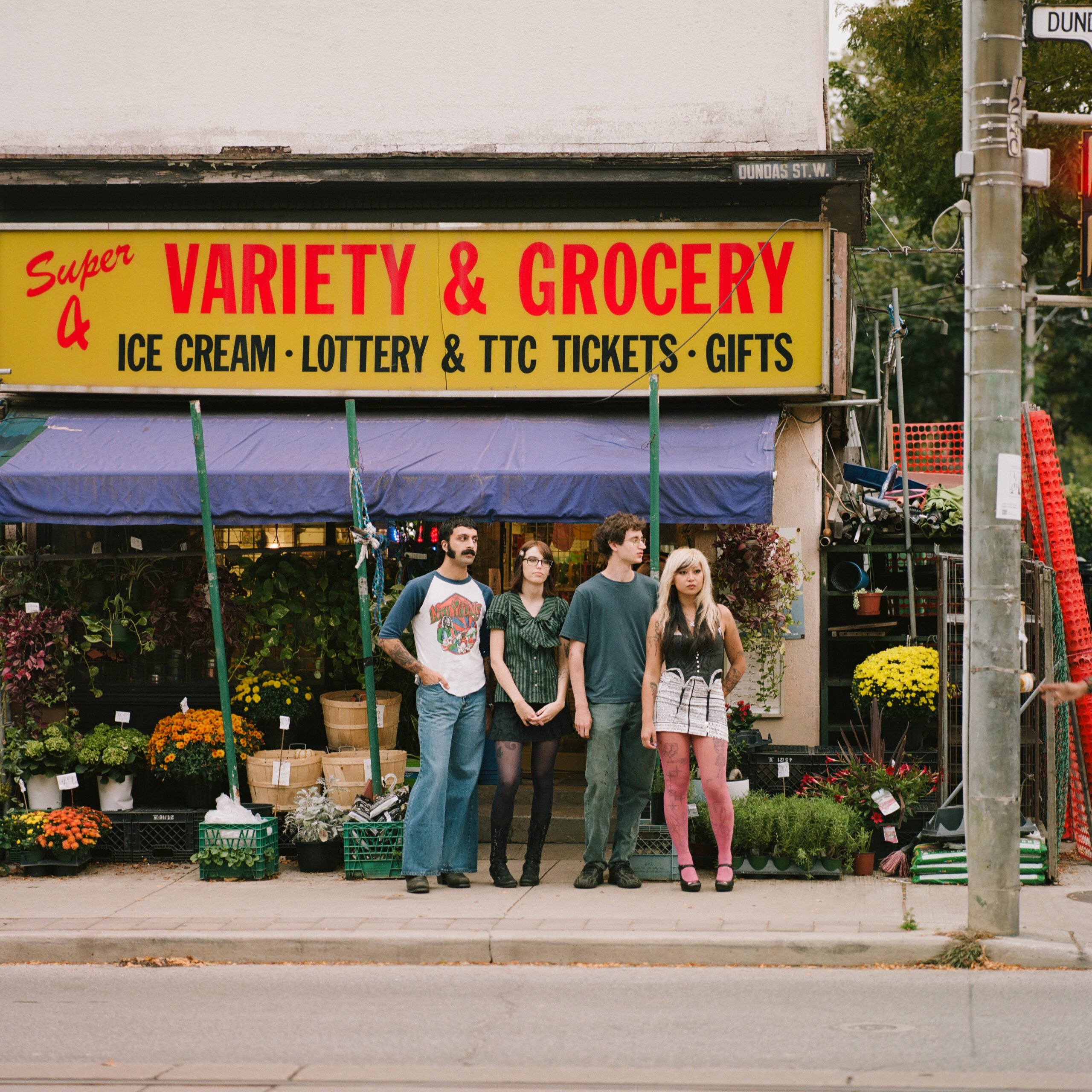
Midway through my video chat with Cootie Catcher, guitarist/vocalist/beatmaker Nolan Jakupovski suddenly wields a prop: “This, I think, is what we want to sound like.” He’s holding a copy of the Pastels’ 1998 remix album Illuminati, on which the Glasgow indie greats have their songs reworked by the likes of My Bloody Valentine, Stereolab, and Jim O’Rourke. “A lot of the songs on here, I hear them, and I’m just like, ‘Oh, this is literally what we want to do, but live.’”

Having heard Cootie Catcher’s excellent new album Something We All Got, out later this week, I’m not surprised that one of the Toronto quartet’s primary reference points bridges the gap between jangly, twee guitar pop and electronic manipulation. At various points across the record, fuzzy lo-fi melodies are backed by skittering programmed percussion; today’s new single “Quarter Note Rock,” on the other hand, is a seemingly straightforward rock number that gradually deconstructs into glitched-out distortion.

As for contemporaries, Cootie Catcher’s music draws parallels to indie pop juggernauts like Box For Buddy, Box For Star by This Is Lorelei — whose Nate Amos, incidentally, mixed Something We All Got — but rather than coming from a single narrator, Cootie Catcher’s songs tackle multiple points of view, with Jakupovski sharing vocal duties with bassist Anita Fowl and synth player Sophia Chavez. Thematically and sonically, contrast is a common thread binding Something We All Got. Read our conversation, edited for clarity, below.

Embracing Awkwardness

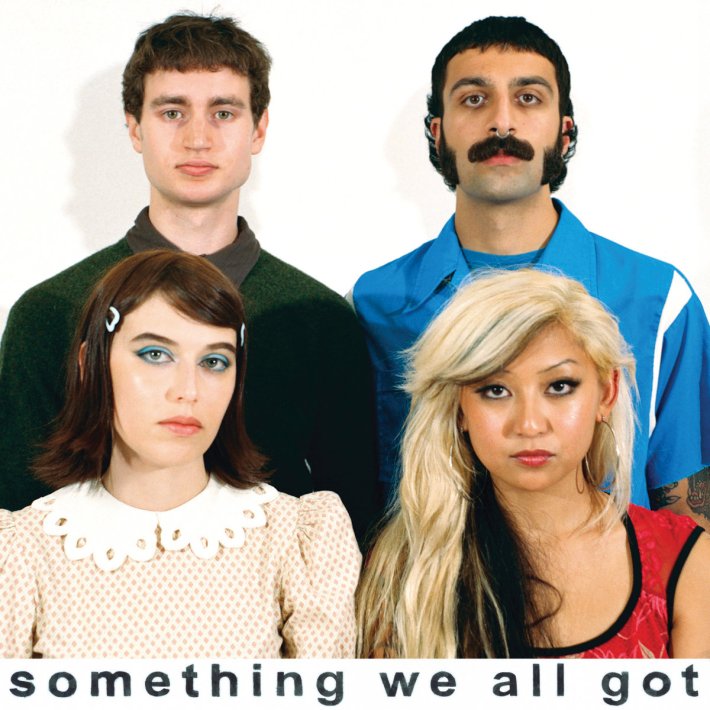
ANITA FOWL: A lot of my songwriting comes from a place of feeling sort of disconnected between what I’m thinking of saying and what ends up actually coming out. Wrong place, wrong time situation. And that’s very much the case with songs like “Straight drop.” We’re all roughly around the same age, mid-20s. When you’re a teenager and you’re awkward, that’s just part of growing up and being in a transition phase. But I feel like when you hit 25 and you’re awkward, it’s like, this is kind of just who you are. If you’re feeling a bit socially challenged, you kind of just have to embrace it. And so I let out a lot of those frustrations through the music, but even the album art is awkward; it’s a photo of all four of us crammed in this, like, school portrait situation. And I feel like it really highlights that even if we are trying to be our most serious selves — we got ready, posed, sat in a studio — we still come off a little awkward. And what’s more awkward than promoting an album that has your own face on it?

HBO’s Girls

NOLAN JAKUPOVSKI: I think the social aspects of Girls are really influential for us lyrically. It covers all these different types of relationships so well, but it doesn’t take itself too seriously. And it’s really funny. I think we’re all really funny.

FOWL: And with the little music subplots, the characters are such good examples of people in the music scene. It’s eerily accurate.

Which of the girls do you feel like you most strongly identify with?

JAKUPOVSKI: I think there’s a little bit of Hannah in everyone.

FOWL: Toronto is full of Booth Jonathans, for sure.

How would you describe Toronto’s music scene to people unfamiliar with it?

JAKUPOVSKI: Toronto has a lot of small groups and cliques.

SOPHIA CHAVEZ: I think that’s why we have a lot of different voices on our album. We’re obviously besties, but we’re all kind of in different scenes and do our own thing. 

Playing Live And Watching Live Sets On YouTube

JAKUPOVSKI: When we first started I was making beats for us to play along to live, but I wasn’t really considering that they’d be impossible to play to live. It can’t be too cool or too messed up. Now I have to think about that when I write or I’m composing beats.

FOWL: When we were first starting out, way in the early days, not even all of our songs had the DJ track. Sometimes we’d have to have other songs prepared just in case the venue or sound person couldn’t accommodate the DJ thing. That really inspired how we write songs, and I feel like on the new album we really figured out our formula. 

Logistically, do you think watching videos of other bands playing live influences your setup?

JAKUPOVSKI: Yeah, we try to keep our setup as simple as possible. We bring a DJ controller, a synth, drums, bass guitar, laptop — that’s pretty much it. I think we’re definitely blessed that we can just pull up with that. I think this is why we are a product of current time and not a band from the ’90s or something.

What are some of your favorite live sets to watch online?

JAKUPOVSKI: There’s this whole concert video of Meat Puppets, Hüsker Dü, and Minutemen all playing back to back. It’s pretty magical. But I even like watching just local bands on YouTube.

Disco Inferno

JAKUPOVSKI: There’s a lot of audio of them performing live, but I can’t find a single video, which is kind of tragic to me. They were an early instance of a band doing digital sampling live. I’m not actually sure how they’re making those sounds, to be honest — it must be a sample pad or something. But they were kind of doing what we’re doing in terms of the things they chose to sample, just in the ‘80s and ‘90s. It sounds more ethereal. 

We sample each other a lot. I don’t think there’s anything too crazy on the record, but often we’ll sample a background vocal of us singing or a guitar idea and manipulate it and add it in somewhere else. 

Electrelane

JAKUPOVSKI: There’s almost a rigidness to them that I really like. I really like how the drummer plays in that band and the way they use keys. What’s that song where they almost speed up…?

FOWL: “To The East?”

JAKUPOVSKI: It might be that song. I love when the drums come in, and I also really love that era of production in the 2000s. We also love those kinds of vocals — Nico kind of sings the same way.

FOWL: There’s a real affectation to it.

How you discover a lot of your favorite music?

FOWL: I found Electrelane through Nolan, like most things. I remember him telling me about them and then I started to get recommended them through the YouTube algorithm.

JAKUPOVSKI: Maybe our influence is actually the algorithm. [Whole band groans] It’s true, though! Jim O’Rourke used to not be on streaming, and I only have this album because I found it on YouTube.

FOWL: I was definitely a YouTube-to-MP3 converter warrior growing up. I think a lot of our generation was like that.

I do think the YouTube algorithm tends to be less sinister. There’s something a little more personal and niche to it.

NJ: Yeah, I’ll take the YouTube algorithm any day. There’s a lot of evil stuff on there, but most of the time it’s like, “Here’s an Arthur Russell live video for you.”

Something We All Got is out 2/27 via Carpark.


Cowboy Hunters Share New Song “Shag Slags Not Flags”: Listen


Glasgow-based musicians Megan Pollock and Desmond Johnston make up the band Cowboy Hunters. Their last single “Have A Pint” is an aggressive, circus-like romp inspired by the Lady Gaga interview clip-turned-meme. It’s absurd. It makes me laugh, but the music is so weirdly aggressive it makes me want to smash something, or maybe jump into a mosh pit of clowns.

Today, they’ve shared another song, “Shag Slags Not Flags,” a thorny explosion calling out loser racist internet trolls suffering from intense sexual frustration. Here are a couple lyrics from it: “Forty-three with a flag in her bio/ Said she hates blanks, but that is a typo/ The sexual frustration you could catch with your eyes closed/ Lonely at night, so turn to a wino.” Like their previous releases, it’s aggressive and funny, pointing out how fucked our world is with a big, shouty chorus. It’s off their forthcoming EP EPeepee that’s out March 20.

Listen below.

EPeepee is out 3/20.


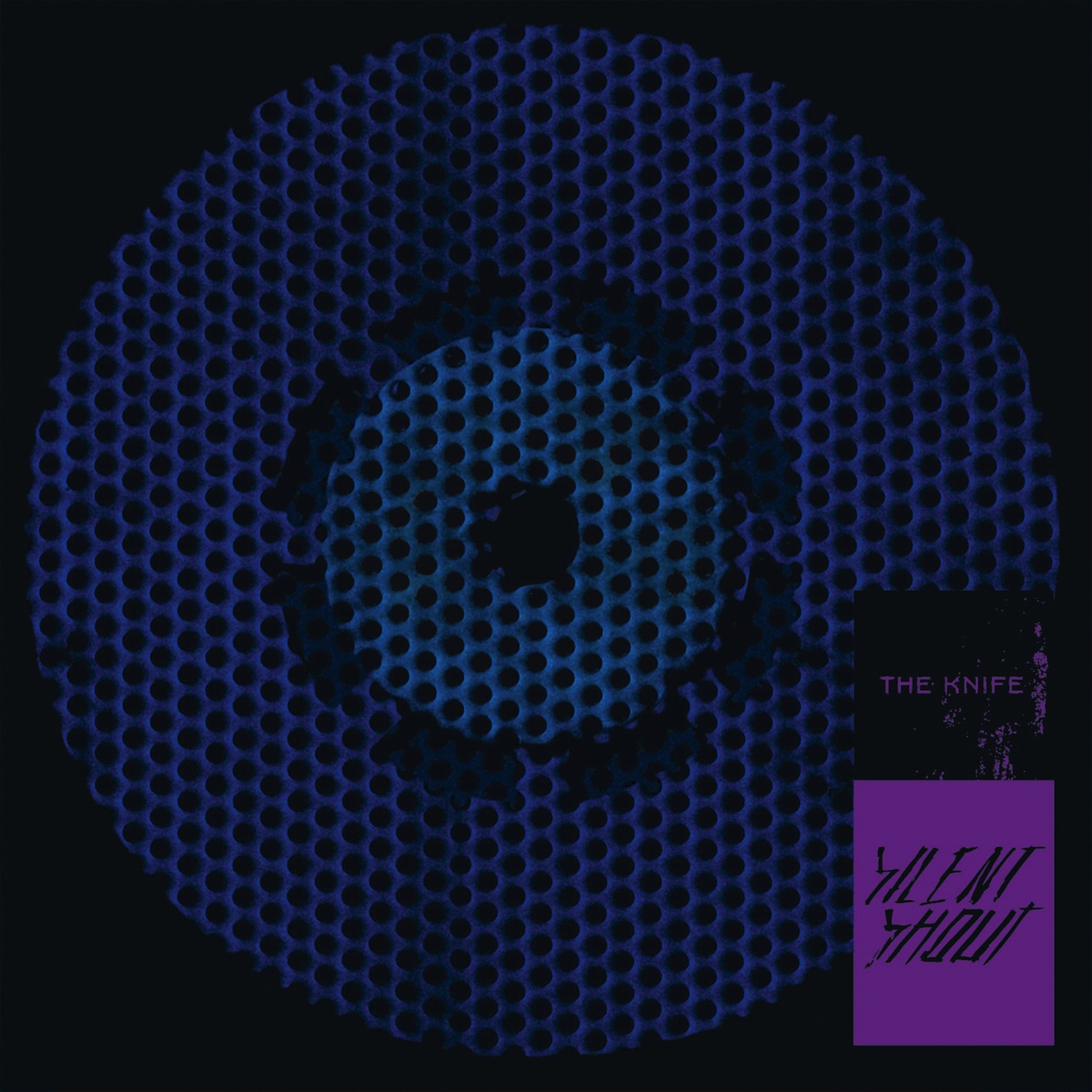
The Knife’s ‘Silent Shout’ Turns 20


The voice doesn’t sound human. It doesn’t sound like one voice, either. It’s a distorted monotone chant that comes through in several registers at once. It’s a high-pitched whisper and a baritone rumble at the same time. It’s one voice, clearly, but that one voice is being shifted and stretched and morphed into a bizarre caricature of humanity. Even the heavy Swedish accent on that voice increases the disconnect. The voice sounds alien, and it speaks of alienation: “In a dream, I lost my teeth again/ Calling me woman and a half-man.” In the “Silent Shout” video, that voice comes out of a warped, distended, expressionless face, as if Joseph Merrick was intimidatingly bored when he asserted his humanity to a freaked-out mob at the end of David Lynch’s The Elephant Man.

As with David Lynch, sound design plays a huge role. But where Lynch filled his visions with ambient hums and clanks and whirs, the Knife went way more spartan with their 2006 masterpiece Silent Shout, which came out in Sweden exactly 20 years ago today. The aforementioned title track, the first on the album, opens with a nervous synth note pattern: Boom boom boom pause, boom boom boom pause. A pulsing house music kick drum comes in underneath it, and then a cold, flighty keyboard arpeggio. That arpeggio keeps nattering away, sometime drifting just out sync and then finding its way back again. In its way, that musical bed is just as disquieting as that electronically manipulated voice or the lyrics that the voice chants. “Silent Shout” is straight-up club music. It’s exciting and physical, and it carries a sense of freedom, of release. At the same time, it sounds like walls closing in on you.

Lynch was a big touchpoint for the Knife. Shortly after Silent Shout came out, Karin Dreijer told Pitchfork, “We talked about David Lynch a lot, especially Mulholland Drive, where they go to this concert in the middle of the night, and there’s playback music. We were very inspired by that when we decided to start doing live shows. I think I’m more inspired by films than music.” Dreijer mentions that the Knife were just starting to do live shows because live shows hadn’t been part of their mission since the two siblings started making music together. Karin’s brother Olof had been recognized a few times, and he didn’t like it. So when they posed for press pics or did the occasional rare live show in 2006, the Dreijer siblings wore plague masks and allowed themselves to simply become part of an audio-visual spectacle that erupted all around them.

These days, people tend to remember the Knife as an uncompromising art project, a group willing to disregard any thought of commercial success to make a sharp, uncompromising statement. After Silent Shout, they pushed further into experimental and conceptual realms, making the 2010 opera Tomorrow, In A Year and the 2013 double album Shaking The Habitual before disbanding entirely. Karin Dreijer’s solo project Fever Ray continues to carry the transgressive torch. But at the time that they made Silent Shout, the Knife were at least fringe participants in a European dance-pop underground. When nobody paid attention to their self-titled 2001 debut, the Dreijer siblings started messing around with club sounds and free downloadable plug-ins on 2003’s Deep Cuts. That’s still a fearless, idiosyncratic record, but it found an audience in ways that the group couldn’t have anticipated.

The Sony commercial was the Knife’s one real brush with mainstream fame, or at least with mainstream fame on any terms other than their own. Deep Cuts opened with “Heartbeats,” a big and bright synthpop jam that’s still by far the biggest Knife track on Spotify. The duo’s fellow Gothenburg musician José González released a hushed acoustic cover of that song, and Sony licensed the González version for a commercial for the Bravia TV — an instantly memorable clip where thousands of brightly colored balls cascade down a San Francisco street. As a result of that ad, the González “Heartbeats” cover became a huge hit all across Europe just as Silent Shout was coming out. It could’ve been a perfect hype-storm for the Knife, but they had other things in mind.

The Knife had to sign off on Sony’s license. They agreed to let the company use their song. They were putting out music on their own label, Rabid, and they figured that the ad money would keep them funded. During that period, the Knife didn’t exist off on their own icy island reserve. They were part of a little experimental pop community. The Knife produced “Who’s That Girl?,” a single from Robyn’s 2005 self-titled album, and Robyn took inspiration from the duo’s DIY ways when she started her own Konichiwa label. That same year, Karin Dreijer sang on the Norwegian duo Röyksopp’s single “What Else Is There?,” and that song was a chart hit in a bunch of countries. The Knife’s sound was eerie and futuristic, but it also had a certain nostalgic warmth to it. They were able to merge their style with what other artists were doing, and they could’ve continued on that route. Instead, they became something else.

Silent Shout exists at a magical pivot point. It’s the record that the Knife made right in between their time as a culty synthpop act and as a fully experimental concern. They had things that they wanted to say about sex, economics, gender, and the omnipresence of screens. They found minimal ways to say those things, constructing Silent Shout with nothing but synthesizers and drum machines that were already old and outmoded in the mid-’00s, and they knew how to make that shit bang. They also arrived early to the vocal-manipulation party, warping Karin Dreijer’s voice into something eerily and majestically post-human right around the time that T-Pain was first unlocking the commercial possibilities of robo-narcotized Auto-Tune effects. Their goals were different, but the Knife and T-Pain both gestured at a future where humanity was fungible, where emotion would be conveyed through glaringly artificial electronic effects.

In the aforementioned Pitchfork interview, Olof Dreijer talked about why the Knife used so many vocal effects on Silent Shout. He said that the duo wanted to make an album more ambient than Deep Cuts and that the vocals, if they were going to be there, had to help conjure “another state of mind” in the listener. “If you want vocals, you have to treat them so that you don’t get back to reality so fast. If you recognize the voice as Karin, then you also end up back in reality, so you have to create a person who is someone you don’t know, where you don’t know if it’s a male or a female or what.” This was many years before Karin started using they/them pronouns, before gender fluidity was even part of the mainstream conversation. Already, though, the Knife’s music worked to subvert binaries like gender.

In some ways, the blinky drum machine bounce and monotonal vocals of Silent Shout were an extension of electroclash, the irony-drenched art-kid club music that thrived in the early ’00s. But Silent Shout is bigger than that. The ominous power of the production and Dreijer’s disguised voice work together in eerie, forbidding ways; The critic Mark Pytlik called the album “haunted house” in a rave review. The album’s lyrics work as squirmy post-punk provocations. Karin Dreijer sings of sex work at an arch remove: “I’m dancing for dollars for a fancy man,” “Bend back, give head, it’s not pornography/ If you do it with the lights, then it’s art, you see.” They warn of the numbing effects of TV screens and demand control of their body. Those concerns have only sharpened with age, and now Silent Shout sounds like an album out of time, one that has lost absolutely none of its dark urgency.

When Silent Shout came out, the Knife didn’t sound like participants any pop-adjacent scene anymore. They were their own thing. Silent Shout was a huge deal within certain enclaves, but it didn’t leave much impression on the culture at large. The LP was a #1 album in Sweden, and Pitchfork chose it as the best album of 2006, putting it ahead of noisy records from TV On The Radio, Joanna Newsom, and Ghostface Killah. But on that year’s Pazz & Jop critics’ poll, Silent Shout didn’t even place. The Knife made their US debut at New York’s Webster Hall, not a huge room but an excited one.

Two decades on, it’s hard to calibrate the legacy of Silent Shout. It’s an acknowledged classic of weirdo almost-pop, but it’s also a = singular record. Nobody else, the Knife included, has really made another album that sounds like Silent Shout, but I hear echoes of its eerie thump in plenty of the jagged, gothy music that emerged from various different undergrounds in the intervening years. The sound of malevolent, mechanized almost-humanity never goes out of style, and Silent Shout still sounds like a future that we haven’t been smart enough to avoid.