fmka.pro

Miles Davis’ ‘Complete Live At The Plugged Nickel’ Reissue: Review
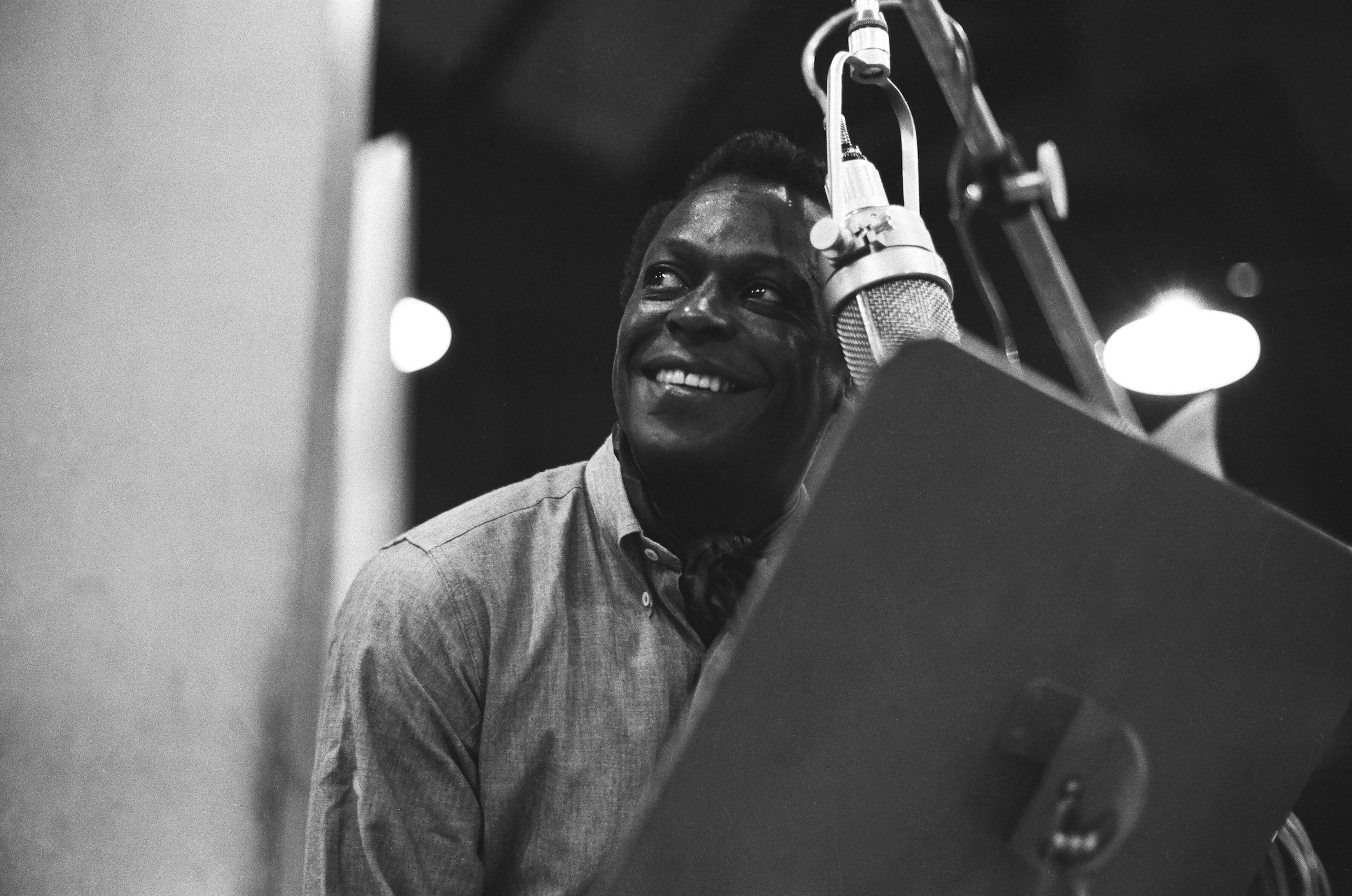

Miles Davis was born in Alton, Illinois on May 26, 1926, and the Miles Davis estate and Sony Music — and probably to a lesser degree Warner Bros., which owns his last few releases — are celebrating the legendary trumpeter’s centennial this year. I fully expect to see a ton of reissues, and possibly some new vault material, all year long. (It’s John Coltrane’s centennial, too – he was born September 23, 1926 in Hamlet, North Carolina – and there’s a whole lot going on with his estate and archives as well.)

The first Davis release of the year is a reissue of a legendary box: the eight-CD Complete Live At The Plugged Nickel, first released in the US more than 30 years ago, in July 1995. (A slightly different, edited version came out in Japan in 1992.) I still have an original copy on my shelf; I bought it the week it came out, at a long-shuttered record store in Hoboken, NJ, and I’ve listened to it countless times since then.

The story behind the box is pretty fascinating. Davis had formed what came to be known as his Second Great Quintet – with Wayne Shorter on tenor sax, Herbie Hancock on piano, Ron Carter on bass, and Tony Williams on drums – in 1964. (An earlier version of the group featured George Coleman on sax; we talked about them in 2024.) In his autobiography, Davis wrote:

I knew that Wayne Shorter, Herbie Hancock, Ron Carter, and Tony Williams were great musicians, and that they would work as a group, as a musical unit. To have a great band requires sacrifice and compromise from everyone; without it, nothing happens. I thought they could do it and they did. You get the right guys to play the right things at the right time and you got a motherfucker; you got everything you need.

If I was the inspiration and wisdom and the link for this band, Tony was the fire, the creative spark; Wayne was the idea person, the conceptualizer of a whole lot of musical ideas we did; and Ron and Herbie were the anchors. I was just the leader who put us all together. Those were all young guys and although they were learning from me, I was learning from them, too, about the new thing, the free thing.

That last sentence is crucial, because it’s what makes the music recorded at the Plugged Nickel, a small club in Chicago where Davis often performed around Christmastime, so astonishing. 

The quintet recorded their first studio album, E.S.P., in January 1965. But they couldn’t get on the road to support it right away; as Davis explained:

My hip was operated on in April 1965, and they replaced the hip ball with some bone from my shin, but it didn’t work and so they had to do it again that August. That time they put a plastic joint in. My sidemen now had big reputations so they didn’t have any problems working while I stayed home and recuperated, watching the Watts riots on television.

In fact, they made some incredible albums during that time span: While Davis was idle, Herbie Hancock recorded Maiden Voyage; Wayne Shorter recorded The Soothsayer, Et Cetera, and The All Seeing Eye; and Tony Williams recorded Spring (which featured Shorter, Hancock, saxophonist Sam Rivers and bassist Gary Peacock).

Back to Davis:

I didn’t play again until November 1965, at the Village Vanguard. I had to use Reggie Workman on bass because Ron — who would do this kind of shit periodically — couldn’t, or wouldn’t, break a commitment to someone else. It was a great comeback and the people received the music real well. After that, I went on the road in December to Philly and Chicago, where we played the Plugged Nickel and made a record there… Columbia still has some tapes they haven’t released from that taping. But Ron came back for this gig and everybody played like we hadn’t been separated at all. Like I said, I have always believed not playing with each other for a while is good for a band if they are good musicians and like playing with each other. It just makes the music fresher, and that’s what happened at the Plugged Nickel, even though we were playing the same book we had always played. In 1965 the music that people were listening to was freer than ever; it seemed like everyone was playing out. It had really taken root.

They performed at the Plugged Nickel for a week, and two nights’ worth of music was recorded: three sets on December 22, and four sets on December 23. As Davis mentions, the band was not playing their new music onstage. They were playing tunes from his 1950s catalog like “Milestones,” “If I Were A Bell,” “Stella By Starlight,” “So What,” “My Funny Valentine” and “Autumn Leaves.” Only one piece from E.S.P. is performed on the Plugged Nickel box: “Agitation.” And it’s only played twice, across seven sets of music. Perhaps this is what inspired the approach the band chose to take, which has become an infamous piece of Davis lore.

The story goes that on the plane to Chicago, drummer Tony Williams — who, again, Davis described as the band’s “creative spark” — suggested to Shorter, Hancock and Carter that they play “anti-music” on the gig. As Herbie Hancock put it, “Whatever someone expects you to play, that’s the last thing you play.” This wasn’t free jazz, but it was a deliberate confounding of both band and audience expectations. So if a song had traditionally built to a fiery climax, on these two nights in Chicago they would let the music dissipate like a popped balloon. If a groove got too strong, Williams would break it up, or let it slacken until it was a struggle to move forward at all. If Hancock would ordinarily create a lush harmonic bed beneath a soloist, now he’d let them float out there alone, like Wile E. Coyote running off a cliff. And here’s the thing: The band all agreed to this idea, and they didn’t tell Davis.

And perhaps even more courageously, they stuck to the plan even when they got to the club and realized that Columbia was going to be recording them.

The resulting music is wild. It swings hard as hell — this band was never going to not swing. But tunes are introduced with the barest nods to the melody; Shorter’s solos go flying off in all directions or turn in ever tightening spirals like he’s trying to drill himself into the stage; the rhythm is double or triple time, then suddenly slows to a crawl; and pieces will end with a sudden, half-discordant chord and a cymbal crash, leaving you thinking, That’s it?

And even without being in on the plan, Davis manages to contribute perfectly. He was still not in good health, and his playing lacks a lot of the precision you hear in the studio and on other live LPs from even the year before. A lot of notes slide away from him, dribbling from the horn’s bell or coming out like the scrowl of a wet cat. I mean, listen to that version of “Stella By Starlight.” That is raw.

But he’s never lost amid what his band is doing; he gives them all the room to run they could ever want, and when he chooses to make himself heard, his leadership is unquestioned. He takes over, and instantly it’s like everything that’s been happening the whole night was his idea. This is as close as Miles Davis ever got to playing free jazz, and he made it work. And whether it was pure star power or the ability to grasp what was happening on the night, the audience was with the band all the way. This version of “So What” is nothing like the classic studio version from 1959’s Kind Of Blue, but the crowd is loving it:

The Plugged Nickel recordings were not released right away. Columbia shelved them. Two LPs’ worth, Live At The Plugged Nickel Vol. 1 and Vol. 2, came out in Japan in 1976, after Davis had retired from public performance; those were combined as a double LP for the US market in 1982. A few more pieces were released as Cookin’ At The Plugged Nickel in 1987. But for whatever reason, the sheer radicalism of this music didn’t really sink in for people until all seven sets came out in 1995, and people could track what Davis and his band did over the course of those two nights in Chicago. When the box hit, it was almost immediately hailed as some of the most fascinating live Miles material available. I know I’ve been enraptured by it for 30 years, even though it’s not an easy listen by any means. And now that it’s back in circulation, you should absolutely check it out.

TAKE 10

10

Angelika Niescier – “Rejoice, Disrupt, Resist”

German alto saxophonist Angelika Niescier enjoys collaborating with Americans. A few years ago, she had a New York-based group with bassist Christopher Tordini and drummer Tyshawn Sorey; they made three albums. Now she’s turned her attention to Chicago. This album features flutist Nicole Mitchell, alto and tenor saxophonist Dave Rempis, vibraphonist Jason Adasiewicz, bassist Luke Stewart, and drummer Mike Reed. The music they make together has a hard-charging energy, particularly thanks to Reed, whose drumming is parade-ground precise, with Stewart beside him delivering bass lines of a Charles Mingus-esque intensity. “Rejoice, Disrupt, Resist” opens the album with a quick shimmy of vibes before the rhythm section leaps into action, and when the horns come in, wavering like a mirage, the music falls into place with a very Chicago feel; it reminds me of something Fred Anderson and Ken Vandermark might have played together back in the ’90s. (From Chicago Tapes, out now via Intakt.)

9

Dave Holland/Norma Winstone – “Will You Walk A Little Faster”

This is a fascinating record. A collaboration between bassist Dave Holland and vocalist Norma Winstone, with saxophonist Mark Lockheart, pianist Nikki Iles, and drummer James Maddren, with guitarist John Parricelli appearing on five of the nine tracks, it’s entirely composed of previously unheard pieces by trumpeter Kenny Wheeler, a longtime collaborator of Holland’s. Three of the pieces use poems (by William Blake, Lewis Carroll, and Stevie Smith) as their lyrics. The rest are by Winstone. But what really sets this record apart is the presence of the London Vocal Project, a 25-member choir. Jazz plus a choir is not that common: Kamasi Washington does it, and a few other players (Andrew Hill, Donald Byrd) did it in the ’60s. And the choir here is not singing wordlessly, as they do on Washington’s records; they’re singing the poems. Carroll’s “Will You Walk A Little Faster,” which struts and bounces, is beautiful. (From Vital Spark, out now via Edition.)

8

Tomeka Reid Quartet – “Oo long!”

Cellist Tomeka Reid’s quartet with guitarist Mary Halvorson, bassist Jason Roebke, and drummer Tomas Fujiwara is just a fantastic working band. This is their fourth album after a self-titled 2015 debut; 2019’s Old New; and 2024’s 3+3, and their collective voice is stronger than it’s ever been. The title, Dance! Skip! Hop!, conveys a kind of uncontainable joy, and that’s audible throughout the album. These four musicians are going off throughout this record. But this isn’t “free music” (defined however you like); Fujiwara and Roebke swing hard on every tune. And because they have a full-time bassist, Reid is not required to fill that role. Instead, she’s up front with Halvorson, playing really nice unison melodies and then tossing ideas back and forth as a duo. “Oo long!”, named in tribute to a restaurant Reid visited in Düsseldorf, features one of the noisiest, skronkiest solos in Halvorson’s catalog. (From Dance! Skip! Hop!, out now via Out Of Your Head.)

7

Dave Douglas – “Sandhog”

Trumpeter Dave Douglas loves to start bands. His latest is a quartet with pianist Marta Warelis, bassist Nick Dunston, and drummer Joey Baron. (The Four Freedoms of the album title were articulated by US president Franklin Roosevelt in 1941: freedom of speech, freedom of worship, freedom from want, and freedom from fear. No comment from me.) Their debut album was recorded on July 6 and 7 of last year at a festival in Spain’s Basque country — live, and then on the same stage, without an audience. The tracks that end with raucous applause and those that don’t blend seamlessly together, and the performances are uniformly red-hot. “Sandhog,” named for the workers who dug New York’s subway tunnels, is a hard-edged tune set to a big, pounding Baron beat, with Dunston — who also introduces the piece with a pulsing vamp — taking a fiercely string-slapping solo halfway through. (From Four Freedoms, out now via Greenleaf.)

6

 Corcoran Holt – “Rae Ray”

Bassist Corcoran Holt’s second album as a leader is a deeply personal and even autobiographical statement; the compositions are often tributes to members of his family, evocations of major events in his life, or nods to personal and professional heroes. The band is excellent — it includes one of my favorite saxophonists, Stacy Dillard; trumpeter Josh Evans; keyboardist Benito Gonzalez; drummer Lewis Nash; and percussionist Kweku Sumbry. The music is occasionally intercut with voicemail messages from family members and other musicians, which mostly serve to tell us that Holt is a guy who’s not great about returning phone calls or emails. But, you know, if I had a message from Benny Golson on my phone, I’d never throw that shit away, either. “Rae Ray” is a dual dedication to legendary bassist Ray Brown and Holt’s wife Raven; it’s a piano trio piece with the bass featured prominently throughout. (From Freedom Of Art, out now via Holthouse.)

5

 Jazz Sabbath – “Iron Man”

When I first heard about Jazz Sabbath, the idea seemed both obvious and deeply goofy. Jazz arrangements of Black Sabbath tunes – ha ha, hilarious. But Geezer Butler and Bill Ward were the most swinging rhythm section in hard rock, and all their songs are fundamentally blues tunes, so it makes musical sense. On their studio albums, they bring in horn players and guitarists, but on this double live LP, recorded last year in the Netherlands, you just get the core trio: keyboardist Adam Wakeman (son of Yes member Rick Wakeman, and Ozzy and Sabbath’s touring keyboardist for many years), performing here as “Milton Keanes,” bassist Jerry Meehan, aka “Jacque T’Fono,” and drummer Ash Soan, aka “Juan Take.” This version of “Iron Man” (a tune also covered by the Bad Plus) jumps the tempo up significantly, abandoning the clanging doom of the original in favor of a loping swing. (From Jazz Sabbath Live, out now via Blacklake.)

4

Quinsin Nachoff – “Patterns From Nature: I. Branches”

Brooklyn-based saxophonist Quinsin Nachoff’s latest album is a fascinating orchestral work recorded with a dozen players who travel the zones in between jazz and modern classical music, and the Molinari String Quartet. It consists of two long suites, the four-movement, 42-minute “Patterns From Nature” and the three-movement, 21-minute “Winding Tessellations.” If you’re looking for long horn soliloquies, look elsewhere. This is ensemble music, instruments coiling around each other like vines climbing a tree, with little blossoms of sound every once in a while as a single player may get a brief moment in the spotlight before being swallowed up by it all. “Patterns From Nature: I. Branches” opens with bells like we’re being summoned; drummer Satoshi Takeishi uses rattles, brushed snare and more to sketch a backdrop as pianist Matt Mitchell ripples and trills, with the strings, high and low, all around, calling out like invisible birds hiding in trees. (From Patterns From Nature, out now via Whirlwind Recordings.)

3

Melissa Aldana – “La Sentencia”

Filin, which I had never heard of until writing this column, was a style of Cuban pop music, inspired by romantic ballads from America and popular in the 1940s and 1950s; it’s pronounced like “feeling.” Saxophonist Melissa Aldana, who’s from Chile, has adopted the style for her latest album, interpreting songs from the era (plus a version of Brazilian composer Hermeto Pascoal’s “Little Church”) in a manner that reminds me of Dexter Gordon. Gordon always insisted it was crucial to know the words of the standards he played, in order to make sure he treated them like songs, not just melodies and chords. Aldana takes that approach here, and has said that since the songs were originally written in Spanish, she connects with them even more deeply. She’s joined by pianist Gonzalo Rubalcaba, bassist Peter Washington, and drummer Kush Abadey, and Cécile McLorin Salvant sings on two tracks. (From Filin, out now via Blue Note.)

2

Asher Gamedze – “Air”

South African drummer Asher Gamedze’s fourth album is all about community, friendship, and collectivism. The musicians — trumpeter Keegan Steenkamp, keyboardist Nobuhle Ashanti, bassist Zwide Ndwandwe, and percussionist Ru Slayen — don’t just play their instruments, they also sing spiritually inspired lyrics (by Gamedze) and are heard reading from an essay by South African civil rights activist Steve Biko, as part of a regular reading group. But the music is neither didactic nor preachy; it’s purely enjoyable no matter the context. “Air” is a slowly pulsing groove intended to make your head bob and your hands clap. Ashanti’s synth contributions are fascinating, seeming to include vocal samples as well as an almost theremin-like solo, as Ndwandwe, Slayen and Gamedze put together intricate rhythm patterns and Steenkamp floats in like a cooling breeze through a window on a hot, dry afternoon, playing a melody so gentle you’ll feel like you dreamed it. (From A Semblance: Of Return, out now via Northern Spy.)

1

The Messthetics And James Brandon Lewis – “Deface The Currency”

The Messthetics were an interesting band even before James Brandon Lewis came along. In 2018, 15 years after the legendary post-hardcore dub-rock quartet Fugazi had gone on hiatus, its bassist and drummer, Joe Lally and Brendan Canty, reunited in an instrumental trio with chameleonic noise-fusion guitarist Anthony Pirog. Their self-titled debut and its sequel, 2019’s Anthropocosmic Nest, were filled with rifftastic monster jams like “Quantum Path” and “Better Wings,” while mellower pieces like “The Inner Ocean” and “Because The Mountain Said So” showed their softer side. Both these albums were on Dischord, Fugazi’s label, which made the link between past and present possibly more emphatic than Lally and Canty might have intended.

In 2024, though, the Messthetics made two surprising moves: They expanded to a quartet with the addition of tenor saxophonist James Brandon Lewis, and they signed to Impulse! Records. The collaboration with Lewis didn’t come out of nowhere; Pirog had appeared on the saxophonist’s albums No Filter and An UnRuly Manifesto. (I saw Lewis’ quartet with bassist Luke Stewart, drummer Warren Trae Crudup III, and Pirog play with Harriet Tubman in 2017 or so. They killed it.)

The Messthetics And James Brandon Lewis worked well because Lewis is a very riff-oriented player. His melodies aren’t complicated. They’re big and brash, and they come right at you, which means they work just as well on electric guitar as on tenor saxophone. And when he and Pirog were soloing simultaneously, as on a piece like “Three Sisters,” with Lally and Canty laying down a thick, dubby rhythm behind them, the music soared. 

That record could easily have been a one-off. James Brandon Lewis is a busy guy. But now there’s a second album, Deface The Currency, and they seem to have really congealed as a band in a way that makes their pre-Lewis albums feel like a whole different thing. The way Pirog and Lewis take turns playing short solos, and the way Lally and Canty react differently to each of them (giving the guitarist a whomping hard rock backbeat, and the saxophonist a funky call-and-response), before they all come together at the 3:30 mark for a punk rock free jazz blowout, is fantastic. This is an album meant to be played loud. (From Deface The Currency, out now via Impulse!.)
OUTWARD BOUND


New EP ‘Vestibule’ & More


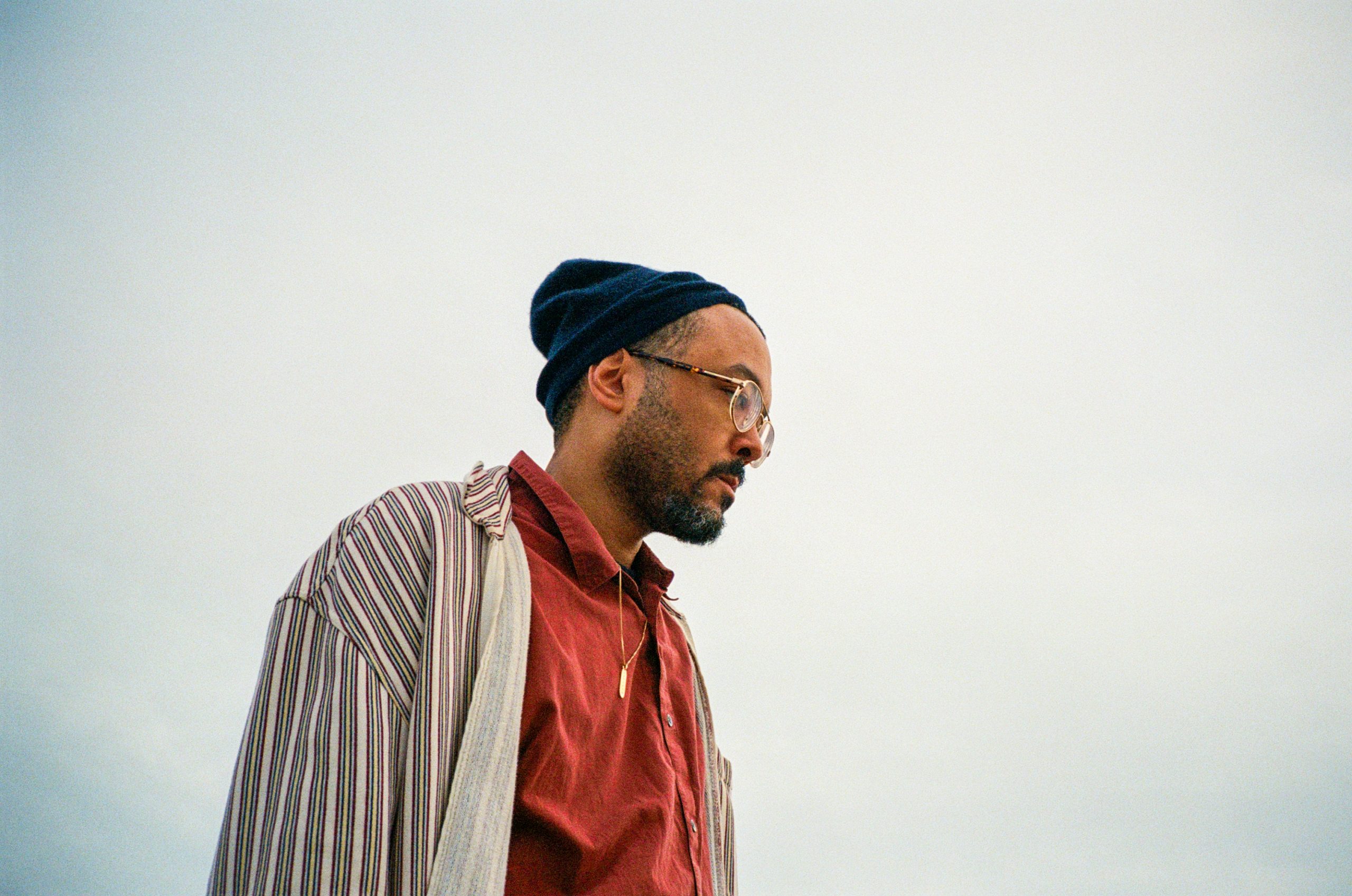
Galcher Lustwerk’s deep house is smooth as marble. The Cleveland native — born Chris Sherron — began saxophone lessons in elementary school, then came to DAW techniques as a teenager. As a student at Rhode Island School of Design, he became ingrained in the city’s noisy DIY scene. He paid his dues in the White Material collective with DJ Richard and Young Male. The 2012 originals mix for Blowing Up the Workshop, 100% Galcher, thrust him out of obscurity, yielding a deal with Ghostly International and an Azealia Banks co-sign.

A pillar of the New York City circuit, the Lustwerk persona is as tongue-in-cheek as it is sumptuous. “I thought it would be a funny techno alias — a Black producer from the Midwest with a nom de guerre a la Gerald Donald or Dopplereffekt,” he muses. “I’ve got other side projects, like Macchiatto, the Fock, and Road Hog. I’ve got a whole notes list of alias names I’m not using.” From post-rock to film scores, his concoctions are opulent.

Uniting smoky improvisation and a silky flow, Lustwerk’s formula is luminous. “Coming from the saxophone, I’ve always liked to keep instrumentation loose and for there to be a jazzy quality,” he says. “I think that’s partly due to laziness as well. I prefer to pick a sound and play with melody, rhythm, or arrangement, versus sculpting the sound itself. I’ve gravitated towards digital sounds for that contrast between mechanical and organic.” He largely operates in Ableton’s fluid Session View, cycling through plugins and gear. Slick lyrics imbue sketches with cultural grounding.

Vestibule — the latest Lustwerk EP on Stratasonic — assembles three tracks about the VIP experience. The title alludes to liminal periods when decisions happen partying. Swagger and skepticism balance evenly, avoiding the pitfalls of a glamorous victory lap. His demeanor is assured, but minor key doodles cater to moments after the lights have turned on. Syncopated bars about women and clout cascade over woodwinds, pads, and electric pianos. Lustwerk’s cool intertwines with melancholy, letting rowdy anthems feel profound.

PEAK TIME

10

WTCHCRFT – “Let’s Get This Party Over With”

Anthony McLean’s WTCHCRFT is a fixture of Brooklyn’s sleep-deprived corners. His EP for Sorry Records, Let’s Get This Party Over With, is acrid. On the titular opener, lofi talking and vinyl scratches speed past pretty intersections — stark and careening.

9

Blu:sh – “Full Of Fools”

Blu:sh — the propulsive moniker of French chiller Benoit B — peppers tech beats with fizzy ear candy. The EP Yapping After Dawn is issued by Dutch raver Rey Colino’s Kalahari Oyster Cult. “1000” emerges with foghorn low end, until crackles and speaking convey disorientation. It is a decadent cacophony.

8

Surgeons Girl – “Under This Space”

As Surgeons Girl, Bristol’s Sinead McMillian creates twinkly analog jams. The classically trained producer’s EP, A Moment To Machine, arrives via Peverelist’s Livity Sound. “Under This Space” contrasts swirling arpeggiations and wound-up pulse. It melds new age serenity and zippiness.

7

Skee Mask – “Nights & Music”

Ahead of his buzzy A Strange Tour, Bryan Müller eases into 2026 with the return of his Ilian Skee series. ISS012 is centered on robotic grooves, descending subs, and brittle cymbal flurries. “Nights & Music” is the EP’s pinnacle, with a restless acid bassline and drums that filter into mush. This is shifty and bewitching — in line with the Bavarian hermit’s finest cuts.

6

Sleep D – “Step On It” (Feat. Posseshot)

From Roza Terenzi to Guy Contact, Australians are responsible for some of the best modern progressive house. Near the core of this boom is Butter Sessions — a label launched by Corey Kikos and Maryos Syawish of Sleep D. To celebrate its 15th anniversary, the Melbourne-based platform has compiled three discs of rubbery pieces from Fader Cap, Jennifer Loveless, Unsolicited Joints, and more. “Step On It” finds Sleep D teaming with rapper Posseshot. Brash vocals crest over a jittery trance thump. It is entirely unrestrained.

5

Excalibur & DJ Spence – “Medium Rare”

With the minimal revival in full swing, Montréal’s Doo Records presents a gritty alternative to the Beatport nostalgia. Advertising wares via newsletter and a doodly website, it resembles a sibling to Berlin’s shadowy Acting Press. On the 12″ Medium Rare, Excalibur and DJ Spence straddle subtlety and insistence. The front half offsets clicky kicks, muted stabs, and an earworm scraping motif. It evokes Basic Channel producing with a toy keyboard.

4

Maara – “A Moving Blur”

Following years spinning at sweaty queer nights in Montréal, Berlin expat Maara Louisa Dunbar has pushed into narrative terrain. Her moody full-length for NAFF, Ultra Villain, spans pop and trip hop. It sees her evolving into the role of a singer, pulling from desire, heartbreak, and empowerment. “A Moving Blur” pairs R&B and downtempo, with whispery verses that bleed into sultry hi-hats and bleeps. It mimics the glow of a lava lamp in a stone dungeon.

3

Shackleton – “Crushing Realities”

Experimental veteran Sam Shackleton coaxes breath out of dubstep. The England-born, Berlin-based Skull Disco founder’s album for AD 93, Euphoria Bound, seems crafted from sentient earth. “Crushing Realities” twists a chanting sample into bizarre coils. Polyrhythmic rattles and toms usher a growling climax. Pondering lucidity, it is primal.

2

Organ Tapes – “Gun To The World”

On a packed evening at Nowadays, surrounded by a fistful of New York City’s hottest DJs, Organ Tapes strummed an unplugged Neil Young cover. It captures the ethos of English-Chinese songwriter Timothy Zha, who fuses a sad boy ethos and crinkly sonic design. His EP for Ian Kim Judd’s OST, 包烟 (Yi Bao Yan), offers nicotine-streaked existentialism. “Gun To The World” unfurls with a dialogue between crystalline guitar and snotty synthesizer. “I don’t really care about that/ I put thе gun to the world/ Fuck it, I guess/ Still youngеr than old,” Zha mumbles in the chorus, his voice drenched in AutoTune — glum reassurance.

1

Daphni – “Shifty”

In his tenure as an unassuming superstar, London-based Canadian Dan Snaith has leaned into euphoria. Butterfly — the fifth Daphni full-length, out now on his Jiaolong imprint — paints disco, house, and hip hop in pastel shades. It does not all land gracefully, yet “Shifty” embodies the better aspects. Ascendant chords wring over a 2-step shuffle and shouts. It could pass for the output of an edgier newcomer.

THE AFTERS


“Choosin’ Texas” Singer Ella Langley’s Walled-Off Superstardom


Ella Langley’s “Choosin’ Texas” is not only a #1 hit but a historic #1 hit. The song, a gentle country weepie about losing your cowboy paramour to his exes down in you-know-where, made Langley the first woman to reach the top of the Billboard Hot 100, Hot Country Songs, and Country Airplay charts simultaneously. Based on the numbers, she’s just collected a full set of tickets to the monoculture. 

There are two reactions one may have here. Either Langley’s superstardom has been obvious to you for months now, or you’ve never heard of her until just now. The latter is probably not your fault. “Choosin’ Texas” does have its champions outside country fandom — YouTube pop critic Todd In The Shadows named it the third-best hit of 2025 — but otherwise, Langley has gotten very little coverage in the mainstream music press. If you want to know about Ella Langley, you end up watching hour-long podcasts called The MeatEater Podcast with The Brothers Hunt on God’s Country. (This is real.)

For those who’d rather not watch The MeatEater Podcast with The Brothers Hunt on God’s Country, here’s a quick intro. Langley grew up in deep Alabama and was raised on classic country, Stevie Nicks, and hard rock — she named one of her dogs Crue, as in Motley. She’s been gritty since childhood; on the advice of a mentor, she learned 50 songs to cover at future gigs before attending college. She built up connections the old-school, boots-on-the-ground way — hustling for gigs, shopping around video press kits. Then came the publishing deal, then the record deal, then the tours with Randy Hauser and Koe Wetzel and the Grand Ole Opry debut.

And then came Langley’s first monster hit: “You Look Like You Love Me,” a duet with fellow country artist Riley Green. It wasn’t meant to be a hit: “I didn’t think that song was ever gonna leave my audio recordings,” Langley said. “It was a joke.” If it was a joke, it was well-timed. Langley discovered a shrewd strategy, wielded by Laufey and Olivia Dean before her: Do a throwback single, but throw it back several decades farther than everyone else. Specifically, “You Look Like You Love Me” evokes the talk-singing country of the ’60s and ’70s, popularized by artists like Hank Williams. The verses are completely spoken: she and Green nonchalantly recap their respective sides of a bar hookup. The chorus, a pickup line that Langley semi-jokingly encourages listeners to try themselves, is vintage twang. 

Once again, you’ve either been bombarded with “You Look Like You Love Me” for over a year, or you’ve never heard it. (You should; it’s good.) This is unusual even among dark-horse hits, often called “FYPcore,” after their huge familiarity gap between TikTok lifestyle content and the pop-star zeitgeist. Even if you know nothing about, say, Alex Warren, you’ve undoubtedly absorbed “Ordinary” via osmosis. It’s possible to go through life without encountering Langley’s single even by accident.

What’s behind this selective virality? Unlike other country crossovers — most recently, Shaboozey’s J-Kwon-interpolating “A Bar Song (Tipsy)” — “You Look Like You Love Me” is hardcore period-piece country. Relentless earworm of a chorus aside, it makes very few concessions to pop. “Choosin’ Texas” is pop-country, but the average person would probably not classify it as a pop song. And until recently, pop radio’s been lukewarm on it. On the Top 40 airplay charts over the past few weeks, “Choosin’ Texas” has consistently lagged in the mid-40s, right behind Hilary Duff’s “Roommates” — an artist 20 years removed from Disney stardom, recording what’s basically a Gracie Abrams song about giving someone head in the back of a dive bar. Langley’s song is popular enough to top the pop chart, but unlike “A Bar Song” or Wallen’s “Last Night,” it hasn’t really permeated the pop market.

The elephant in the room here is the MAGA of it all. Music Row, and many of its artists, have historically skewed decidedly conservative as an institution. What’s changed lately is how overt they are. During the last Trump administration, artists went stealth mode, commissioning songs about how “politics” — nebulously defined — are such a damn buzzkill. This time, emboldened further by grievance-based #1 hits like Jason Aldean’s “Try That in a Small Town,” the politics are loud and proud. And unlike the last time this happened — the post-9/11 years marked by Toby Keith’s “Courtesy Of The Red, White And Blue (The Angry American)” — the country industry is positioning themselves in explicit opposition to mainstream music, most notoriously Kid Rock and his Turning Point USA-affiliated counterprogramming. 

Langley has not defined her politics so overtly, but she has played the right cards to thrive in the current country environment. She’s played Kid Rock’s festival series Rock The Country and will be back this year (though she didn’t perform on his fake Super Bowl halftime show). She’s cool with Morgan Wallen, slurs be damned, but so are lots of her colleagues from both the country and pop worlds. In a scene where women face a much steeper climb to stardom, she’s worked hard to court a country contingent that has become defiantly anti-mainstream, and it may be limiting her prospects beyond that world.

It’s hard to talk about this subject without sounding dismissive. A lot of disdain for country genuinely is mixed up with disdain for the genre’s often working-class audience. And mentioning politics in this context has a tendency to make country music heads come out of the woodwork mentioning the same handful of vaguely liberal country songs (e.g. “The Pill”), the same few progressive-coded critical darlings like Kacey Musgraves, and how Tim McGraw voted Democrat or whatever. But the average music listener does not know, care, or want to care about any of this. They hear lyrics like “Can’t change how I was raised, the Bible in my blood, and the ‘Bama in my veins” (“Dandelion”), and they are as capable as anyone else of parsing the intentional statement about who is and is not supposed to relate. 

Like it or not, this is the barrier to mainstream stardom, and for female artists, it’s particularly stifling. Music Row has long been reluctant to champion women — in 2015, radio consultant Keith Hill infamously compared them to “the tomatoes of [the] salad” of playlists: to be used sparingly, as a garnish. To illustrate: “Choosin’ Texas” was co-written by Miranda Lambert, probably the biggest female superstar in country music over the past two decades. It was Lambert’s first pop #1 hit, too. The rarity of this kind of chart success saddles any breakout female artist with pressure, as country music journalist Marissa Moss has noted, to be the one who’ll Change Everything for Women, with the implication that they’ve failed when they inevitably don’t. It’s probably not a coincidence that when male country artists cross over to pop, like Morgan Wallen or Jelly Roll, it just means they now have two bases of support. When female artists cross over, like Taylor Swift or Kacey Musgraves or Maren Morris, they leave the industry entirely.

So Langley’s success — getting her own breakout hit, without needing a male duet partner — comes with behavioral expectations. Early single “Country Boy’s Dream Girl” presented her as a rough-and-tumble sort tailgating on a river bank; she’s now dolled up in gowns and pageant makeup. Her old website described her as a maverick and a “straight-shootin’ songwriter who pulls no punches”; her new one has a lace-and-stationery design and a ChatGPT-core missive about the broader symbolism of dandelions. Nor is the pressure just aesthetic. When promoting “You Look Like You Love Me,” Langley repeatedly expressed the same verbatim hesitance: “That’s kind of a risque thing.” 

Meanwhile, go back a few years and Langley holds her own in podcast bro-downs about hookups, deer hunting, and “nut-scratchers.” The idea that alluding to sex with Hayes Code-compliant vagueness is alienatingly risque is ridiculous — including to her audience, if the YouTube comments on the Bobby Bones interview are any indication: “This is exactly what I did 40 yrs ago. I walked up to my Ray in a bar. We now have been married for 32 yrs. + 7 yrs living together.” “My daughter found her first husband sort of the way this song suggests. Halloween, she was dressed as a cop, arrested him in a bar, a former college football player.” (But be warned, prospective pickup police: “They got married, after a few years, 2 kids, his true personality imerged [sic] and they are now divorced.”)

Most disappointingly, these expectations seem to have stifled Langley’s music too. To my ears, she sounds far more in her element on her raucous material from previous albums Hungover and especially Excuse The Mess — self-loathing barnburner “Make Me Wanna Smoke,” swaggering cheater-revenge anthem like “Better Be Tough” (“Screw you — I won’t”), lonesome plaints like “Hungover” and “Paint The Town Blue,” and the wonderfully self-aware “Girl Who Drank Wine,” which flips the standard “city girls drink champagne, us girls drink Jack” country trope into the wine-drinker as a mysterious outlaw fatale. 

Since then, her music’s gotten gauzier, and her songwriting’s become fuzzier. “Choosin’ Texas” can’t quite decide whether Texas is a metaphor for the girl, the girl is a metaphor for Texas, or maybe whether there’s some kind of nickname situation. “Dandelion” tries to turn the titular flower into an omni-symbol — wild and untamed, unlike roses, but also thornless and unassuming unlike roses — like a floral Mary Sue. Not only is “Be Her” a poor fit in its Taylor-esque featheriness, Langley has other songs about insecurity that are far less emotionally shallow. Perhaps that’s why Langley’s patterned herself upon Lambert, whose megastardom has earned her the permission to make music that’s as mean and messy as she wants. Langley deserves the same.

POP TEN

Noah Kahan – “The Great Divide”

“The Great Divide” leapfrogs Kahan’s acoustic cohort in part for being higher-energy and closer to rock-rock. But the real reason is that Kahan is simply a better songwriter, with more precise observations and more cutting lines. I certainly wouldn’t want to be on the receiving end of “I hope you’re scared of only ordinary shit, and not your soul and what He might do with it.”

Lana Del Rey – “White Feather Hawk Tail Deer Hunter”

I think it’s a good sign that I have no idea from one single to the next whether I’ll be on board with Lana Del Rey’s current thing. “White Feather Hawk Tail Deer Hunter” is genuinely bizarre: a shudderingly orchestrated showcase of yandere tradwifery, where Lana’s vocals are inspired equally by Betty Boop (not for the first time) and mumble rap, and where she undercuts her otherwise straightforward love declaration not with thuddingly on-the-nose lyrics, but with an meticulous, ominously minor-key arrangement. Bizarre is better than boring; bizarrely captivating, better yet.

Remy Bond – “Cherry Red Balloon”

If you were more on board with Lana Del Rey’s last thing, “Cherry Red Balloon” has you covered: woozy and vaguely Lynchian, with an Emile Haynie type beat and a Lisa Frank/Precious Moments video. Also, the best song about Kokomo since “Kokomo.”

IVE – “Bang Bang”

IVE capitalizes on the fact that they’re the group who made the song that K-Pop Demon Hunters‘ “Golden” ripped off. I continue to be in awe at the speed at which K-pop mints new genres: in this case, surf-rock that you can sing “Put A Donk On It” over. (Plus a half-time bit, a Jersey club bit, and plenty more; a free-gift-with-purchase deal of an arrangement.)

sombr – “Homewrecker”

sombr combines his two calling cards — making pop hits, and being kind of a fuckboy — to their logical conclusion: making a song as anthemic as “Call Your Girlfriend,” on the same messed-up-if-you-think-about-it topic. Robyn pulled it off with her unsuppressable underdog charm; sombr pulls it off with his (I sure hope) self-aware skill at playing the heel. I mean, “I don’t wanna be how you formulate opinions on astrology” is just such a sombr line, right?

Justine Skye – “Thong”

It’s amazing to witness the absolute glow-ups that the once-B-list R&B starlets of the mid-2010s are having all at once. Ten years ago, Skye was making “Bitch Better Have My Money” ripoffs. Now she’s making immaculate, glassy lounge music, courtesy of Kaytranada at his best.

Chloe Qisha – “YDH”

Imagine Peggy March’s “I Will Follow Him” — there’s what sounds like an interpolation — except with another F-word. If I’m being completely honest, not all of Chloe’s punchlines work, and you may not get through this song without at least twice going really? But the moment she put “horny” through a Daft Punk-like vocoder, I was sold.

CORTIS – “GOAT”

Boy band CORTIS’ current single is the Tommy Richman-esque “Go!,” but “GOAT” is the track that’s gotten them their own historic first: they’re the first K-pop group to play NBA’s All-Star Weekend. And what a jock jam they did it with. The only possible improvement would be for CORTIS to lean into the fact that this is the theme song for Steph Curry’s Sony Pitcures Animation movie, and sample Steve Kerr saying “thumping techno club music.”

Dove Cameron – “Do I Wanna Know”

I usually don’t include covers here, but Cameron’s version of the Arctic Monkeys song — a theme for her new thriller series, 56 Days — is both a swerve for a former Disney star, and genuinely transformative. She translates the song from scuzzy rock to despairingly sullen downtempo R&B so well that it took me a while to recognize the song’s provenance. It reminds me of JoJo’s “Marvin’s Room” flip; I guess I’m just a sucker for former child stars making dramatic breakthroughs.

Katseye – “Internet Girl”

I highly doubt that Katseye’s original Pop Star Academy exit strategy was to become the queens of trollgaze, but it’s working for them. An incomplete list of what “Internet Girl” reminds me of: “Gnarly” made even gnarlier. Toy-Box’s “www.girl” updated for the 2020s. Josie And The Pussycats-style, except the subliminal messaging isn’t for Coca-Cola but Big Zucchini, and that’s the joke. Sadly, “Internet Girl” so far hasn’t had the staying power of the less-interesting “Gabriela,” so vote with your streams.

CLOSING TIME


Metal Band’s New Album ‘Necropalace’


In late 2022, not long after the release of Worm’s Bluenothing EP, project mastermind Phantom Slaughter thought he was being phished. Someone claiming to be Marty Friedman, the former Megadeth and Cacophony guitarist and trailblazing solo artist, had apparently just heard the record, and they slid into Worm’s Instagram DMs with an all-caps reaction: “I LOVE BLUENOTHING!

“I was like, ‘No, this is a spam account. This can’t be real,’” Slaughter recalls. “[But] it was actually his account, and I had to take maybe an hour to come to my senses and reply. He saw the guitar artistry in Bluenothing, and I guess that resonated with him. I don’t know how he found it. It doesn’t make any sense that he would even know who we are.”

A lot more people are finding their way to Worm these days. The project that Phantom Slaughter started in Miami in the early 2010s has evolved from a sludgy death/doom solo project into a conceptually and sonically ambitious black metal duo. Guitarist Wroth Septentrion (né Phil Tougas, also of Exxûl, Atramentus, Chthe’ilist, and more) joined the fold in 2021, which allowed Slaughter to fully focus on vocals and keyboards. Bluenothing was Septentrion’s first recording with Worm, and his expressive, neoclassical-inspired playing provided the breakthrough the band needed to crawl out of the swamp and ascend into the sky. (It’s no wonder Friedman, himself no stranger to neoclassicism, responded so strongly to Bluenothing.) Last year, Worm signed to Century Media, completing their ascent from the deep underground (Iron Bonehead) through metal’s tastemaker indie ranks (20 Buck Spin) to one of the genre’s marquee labels.

Nearly 15 years after Worm’s first demo, their steady evolution has brought them to the gates of the Necropalace. The band’s fourth full-length (and eighth release overall) is their crowning achievement to date. Necropalace synthesizes Phantom Slaughter and Wroth Septentrion’s myriad influences into an ornate fantasia of symphonic black metal, funereal death/doom, and face-melting shred guitar. Its entire hour-plus runtime feels like an extended flex, but it saves its biggest flex for the final track — Worm superfan Marty Friedman, who hardly ever plays on metal records anymore, contributes lead guitar work to the closing movement of “Witchmoon (The Infernal Masquerade).”

“I always had that in mind, [that] when we have the full-length, I’m gonna ask [Friedman] to be, in some form, on the album,” Phantom Slaughter says. “I have to ask him. If he says no, he’ll say no, but I have that contact. My message won’t be unseen if I send that, because the Instagram chat is open. At least he’ll leave me on read, you know?”

Friedman didn’t leave him on read, and his work on “Witchmoon” wound up serving as Necropalace’s capstone. The solo section that Friedman plays on was actually written as a call-and-response tradeoff between guitar and keys, but even with Eternity’s End virtuoso Jimmy Pitts committed to play the keyboard solos, the idea wasn’t quite working. 

“When we heard it, we kind of thought, ‘We need this to be a little bit more evil-sounding,’” Septentrion recalls. “I think it’s not so much the phrasing, it was just the sound. It was a worthy experiment. But Marty Friedman’s influence on this record is all over the place. Both Cacophony albums [and] all his solo albums [were a] big inspiration on all of Necropalace. Not just the leads, but how everything is: the chord progressions, the melodies, everything. So it made sense. His DNA’s all over the damn record, so let’s just make that a reality.”

Slaughter and Septentrion both contend that Worm hit a new level of compositional sophistication with Necropalace. After Bluenothing and the Starpath split with Dream Unending, they had the reps as cowriters to start communicating ideas on a deeper, almost instinctive level. Both described experiencing something like co-synesthesia, where the intended mood of a song would first reveal itself as a color, which the two would then work to express within a sympathetic musical mode. There’s no technical, theory-based link between chord progressions and colors, yet when Slaughter and Septentrion would make references to each other in those terms, they almost always agreed.

“We never got stuck, that was the crazy thing. These things were just coming out naturally. It was a lot of in-the-moment stuff,” Slaughter says. “We did have some riffs on our own sides that we presented to each other, but they would always be molded. Those riffs would end up changing at some point.”

Much of Necropalace was written remotely, with Septentrion contributing ideas from his home in Quebec and Slaughter working from Worm HQ in Florida. Still, in-person collaboration played a critical role. Since Septentrion joined the band, Worm have started playing live, which has had a few crucial effects on the way they function. First and most importantly, playing the old songs onstage allowed Slaughter to hear which parts get a big crowd response, which in turn led to Necropalace being the first Worm album with repeating parts and choruses. “In the back of my mind, when a riff was being made, I thought, ‘Oh, this is gonna crush live.’ I never thought that before,” Slaughter says.

Being on tour together has also allowed Slaughter and Septentrion to give each other real-time feedback on the music they’re working on. “Witchmoon” and the slyly proggy “The Night Has Fangs” were both shaped in the van on Worm’s 2024 tour supporting Gatecreeper, and when the band got back to Florida at the end of that run, they brought their road-sharpened chops into the final recording sessions for Necropalace

“[Septentrion] was there when I was working on those keyboard parts, and he knows more about music theory than me, so I could pick his brain, and I could ask him for certain things,” Slaughter says. “It changes the way that I view playing synthesizers. I always have that in mind now, that there could be more theory to it, or certain melodies can be built even crazier. I think him being in the band is allowing everything to be more musical, and that’s definitely how I want things to be.”

One of the places Necropalace’s musicality shines is in the role of the guitar solos. Septentrion admits that, on Bluenothing, he let his solos drive the structure of the songs rather than making them fit within a more complete architecture. The title track of the EP, he says, “feels like it’s just going from one solo to the next.”

“I think on Necropalace, as much as there are a lot of solos, they’re treated as a point of climax, rather than necessarily being the sole focal point of a song,” he continues. “The song has a main theme that’s the main focal point of the song, and the solo acts more as a mere moment amongst others. There’s peaks and valleys in every song, and solos can act as a sort of tool, to make a movement conclude. [But] also, there’s always a youthful aggression, a youthful arrogance to it. If it doesn’t have that, then what are you doing? I think this record has that balance. There’s an element of showmanship and flash to it, but I think we were conscious about where we put these solos, and it’s often gonna be to serve the song.”

Often — but not always. An undeniable part of Necropalace’s appeal is its excess, its willingness to let a song stretch to 10 or 12 or 14 minutes as it works through a barrage of riffs, solos, keyboard flourishes, spoken-word interludes, time changes, tempo shifts, and obscure extreme metal references. Phantom Slaughter is a metalhead, first and foremost, and Worm’s songs often feel like him trying to communicate his deep, genuine enthusiasm for this music to the listener. It’s a cliché when artists say they’re just making what they’d want to listen to, but in Worm’s case, it feels apt. 

The band’s Instagram Stories are an extension of that philosophy. They serve as a long-running digital zine with a circulation of 32,000, highlighting underground music that informs the Worm aesthetic in some way. A story from the day I interviewed Slaughter and Septentrion is pretty typical: Against a red velvet background, Slaughter spread his physical copies of Windham Hill Music’s A Winter’s Solstice IV compilation, Malignant Eternal’s Tårnet, Vim Patior’s Magni Nominis Umbra, and Astriaal’s Glories of the Nightsky demo tape. The song playing over that tableau was Anathema’s “Forgotten Hopes,” from the underrated Judgement album. That’s half a day’s listening sorted, if you’re inclined to follow Slaughter down the rabbit hole.

“I’m a student of all of this, and what gets me most excited is when I read about my favorite artists’ favorite artists,” he says. “I think that’s very important to give back to people. I’ve had people say, ‘This link that you showed me inspired me to start a band.’ So, I feel like it’s a genuine way of giving back and sharing.”

“And I just love the idea of people tripping out to an obscure album from ’96 that has like 100 views on YouTube. I get a kick out of that.”

10

Lueenas – “Vølve” (Feat. Rikke Emilie List)

Location: Copenhagen, Denmark
Subgenre: drone metal/contemporary classical

Ida Duelund and Maria Jagd are twin pillars of Copenhagen’s improvisatory music scene, with bodies of work spanning (and blurring the lines between) free jazz, contemporary classical, and experimental film scores. The music they make together as Lueenas is rooted in their experiences in those worlds but wields a decidedly more metallic edge. The duo’s second album, Tender Anger, has been billed by their label Barkhausen Recordings as “string doom,” with Duelund on contrabass, Jagd on viola and violin, and no guitars in sight. It still has plenty of bite, especially on the three tracks with guest vocals by Konvent’s Rikke Emilie List. On “Vølve,” List delivers her death growls through a thicket of dissonant, overlapping string lines, with Duelund and Jagd ratcheting up the tension with each bow stroke. It’s guitarless, drumless, and totally crushing. [From Tender Anger, out now via Barkhausen Recordings.]

9

Bloody Keep – “A Death Alive”

Location: San Francisco, California
Subgenre: raw black metal

Bloody Keep’s lone full-length, 2024’s Rats Of Black Death, was so good it felt like a prank. The prolific musician Abysmal Specter (Old Nick, Curta’n Wall, a dozen others) is synonymous with an ultra-lo-fi, chopped-and-screwed black metal aesthetic that remixes corpse paint, cheap synths, and Web-1.0 graphic design, and he tends to rush out music by the barrelful. Rats Of Black Death, by contrast, was a thoughtfully composed, immaculately produced quasi-symphonic black metal album, epic in its scope and authoritative in its musical heft. Even Curta’n Wall’s scaled-up full-lengths kept a lot of the chintzy charm of the EPs; Rats Of Black Death sounded more like Abysmal Specter making a point. Bloody Keep’s new three-way split with Keys To The Astral Gates And Mystic Doors and Sanguine Wounds is both a return to raw form and a shrewd recapitulation of the ambitions of Rats. The two Bloody Keep tunes here aren’t as produced or as complex as anything on their full-length, but they’re the best, catchiest songs on the split by a mile. “Students Of The Scholomance” and especially “A Death Alive” suggest a new path forward for Bloody Keep, one that honors the project’s hissing, vampiric roots while celebrating the songwriter that Abysmal Specter has become. [From the split with Keys to the Astral Gates and Mystic Doors and Sanguine Wounds, out now via Grime Stone Records.]

8

Domhain – “Footsteps II”

Location: Belfast, Northern Ireland
Subgenre: post-black metal

“Footsteps II,” the nearly 10-minute centerpiece of Domhain’s debut full-length, took a circuitous journey to reach its final form. The Belfast band wrote it in a moody, atmospheric black metal milieu, but the first time they recorded the song, it was as an acoustic reworking. That version appears, simply titled “Footsteps,” on a 2025 split with the German dark folk band Ephemeral. Only by playing the song acoustically did the band discover the key melodies and atmospheric elements they wanted to bring forward, and when “Footsteps” was finally recorded as a metal song, it had been transformed. There are two cellos on the recording that appears on In Perfect Stillness, played by in-house cellist/drummer/vocalist Anaïs Chareyre-Méjan and guest musician Raul Andueza, plus a prominent piano part played by John Wilson. With its twinkly guitars, shoegaze-y sense of dynamics, and breathy French vocals, “Footsteps II” certainly owes a debt to Alcest. But Domhain have managed to transcend their chief influence through sheer hard work, by putting their best song through its paces until it was as good as it could possibly be. [From In Perfect Stillness, out now via These Hands Melt.]

7

Venthiax – “Rites Of Ra”

Location: Huskvarna, Sweden
Subgenre: thrash metal

I’ve been hyping the up-and-coming Swedish thrash scene as one of the best regional metal scenes in the world for several years now. Young bands like Sarcator, Eternal Evil, Atonement, Bloodstain, and Hostilia have returned the country to thrash glory, decades after the peaks of Merciless, Nifelheim, and Antichrist. Slightly late to the party are Huskvarna’s Venthiax, who have just released their first proper EP after a string of demos and live bootlegs. Rites Of Ra announces them as perhaps the brashest, most unrestrained metal band in Sweden, with bug-eyed vocals, lacerating riffs, rumbling, gut-punching bass lines, and some truly wild drumming. This isn’t the most original music in the world, but Venthiax bring the verve and commitment necessary to make their Sodom/Slayer worship work. They get all the little stuff right, both musically and culturally — just check the band photos with bassist Wendy Juneström sitting astride her custom midcentury chopper. This is as real as it gets. [From Rites of Ra, out now via Dying Victims Productions.]

6

Exhumed – “Crawling From The Wreckage”

Location: San Jose, California
Subgenre: death metal/grindcore

Red Asphalt has a hell of a hook: The 10th album by venerable California deathgrinders Exhumed is all about the highways and byways of America, specifically the vehicular carnage that unfolds therein. As someone who insists on running outdoors almost daily in a car-first Midwestern city, I’ve seen my life flash before my eyes enough times to be an expert in Red Asphalt’s subject matter, and I’m pleased to report that Exhumed have delivered an album that sounds like being flattened by two tons of galvanized steel. Most of the album hurtles down the road at 90 mph, but the sludgy, fume-choked “Crawling From The Wreckage” depicts the gory aftermath. Ross Sewage’s off-kilter bass line seems to stagger away from the scene, Matt Harvey and Sebastian Phillips’ guitars find a sickly lockstep groove, and the song patiently makes its way to a revved-up climax from there. It’s nuanced work from these old masters. [From Red Asphalt, out now via Relapse Records.]

5

Twilight Force – “Magic Of A New Dawn”

Location: Falun, Sweden
Subgenre: symphonic power metal

You either love Twilight Force, the elaborately costumed, lore-rich Swedish “adventure metal” band, or you hate them. I love them, heaven help me. They sound like Rhapsody Of Fire covering an unreleased Alan Menken/Howard Ashman soundtrack, and they make me want to stay up all night drinking Mountain Dew and playing The Bard’s Tale on PS2. Standalone single “Magic Of A New Dawn” launches a new era for the freshly Napalm-signed band, but the fundamentals are the same as ever — dramatic swells of violin, hyper-melodic guitar leads, layered choral vocals, fantasy-audiobook narration, and a Disney Parks-style mandate to be cheerful and inspiring at all times. It’s power metal toxic positivity, and against my better judgment, it works on me. [Single out now via Napalm Records.]

4

Fossilization – “Disentombed And Reassembled By The Ages” 

Location: São Paolo, Brazil
Subgenre: death/doom metal

I’ve had my eye on Brazilian crushers Fossilization since the release of their debut EP, 2021’s He Whose Name Was Long Forgotten. Their niche – doomy, dissonant Incantation worship – is a crowded one, but their command of the vocabulary of the genre was immediately evident. They’ve only grown sharper with time, and sophomore full-length Advent of Wounds marks a real leveling-up for the band. It’s thick with evil guitar riffs and tunnel-boring drum bombardments, but the production leaves enough room for the instruments to breathe. “Disentombed and Reassembled by the Ages” is one of the album’s high points, a masterclass in death/doom dynamics that enshrouds its relentless, stomping gait in a fog of eerie atmospherics. [From Advent of Wounds, out now via Everlasting Spew Records.]

3

Converge – “Force Meets Presence”

Location: Salem, Massachusetts
Subgenre: metallic hardcore

You should never, ever doubt Converge, but be honest — nine years after The Dusk In Us and five after the Chelsea Wolfe teamup Bloodmoon I, did you think they’d come back sounding this furious? Love Is Not Enough sounds like it’s making up for lost time and lost rage, with the metalcore greats ripping through 10 ass-beating songs in about half an hour, only occasionally pausing to scratch their gray beards with a noise rock groove. “Force Meets Presence” isn’t one of those beard-scratching moments. A friend described it as having a Metallica riff, and yeah, that’s what I’m hearing around the 30-second mark, too. While Kurt Ballou goes full “Dyers Eve,” Nate Newton finds a little Cliff Burton in his low-end assault and Ben Koller flies around the kit like a man half his age (not very Lars-like). Jacob Bannon, of course, does what he was born to do, locking eyes with death and snarling at it like a rabid Doberman. When Converge set out to write Love Is Not Enough after spending years on the collaborative Bloodmoon project, they knew they wanted it to just be the four of them. “Force Meets Presence” illustrates how they still bring out the best in one another, 25 years after Jane Doe. [From Love Is Not Enough, out now via Epitaph Records.]

2

Ponte Del Diavolo – “Spirit, Blood, Poison, Ferment!”

Location: Turin, Italy
Subgenre: blackened doom metal/post-punk

The bill at Ponte del Diavolo’s record release show in Turin earlier this month is instructive about their place in the heavy music universe. Joining the band in celebration of De Venom Natura were Messa, the shapeshifting doom band led by powerhouse vocalist Sara Bianchin; Ottone Pesante, the so-called “brass metal” band centered on trumpet and trombone; and Nubivagant, the hypnotic solo trad/black metal project of Darvaza mainman Omega. You can hear bits and pieces of all those acts in Ponte del Diavolo’s wide-ranging sound, though they effortlessly fuse them into a sound that’s entirely their own. Sometimes, Ponte del Diavolo sound like a squiggly post-punk band with a serious mean streak; other times, they sound like a mysterious, esoteric black metal band with an unusual interest in synthesizers. On “Spirit, Blood, Poison, Ferment!”, they whip black metal guitar into a groovy, doomy churn while the commanding voice of frontwoman Erba del Diavolo leads the band in witchy ceremony. The song features trombone work from Ottone Pesante’s Francesco Bucci, whose pre-chorus part I can only describe as an evil fanfare. [From De Venom Natura, out now via Season of Mist.]

1

Worm – “Necropalace”

Location: Miami, Florida / Longueuil, Canada
Subgenre: symphonic black/doom metal

Worm guitarist Wroth Septentrion: “Originally, the song started with just the acoustic part, the part that comes in after the intro. But then, Phantom [Slaughter] was like, ‘We need a more dramatic entrance.’ And then he came up with another part that we made it fit before this part. And that part, when we came up with it, we decided, ‘Oh, you know what? We’re gonna bring it back at the end of the song, too.’ So there’s four movements in the song. Originally, there were two. It came from the idea that we need to make this entrance more dramatic, more grandiose and dark. The song needed this, and at the end of it, we noticed, ‘Oh, it’s 10 minutes.’ But it wasn’t our goal to make it 10 minutes. Our goal was to make the song hit more, make it more cinematic. There was no cap on the length, and let’s say the label wasn’t too happy about that at first. [Laughs] But that’s the thing. Sometimes you can’t put a cap on creativity. You’ve got to just let it flow.” [From Necropalace, out now via Century Media Records.]


Lil Nas X’s “Montero (Call Me By Your Name)”


In The Number Ones, I’m reviewing every single #1 single in the history of the Billboard Hot 100, starting with the chart’s beginning, in 1958, and working my way up into the present. The column is now biweekly, alternating with The Alternative Number Ones on Mondays. Book Bonus Beat: The Number Ones: Twenty Chart-Topping Hits That Reveal the History of Pop Music.

It’s an old story, one you’ve heard a million times. An unknown kid comes up with a song that captures the whole world. He’s not the first to try combining two genres (in this case, country and rap), but he does it in a casual, offhand, disarming way that doesn’t put off too many of the people who love either of those genres. More importantly, the song grabs children, to the point where it causes near-riots to break out on schoolbuses. The song smashes records, and the kid becomes instantly famous. He seems destined to go down in history as one of the all-time great one-hit wonders, since there is absolutely no way that he could ever equal the impact of that one hit. (The quickie EP that he cranks out to capitalize on the one hit has another hit, but it’s the kind of other hit that doesn’t stop people from calling him a one-hit wonder.)

During the long stretch of time when the song sits at #1, the kid emerges as a sharp, charming internet character. He also comes out as queer. He makes that revelation casually, as if he doesn’t think it’s a big deal, but he knows that it is. In the months after the song conquers the charts, a deadly disease descends upon the world, and everything stops. The kid uses that time to bunker up, deciding how he’ll present himself as a fully-formed pop star once the song’s novelty wears off. He figures out a bright, canny sound, a version of genre-fluid pop built on rap production. And he makes his grand return with a music video where he rides a stripper pole to hell and gives Satan a lap dance, then murders Satan and becomes the new Satan. You know. That old story.

Lil Nas X did not seem to struggle in the wake of “Old Town Road,” the way almost anyone else would do. He seemed to struggle with very little, at least until his story shifted dramatically in the past few years. (We’ll get to that shift, but it won’t be in this column, and I’m not looking forward to talking about it.) Lil Nas X was great at reacting to the hysteria around him with funny sidelong Twitter bits, and he seemed to genuinely enjoy the sudden gigantic level of fame that he’d almost accidentally earned. But that shit can’t be easy, even before you factor sexuality into the conversation. In a very short period of time, this young man had to learn to live his entire life in public, and he had to figure out how to make a career transition, novelty hitmaker to career artist, that’s tripped up plenty of people who had a lot more time to prepare.

At least where Lil Nas X was concerned, COVID must’ve been perfectly timed. He got to enjoy the full attention blitz of the “Old Town Road” summer just before everything shut down, and then he was granted some relative isolation to figure out his next move. The logical thing would’ve just been to turn “Old Town Road” into a formula and to see if it still had any juice after its tremendous run. (The song that eventually tied the “Old Town Road” chart record, interestingly enough, is one that refined the “Old Town Road” concept and got the country-industry respect that evaded Lil Nas X. That’s a story for a future column.) But Lil Nas X didn’t want to do the same thing twice, and he found some collaborators who understood where he wanted to go.

As “Old Town Road” rampaged across the planet, Lil Nas X quickly went to work on 7, the 2019 EP that was clearly planned and received as an “Old Town Road” cash-in. (It still got an Album Of The Year Grammy nomination despite quite clearly not being an album, which was funny.) For that EP, Lil Nas X recorded a couple of tracks with Take A Daytrip, the New York production duo who already appeared in this column for working on Travis Scott and Kid Cudi’s “The Scotts.” One of those Take A Daytrip productions was “Panini,” the “Old Town Road” follow-up single that peaked at #5. (It’s a 6.) I think that’s a slight, forgettable song, but it must’ve represented a way forward for Lil Nas X. Soon afterward, he asked Take A Daytrip to serve as executive producers of his debut album.

There’s a very funny Genius video where Lil Nas X, wearing a breastplate and what I guess you’d have to call armored finger sleeves, spends 11 minutes explaining every lyric from “Montero (Call Me By Your Name),” even though the song itself is barely longer than two minutes. He even explains things that don’t qualify as lyrics, like the humming that he does on the hook: “It’s kind of used as a mating call, almost. It’s a whole different way to communicate with somebody.” During that verbal marathon, he says that he moved out to LA and rented an Airbnb during the early COVID days. He used the place to brainstorm album ideas, and he sent lots of messages back and forth with the Take A Daytrip guys. He didn’t make too many social connections in those days, but he did have one notable encounter, and that’s what he describes on “Montero.”

About that title: Montero is Lil Nas X’s name. He’s Montero Lamar Hill; his parents named him after a Mitsubishi. Call Me By Your Name is director Luca Guadagnino’s lyrical 2017 queer romance, starring Timothée Chalamet on his way to stardom and Armie Hammer on his way to vividly fucked-up allegations. In the scene that gives the movie its name, Hammer whispers, “Call me by your name, and I’ll call you by mine.” The two characters then spend a few seconds whispering their own names to one another. That scene didn’t stick in my memory like the Psychedelic Furs dance party, but it meant something to Lil Nas X. It gave his song a romantic conceptual resonance: “It’s my name. The song is my name. But it’s the person’s name because I’m calling them by by own name, you get it?”

Lil Nas X grew up in the church; his father was a gospel singer. He came out to his family just before he came out to the rest of the world, which means that he started living as a gay man at almost the same moment that he became a celebrity. Everything was new to him. He hadn’t even seen many explicitly gay movies before Call Me By Your Name. One night during the COVID summer, an unidentified guy invited Lil Nas X to his house. (In the Genius video, Lil Nas X describes the guy as “an artist.” That word can mean a lot of things, but the way he says it makes me think that this is a public-facing pop musician with at least some level of success.) Lil Nas X was scared to be around other people in that moment, and some of the things that he saw in that house scared him further. But he was into the guy, and that feeling led him to the song.

There were drugs at the house. That’s what scared him. On the song, Lil Nas X croons, “Lookin’ at the table, all I see is weed and white/ Baby, you livin’ the life, but n***a, you ain’t livin’ right.” This was a kid who was new to LA celebrity party culture, and that world was at least a little bit seductive, but it was also stereotypical bad shit. I think you can hear those conflicted feelings at work on “Montero.” The song isn’t too complex, but the sentiment might be.

In any case, conflicted feelings weren’t enough to keep Lil Nas X from wanting to have some fun. The song is about flirtation, mutual seduction. Lil Nas X wants to sell what you’re buying. He wants to feel on your ass in Hawaii. He wants to shoot a child in your mouth — a jarringly raunchy image, especially coming from someone who was still known as a cute kid.

In the context of the “Montero” video, though, that line barely registers because of all the similarly explicit visual shit happening. We’ll get to the video, but even when we’re just talking about an otherwise innocuous song, he was knowingly making a statement. He’s also expressing something. There’s real feeling in his voice when he belts out this line: “Never want the n***as that’s in my league/ I only wanna fuck the ones I envy.” You could hear that as a flex, a lament, or an actual personal insight. Maybe it’s all three.

In the Genius video, Lil Nas X says, “Sometimes, you get too simp. You become the simp too hard. You down too bad. And that’s how I felt at that moment.” When you’re a musician who’s caught in a moment of life-altering infatuation that you know isn’t good for you, the best thing that you can possibly do is write a song about it. That’s what Lil Nas X did, maybe as early as the day after the encounter that he describes.

At home by himself, without any music behind him, Lil Nas X came up with the hook: “Call me when you want, call my when you need/ Call me in the morning, I’ll be on the way.” (In the Genius video, he says all the interactions with this guy were over DM but that the word “call” works better in a song. He’s right.) He sent a phone recording of that hook to Take A Daytrip, who were in the midst of working with Omer Fedi, the Israeli producer who has already been in this column for working on 24KGoldn’s “Mood.” Fedi immediately recorded the song’s fluttery, expansive guitar part, and the people involved all built the track from there.

Take A Daytrip and Omer Fedi co-produced “Montero” with New York native Roy Lenzo, who’d worked with Lil Nas X and Take A Daytrip on “Rodeo,” the Cardi B collab from the 7 EP. I like that song. (It peaked at #22.) Lenzo doesn’t have too many big credits outside of his work with Lil Nas X, but the four producers involved in “Montero” all spent months on alternate versions of the track, doing tiny tweaks here and there. There’s a 2021 Vulture interview where Take A Daytrip go deep into all the musical ideas at work on “Montero” — the use of Phrygian mode, the tension of the minor chord progression. It’s fun to read that stuff, though it basically means nothing to me. I do like that they used a heavily treated banjo, one that you might not even hear as a banjo, just as an inside joke about “Old Town Road.” That’s funny. That’s some shit that I’d want to do if I could make music.

When you listen closely enough, you can hear all the tiny flourishes that the producers added to “Montero”: The swirling handclaps, the subtle counter-melodies, buzzing and distorted synths that sometimes threaten to invade the mix. The song sounds vaguely Middle Eastern — that’s the Phrygian mode — without positioning itself neatly within any specific musical tradition. All those layers of acoustic guitar are inviting and seductive, but they also sound unfamiliar, which neatly mirrors the lyrics. That kind of deceptively rich production can elevate a very short, somewhat slight song. It can keep things interesting.

“Montero” is ultimately short and slight, though. That’s not a terrible thing. Plenty of good songs are short and slight, though probably no great ones. Lil Nas X’s voice is pretty limited, but it’s got personality, and he knows how to use it, layering things up and leaning into his lower register. He pulls off the neat trick of sounding casual while making it clear that the things he feels are not casual. I don’t hear the song as much more than a cool little idea, but it works on that level. It doesn’t sound like a hit to me, and I don’t think it would’ve been one if not for the video. This is one of those situations where the video is a whole lot more impactful than the song itself. The video, more than the song, is what introduced Lil Nas X as a whole new artist.

Lil Nas X co-directed the “Montero” video with Tanu Muino, a Cuban-Ukrainian director who had just made Cardi B’s similarly garish “Up” video. Muino had COVID when it came time to shoot the video, so she had to do her directing remotely, watching screens. I’m sure that was a pain in the ass, but the video is mostly computer imagery, so maybe it didn’t make a difference. I’m glad we’ve mostly moved past the hyper-colorful Trapper Keeper surrealism of this particular music-video moment, but nobody ever did that stuff better than Muino, who builds a whole CGI dreamworld full of heavy and obvious symbolism.

In the beginning of the “Montero” video, Lil Nas X sprawls with an acoustic guitar under a white tree in an Edenic purple field. A creepy-looking snake demon with a cat face, who I think is also played by Lil Nas X, winds his way down the tree, performs some kind of magic seduction ritual, and plants a kiss and a lick on Original Lil Nas X, possibly calling himself by his own name or whatever. Then we’re in a fantastical marble coliseum, where a bunch of Lil Nas Xes in Marge Simpson wigs stand in judgment of another Lil Nas X, a pink-wigged prisoner. (Wikipedia calls them Marie Antoinette wigs, which makes more sense thematically, but I know Marge Simpson hair when I see it.) The stands are full of other Lil Nas Xes, some of whom are living statues? The prisoner Lil Nas X is knocked out by a thrown object. I can’t really tell what it is, but Wikipedia says it’s a buttplug. This time, I believe Wikipedia.

The buttplug head impact seems to kill the prisoner Lil Nas X, whose face suddenly appears beatifically plasticy and who immediately ascends heavenward. But no, it’s a fake-out, since there’s the giant CGI stripper pole taking him straight to hell. A couple of years earlier, FKA twigs rode a stripper pole to heaven in her “Cellophane” video, and you can make a strong case that the “Montero” video is a ripoff rather than a tribute, but twigs was publicly into the Lil Nas X twist on what she’d already done.

The last minute of the “Montero” video is the bit that everyone remembers — the lake of fire, the elaborate lapdance for Beelzebub, the neck-snap, the theft of the horns. Even before Lil Nas X kills Satan and becomes the new king of hell, he seems pretty comfortable, intrigued, and turned on in the inferno. He definitely seems like he’s having fun through all of it. This is clearly shock-value theater, and that’s how the world took it. But I think there’s artistic intent in there, too. This is a gay guy who grew up in the church and who was only just learning and accepting who he was, and the video literalizes the idea that the things you grew up demonizing can be the things that bring the most pleasure when you give in to them.

But then, actual artistic intent always fades into the background when we’re dealing with a cultural product that goes this far over the top in its transgressiveness. Lil Nas X posted teasers for “Montero” online for months. He was in a 2021 Super Bowl commercial for something called Logitech that used a good chunk of the song, without really hinting at the aesthetic experience of the video. So when the song and the video arrived at the same time in March, it really did feel like an out-of-nowhere leap.

Old-school sacrilegious shock value has been a pop-music salesmanship tool for generations, but people weren’t really hitting that button in 2021. Cardi B and Megan Thee Stallion went for maximum bawdiness on “WAP,” but even that didn’t invite condemnation in quite the same way that Lil Nas X did in the “Montero” video. He got it, too. Certain elements of society were just waiting to go into moral-panic mode, and the “Montero” video offered them a flashpoint. The more outwardly homophobic wings of the rap world got theatrically upset about “Montero”; I remember Boosie Badazz, in particular, posting a lot of videos about how incensed he was. The worst elements of the Christian right took off running with it, too.

I should get into the Satan Shoes. At the same time as he dropped “Montero” and its video, Lil Nas X teamed up with an art collective called MSCHF to sell 666 pairs of so-called Satan Shoes — customized Nike Air Maxes covered in pentagrams and inverted crosses, supposedly with single drops of human blood mixed in with the paint. Nike had nothing to do with this promotion, and the company immediately sued MSCHF and got a cease-and-desist. All the shoes got recalled, and I bet that was Lil Nas X’s plan the whole time. It was a transparent publicity stunt, and it worked. Publicity followed.

Kristi Noem, one of the most extravagantly despicable people who has come out of this country in my lifetime, was governor of South Dakota at the time, and she tweeted, “Our kids are being told that this kind of product is, not only okay, it’s ‘exclusive.’ But do you know what’s more exclusive? Their God-given eternal soul. We are in a fight for the soul of our nation.” Never let these fuckers try to take the moral high ground on you. Lil Nas X’s response: “ur a whole governor and u on here tweeting about some damn shoes. do ur job!” It was funny at the time. Now, Kristi Noem’s job is to send heavily armed death squads into American cities to kidnap and terrorize entire populations wantonly and then to go on TV and say that the victims are domestic terrorists when the death squads kill innocent people. I wish she would stop doing her job.

The publicity-stunt stuff worked well enough that “Montero” debuted at #1, largely on the strength of many, many YouTube views. Lil Nas X now had a second chart-topper after “Old Town Road.” And even though the song had absolutely zero chance of becoming as big as “Old Town Road,” it was impactful enough to reshape Lil Nas X’s public persona forever. There was an SNL cold-open skit where Chris Redd, as Lil Nas X, attempted to rebalance the scales by giving God a lapdance. It wasn’t funny. Shortly therafter, Lil Nax X performed “Montero” on SNL, and he had to abruptly cut his pole-dance routine short when his pants split down the middle. That was funny.

At that summer’s BET Awards, Lil Nas X did an Egyptian-themed “Montero” performance, which he ended by making out with one of his backup dancers. I’d argue that this was a genuinely brave act, and it set him up for another round of hate from Boosie Badazz types. The day that he released “Montero,” Lil Nas X posted a letter to his 14-year-old self: “i know we promised to die with the secret, but this will open doors for many other queer people to simply exist.” I think he meant it. And while I’m generally suspicious of the idea that popular music can enact meaningful cultural change, I think he really did forcefully yank the Overton window a few degrees with the “Montero” rollout.

On Slate, my colleague Chris Molanphy argued persuasively that “Montero” was the gayest #1 hit in Hot 100 history. I’m in no position to judge where “Montero” ranks next to, say, “Father Figure” on the queerness scale, but it’s definitely more explicit about its meaning. There were many, many #1 hits from queer pop stars before “Montero,” but almost none of those artists were publicly out of the closet when they were making those #1 hits. Almost none of them celebrated their own queerness that visibly. More visibly queer hits would follow, and we’ll cover some of them in this column.

From where I’m sitting, “Montero” is a work of personal expression that effectively disguised itself as a work of shock-value publicity stunt — the kind of thing he could’ve learned by studying Nine Inch Nails, the band sampled on “Old Town Road.” I guess “Montero” can be both. But I think most of the public took it as pure shock value. The thing about the shock-value tactic is that it only works for so long, and it doesn’t guarantee success for anything beyond the one moment. On the SNL episode where his pants split, Lil Nas X also debuted his follow-up single “Sun Goes Down,” and that one peaked at #66. In 2024, Lil Nas X tried to kick off another album cycle with the release of “J Christ,” a song and video that repeated the “Montero” playbook. It didn’t work. The song peaked at #69, and the album never came out.

“Montero” only got a week at #1, but the song stuck around the top 10 for a while, and it’s now seven times platinum. Lil Nas X’s run in the spotlight didn’t end after “Montero.” It kept going for reasons mostly unrelated to shock value. In September 2021, he released Montero, a sharp and canny debut album with a lot of hooks and with appearances from past Number Ones artists like Doja Cat, Megan Thee Stallion, Miley Cyrus, and Elton John. The genre combinations weren’t as audacious as what Lil Nas X pulled off with “Old Town Road,” but the LP showed him to be a born synthesist who could hold lots of ideas together. He wasn’t done making hits. We’ll see him in this column again.

GRADE: 6/10

BONUS BEATS: Here’s pop prospect Dove Cameron, AKA Maleficent’s daughter in Descendents 1-3, covering “Montero (Call Me By Your Name)” during a 2022 visit to the BBC Live Lounge:

(Dove Cameron’s only Hot 100 hit, 2022’s “Boyfriend,” peaked at #16. She’s in our latest pop column covering the Arctic Monkeys.)

The Number Ones: Twenty Chart-Topping Hits That Reveal The History Of Pop Music is out now via Hachette Books. You’re cute enough to buy the book tonight.


Ani DiFranco’s New Book ‘The Spirit Of Ani’: Read An Exclusive Excerpt


Tomorrow, Ani DiFranco’s new book The Spirit Of Ani hits the shelves. Following her 2019 memoir No Walls And The Recurring Dream, The Spirit Of Ani finds the legendary musician and activist in conversation with cultural anthropologist Lauren Coyle Rosen.

“Lauren wanted to talk about my creative process and, more specifically, about its spiritual dimension — and so we did,” DiFranco explains. “I hope this book with be of some use to other seekers on the paths of feminism, spirituality and creativity.”

Below, read an exclusive excerpt in which they discuss #MeToo, the music industry, and how the topics play a role in her music.

***

LAUREN COYLE ROSEN: I was just thinking back to your first records as you were speaking, and I absolutely get that sense from them. You just let it all out. Your song “Out Of Habit” [from her first album, Ani DiFranco, released in 1990] just started playing in my mind, as well as “Every State Line” [from the 1992 album Imperfectly] and “Hide And Seek” [from the 1997 album Living In Clip]. These songs so straightforwardly spoke of pain and things that often people will withhold from others, and sometimes even from themselves, from their own conscious awareness. 

It does feel like powerful catharsis, to hear you play and sing these songs. They are also like an empowerment medicine, which perhaps is almost incidental to the act of getting it out of you and into the song that you’re then offering to the world. I think people, especially women, receive that as an empowerment tablet. You’re showing that, not only is it okay to talk about this stuff, but it’s okay to sing about it on stages in front of large audiences or on records released to the world. Like, next time you’re wondering why a woman seems angry or upset, maybe you could check this out. 

ANI DIFRANCO: Yeah, when the #MeToo movement came to the fore, my immediate sensation—I mean, now it’s so much a part of the lexicon that I associate it with itself—in the beginning, I had this really strong association with how many times I’d heard those exact words from other women. I was a little ahead of that wave that’s thankfully cresting, where women’s stories and female perspectives are becoming undeniable in a broader way. I was engaging in the task of calling out the patriarchy in the early nineties, and yeah, just talking about what it’s like being a girl, or a young woman, and hearing overwhelmingly from other young women, “Oh my god, thank you, thank you, thank you. Oh my god, me too.” 

COYLE ROSEN: You mentioned before that in your childhood you felt like learning to read people—their body language, their thoughts—was a safety mechanism, maybe even first and foremost. Maybe that was part of your inbuilt security system, while making your way in the world as a teenager and getting emancipated, or emancipating yourself, I should say. And then, perhaps this played into your going out in the world as an artist and declining all of these offers from people who were offering you record deals. Instead, you created Righteous Babe Records, and you stayed with that. I’m wondering if there was a deep intuitive aspect to that. Were there, in your gut-brain, alarm bells going off? 

DIFRANCO: Right. I mean, I had a relationship with my gut-brain that was ongoing and close and important, so when I walked into whatever situation—x, y, z—you know, the record company office—the gut was telling me all sorts of things, like it was doing at all times, to keep me safe, from as far back as I could remember. 

When it comes to my head-brain, I feel like I am in the habit of processing things twenty years after the fact. I will wait at least that long, sometimes. I think that’s sometimes how long it takes to feel like you’ve exited whatever the situation was and are truly safe. For people who have never been molested or raped, for instance, it’s absolutely logical to say, “Well, if she was raped or whatever, why didn’t she say anything for twenty or forty years? That seems kind of suspect.” If you’ve never been there, that’s a completely logical suspicion. But for those who have experience with the survival technique of suppression—of suppressing something until you’re in a safe enough place in your life that you can actually psychologically and physiologically look at it—you understand entirely. 

People have literal amnesia of traumatic events because sometimes that’s the only way to survive and keep going, psychologically. If you don’t have the right support for healing, time is what it may take to get yourself all the way to a safer place, a place where you might be able to let that demon out of its cage and face it. Those survival techniques are very, very common, but not known to everyone or understood by everyone. I believe they may be known, most broadly, by women. 

COYLE ROSEN: Your “Out Of Range” song [on the album of the same name, released in 1994] keeps playing on top of this conversation we’re having. I always had a visceral reaction to this song—this sense that the intensity of emotions or ingrained patterns can fade, you just have to drive out of range, so they don’t keep hold ing the same kind of grip over you. And with this deep feeling or reaction to your music, it’s not just what you say; it’s also the energy that comes through what you’re saying. You say it with such truth and conviction. With such power, and in such a straightforward manner: “This is what it is.” The truth vibration that cuts through what I call the bullshit chatter in my mind or in my emotional field, even. You write with great conviction of your self-empowerment, yet you are also very vulnerable and open about your ambivalences. Even in “Out of Range,” you sing: 

and i try
to draw the line
but it ends up running down the middle of me most of the time 

So, you said that it often takes you about twenty years to start really processing things that have happened. Do you sometimes look back at songs like that—maybe ones that came through you in a semi-altered state—and now they resonate with your processing of things from the past? Do they reveal or disclose things to you that perhaps you didn’t fully see or recognize at the time, almost as though your spirit or another consciousness was speaking to you, through you? Do you think your soul was speaking to you about things that you would later come to see, like turning over stones, in a conscious way? 

DIFRANCO: Yeah, I think there was a lot of messaging myself back and forth through time. At the time of the writing, it’s not necessarily about consciously processing something. It’s more about unlocking the subconscious and finding homeostasis through that release. 

COYLE ROSEN: Yeah, I was just thinking about trauma, how usually when people narrate trauma or when they give accounts of trauma, it’s tricky to fully register it in the so-called secular rationalist legal system, right? Many psychoanalysts or psychologists or others who specialize in understanding trauma will say that the truth—if it comes to the conscious level for the person who suffered the trauma—comes in shards. Temporality is nonlinear in the experiencing, remembering, narrating. The account, if it has veracity, is going to come in jagged bits and parts that don’t add up because that’s how people can deal with it on a conscious level, with remembering and narrating. It reminds me of what the psychoanalyst Jacques Lacan said, in one of his multitudes of oracular aphorisms: “Every truth has the structure of a fiction” [from his Seminar on the Ethics Of Psychoanalysis, Book VII, 12]. 

I think that, oftentimes in art, it’s not necessarily that it is fictional, but the truth is embedded in these representational forms that may be shard-like, nonlinear, uneven, partial. The art doesn’t have to align, necessarily, with so-called real-world facts. For example, I was struck by how you were saying in your memoir that the song “Shameless” [on the Dilate album, released in 1996] was written from a space of longing for your first husband, before you married, when you were both involved with other people. You sing: 

i gotta cover my butt cuz i covet another man’s wife 

And I never knew that the song was about a guy because there was that decoy of another person’s wife. 

I was also just thinking about your writing on difficult things in general. Maybe it’s sometimes easier to depict them in fictional or semifictional surface forms, even as you are delivering the truth vibration of it, the authentic essence of a song. In this vein, I thought of your mentor and friend, the poet Sekou Sundiata, who would tell you to forget about the facts and just tell the truth. I remember you said that you drew upon that wisdom in your poems and songs. 

DIFRANCO: Well, if I could just pause for one second, on that song lyric from “Shameless,” just to drill down. It wasn’t that I was disguising the literal facts of the scenario in a metaphor or, you know, only able to approach the truth in shards. My using that phrase, “coveting another man’s wife,” is a biblical reference. What I’m doing is I’m trying to talk on many levels about the fact that, in patriarchal religions, adultery is a sin because love and possession are inextricable, and to make matters worse, of course, it’s the male who traditionally possesses the female. Within this sort of patriarchal Christian society, there have been a lot of allowances made for the male sex drive and the natural state of polygamy for a male, but not so for the female. So, in that song, I’m not only trying to say that I’m in this tricky situation by being in love or in lust with somebody who has a partner, but that there’s almost no way of navigating it well, in a society that sets us up for failure [laughs]. I just happen to be writing about all that without letting gender dictate what I can say or how I can say it, or how I can play with metaphor. 

I think when we are young, most people are naturally promiscuous—naturally polygamous and exploratory. But we are instantly found in this structure where we have to deny and suppress that. Or compartmentalize it in some way. And then we become villains when we fail to do so. Most people, when they’re young, break up with people by cheating on them. It’s rarely, you know, I feel as though I don’t want to be monogamous any longer, so I’m going to use my words first and set up a new dynamic, because, of course, these things are very fluid and malleable, and we are free and empowered and equal. This whole society is built on patriarchal religions which are antigay and anti-woman. The society exists within thought frames that are narrow and specific. So our natural animal sex drives are trying to manifest in impossible situations. That’s why I used that biblical phrase, because we’re still living, we’re still answering—on a daily basis, all of us—to a book that was written by and for straight men, a long time ago. Referencing the Bible is a way of referencing the broader social context in which the whole individual love-triangle thing is happening. And how that context can inhibit creative solutions and understanding, and good outcomes. 

COYLE ROSEN: I was just thinking about your song “Adam and Eve” [also from Dilate]. That just started playing in my mind as well. The lines: 

but i know it’s cuz you think you’re adam and you think i’m eve 

It feels like the same kind of thing. 

DIFRANCO: Yeah, I was a little distraught at the time of writing that song [laughs], but I think, again, I was trying to push against the whole society based on a book which is, by and large, simply codified patriarchy, to my mind. So again, it’s a female trying to say, “I’m not just a character in your story. I have my own story.” 

COYLE ROSEN: And now I’m thinking of your song “The Million You Never Made” [from the album Not A Pretty Girl, released in 1995]. When you were resisting all these dudes who were trying to get you on their labels or whatever, in their beds or what have you, did you feel that you could read their minds and intentions? Would you get the gut knowledge and then say no to them? I remember from your memoir that you almost signed with a couple guys in the early days in New York, and then you just said no. You just knew. Do you think that was telepathic? 

DIFRANCO: Yeah, intuitive. The telepathy plays into the intuition. I think just being in touch with: how does something feel in my body? Just feeling that heaviness when I envisioned myself moving into that world of shiny commercial maneuvers—the magazines and the videos and dressing up for the Grammys—not that that’s a given or anything, but that was sort of literally what people would say: “I am going to make you a star. We’re all going to make tons of money.” And I think you don’t have to go very far to see that, after that moment, that’s exactly what they did. Just not with me. 

COYLE ROSEN: How do you mean? 

DIFRANCO: It was super hard for me for a bunch of years because people who didn’t know when or how I started would ask over and over and over again if Alanis Morissette was an influence on me. Especially outside of the United States. Everyone spoke about me as an offshoot of her, because she was considered one of the first outspoken women—showing her anger in this new way, singing from a female point of view, putting a hand up to a lot of male behavior, this kind of thing—that they’d ever heard. They just didn’t happen to be tapped into the subculture I existed in. So they compared me to her, and then to this one, and then that one. It was very humbling to just sit there and say nothing. I would say nothing because it’s really not important who came first or whatever, except to our egos, which are really not important at all [laughs]. 

The way capitalism works, if they can’t sell you, for whatever reason, they’re going to sell something like you. Like Elvis Presley selling rhythm and blues. They’re going to find the thing to capture and sell because they see a market for something. So they were watching this thing happen around me, and they began to see a market for a new kind of feminist perspective in music, or a queer perspective or whatever. Even people I knew, who cared about me, would say, “This movement is going to get packaged and sold, so are you really going to forego being that guy?” I guess, for me, the answer was yes, because when I pictured trying to operate in and become myself in that music-biz world, I felt a heaviness in my body. I felt aversion. I felt sadness and anger. I felt I could see that future. I could see the ridiculousness of me trying to play that game. And I could see wanting to shoot myself in the head like Kurt Cobain. I could feel in my gut how wrong it would be. 

And then, you know, there are other things that, fundamentally, when I’m around political activists who are changing things for the better—when I’m around, you know, my folk community, the “uncool” cultural wing of the Pete Seegers and the Utah Phillips, I feel drawn. I feel inspired, I feel hope. I feel a sense of purpose and of possibility. On a super-simple level, I was working with the binary forces of attraction and aversion. That’s what guided me. 

COYLE ROSEN: You felt like it would be soul-sucking to be in these boxes and forms of contractual obligation with a mainstream record company? 

DIFRANCO: Yeah, like I can choose to surround myself with people who inspire me and feed me energy and inspiration, or who suck it out of me. So, what is it worth? 

The Spirit Of Ani is out 3/3 via Akashic Books. Pre-order it here.


Angel Du$t Are One Of The Best Rock Bands In The World


Ten years ago, Justice Tripp made the fateful decision not to sing a great hardcore song. Tripp was up onstage with has band Angel Du$t at Washington, DC’s St. Stephen’s Church, a local institution that’s been hosting punk shows for decades. (Fugazi’s second show was at St. Stephen’s in 1987.) That night, Angel Du$t were playing the record-release show for Turnstile’s Move Thru Me EP. Some members of Turnstile were in Angel Du$t at the time; others were moshing and stagediving for them. It was beautiful even before the grand finale, and the grand finale is something that I never get tired of watching.

Angel Du$t’s 2014 debut album AD ends with “Set Me Up,” an absolutely perfect hardcore song. It’s about one minute of riffs and accuations: “How! Could! You! Set me up! To knock me down! When I needed you! You were never around!” At St. Stephen’s Church, Tripp said, “There’s like 400 women in the room right now! So fellas, thank you for your support. Make your way to the back. I don’t wanna sing a word.” When the song started, most of the fellas did make their way to the back, and a succession of young women took turns barking the song out to each other. I think about that video all the time. I keep rewatching it, especially when I’m in some kind of depressive funk. It’s therapeutic.

By the time Angel Du$t got to “Set Me Up” that night, Justice Tripp was shirtless. For most of the set, though, he had on a black button-up and slacks. Tripp always dresses in incredibly slick ways, but this was not a fashion decision on his part. When you watch the video of the full set, there’s a moment where Tripp explains his attire: “Today, I’m dressed up really cool. It’s not just because it looks cool. I just made my way from a public viewing. Lost somebody. Life is very, very short. People gonna die in this room. Soon. Hopefully not too soon, but it’s gonna happen. Somebody’s got to go. That’s how it works.” I don’t know who Tripp lost, but in the wake of that loss he played a wild, euphoric show and attempted to lift up everybody else in the room. I think about that all the time, too.

Last Friday night, Justice Tripp and Angel Du$t were back onstage in St. Stephen’s Church. Tripp was the only band member remaining from that 2016 show, and he was a decade older, but the energy was the same. Angel Du$t just released Cold 2 The Touch, their sixth album and to my mind their best. The night earlier, they’d played a huge, free record release show in their Baltimore hometown, and I would’ve been there if I could’ve fit it into my life. The DC show was the first night of a long tour that you really, really should go see if you get the chance. What I saw at St. Stephen’s Church was truly special. I’ve seen Angel Du$t a handful of times, and they’ve always kicked ass. The show on Friday was the best that I’ve seen from them.

Angel Du$t are a weird band. When Tripp started the group, he was best-known as the frontman of Trapped Under Ice, the hardest band in the world. TUI didn’t always make down-the-middle meat-and-potatoes hardcore, but if you were into NYHC-style anthemic chug, they were the kings. Some of Angel Du$t’s music fits into that lane, too. But Angel Du$t pull in all sorts of other sounds and ideas — shimmering power-pop harmonies, funky textures, acoustic guitars, classic-rock choogles — while still working unambiguously as a hardcore band. Angel Du$t songs sometimes speed up or slow down at moments where those things just don’t make sense. Sometimes, they mush things together that shouldn’t be mushed together. That’s one of the main reasons their music works so well. I’m always fascinated to hear what they’ll do next.

Cold 2 The Touch is the hardest, most intense Angel Du$t record in a while, but it also feels freer and more unencumbered than some of their stuff. The harmonies and the mosh parts don’t feel like they exist in opposition anymore. They feed each other. A searching, percussive psychedelic rock zone-out will melt into pure haze, and then a juddering stomp-riff will appear on the horizon like distant headlights. Tripp will sing sweetly that he’s praying for your downfall. There’s a sincere, searching quality to the record that I find really moving. Tripp sings about sex and loneliness and rage and the futile, never-ending quest to stop feeling so cold inside. Much of the record, at least the way I hear it, is about finding reasons to resist death while accepting it’s coming anyway. Somebody’s got to go. That’s how it works.

Plenty of people who love hardcore find Angel Du$t to be annoying. I will always remember talking to a guy at last year’s United Blood who was psyched that the Angel Du$t set was next: “That’ll give me a chance to take a shit!” Delve into enough YouTube comments and you’ll find so many people who wish they’d stop farting around and make bangers again. But the farting around, at least from where I’m sitting, is always the point. The band’s combination of playfulness and intensity, of melody and fury, of toughness and vulnerability is exactly what sets them apart. Nobody else is doing it like that.

Angel Du$t’s membership has changed a bunch of times over the years, but they now exist as an ultra-focused band. When you look at all five guys onstage, they look like they’re members of different bands, which means they look even cooler together. I’m really stuck on one of the singles from Cold 2 The Touch: “I’m The Outside,” which starts out as fast, zippy, harmony-heavy psych-pop before suddenly downshifting into a lurching, firebreathing breakdown that makes me want to hit a running powerslam on a Sherman tank. It might be my favorite Angel Du$t song since “Set Me Up.” It was the first song that they played on Friday night.

Angel Du$t’s new guitarist is this guy Jim Carroll. He’s not the Jim Carroll who sang “People Who Died”; that Jim Carroll died. This Jim Carroll is a big motherfucker with pigtails who spent time in legendary Boston hardcore bands like the Suicide File and the Hope Conspiracy. He might be the only member of Angel Du$t who’s older than me. (If he’s not older than me, I don’t want to hear it.) He started Friday night’s show playing Link Wray’s “Rumble” riff and then going directly into “I’m The Outside.” It was awesome.

At the back of the stage, mylar balloons spelled out the words “COLD 2.” But the room was so hot and muggy that the balloons kept sagging, and the L kept going backwards and bumping drummer Nick Lewis. This was one of those situations where it’s cold outside and unbelievably sweaty inside, and there’s no reentry, so everyone just stays inside and keeps sweating while a couple of ceiling fans halfheartedly move stale air around. But Justice Tripp still went up onstage in some leather gloves and a western buckskin jacket with fringe. When you stay cold, you always look cool.

The energy in the room that night was unbelievably wholesome. Some of that is down to the way Washington, DC’s longstanding DIY punk traditions work. Even at a hardcore show full of tough guys, you always get the sense that a community meeting is about to break out. But some of that feeling was specific to Angel Du$t. My favorite strangers in the crowd were a dad and his teenage daughter. During Angel Du$t, the dad ran off to mosh, but he kept running back to check on his kid in between songs, making sure she was OK. During one of Angel Du$t’s brightest and zippiest songs, he coaxed her out to pogo around with him, and they looked so happy together. I was already in a good mood, but that put me in a better one. The whole show worked like that.

The bill on the Angel Du$t tour changes continually as it makes its way through the country, with tons of bands — Big Boy, Béton Armé, Midrift, Home Front — jumping on and jumping off. In DC, they shared the bill with Justice Tripp’s favorite band ever, storied ’90s NYHC maniacs Crown Of Thornz. Frontman Lord Ezec is one of hardcore history’s great larger-than-life figures. In the 1999 documentary NYHC, he comes off as the scariest, most charismatic lunatic in a scene full of scary, charismatic lunatics — the one who tells a story about getting stabbed with a screwdriver and laughs about it. (I also love the bit where he says that he doesn’t even like hardcore; he’d rather listen to the Sundays or the Cranberries.) Crown Of Thornz had a weird, intense, tangled sound that was more complicated than it got credit for being, and Ezec sang about mental anguish and self-recrimination, but he also sang about how the Juggernaut is a big, tough guy. Fascinating band.

These days, Lord Ezec is probably the most face-tatted middle-aged man I’ve ever dapped up, but he’s not the psycho nightmare figure that once existed in my imagination, or at least he’s not just that. He’s fun to watch — bouncing around, shadowboxing, happily shit-talking guitarist Mike Dijan for continuing to father children into his fifties. He’s the only hardcore frontman I’ve ever seen salsa-dance to his own band’s intro. Crown Of Thornz’ singular sound still hits hard. One of the miracles of hardcore is that it’s a vehicle for self-expression for people who don’t necessarily strike you as artistic types, and you’ll never find a better example of that than Crown Of Thornz.

Backlash, a young DC band who played earlier in the evening, are pretty much by-the-numbers hardcore, but they play it with verve and style. They just released a self-titled EP that’s worth your attention. Another band dropped off the show at the last minute, so we also got a set from Loose Leash, a brand new DC band that includes ex-members of Bacchae and Give. That band rules. This was only their second show; the first was opening for Angel Du$t’s in Baltimore the previous night. You can tell that they’re just getting started, but I find their sincere, funky take on classic DC hardcore (and the Inside Out cover that closed their set) to be just incredibly cool. I can’t recommend their demo enough.

In the months ahead, Angel Du$t will roll through North America, Australia, and Europe. Every show won’t be like the DC one. I can’t say for certain that you’ll have a magical experience at any one of those shows, but I can tell you that I had one. For my money, Angel Du$t are one of the best rock ‘n’ roll bands on the face of the planet right now. They play all the time, and they keep getting sharper and more locked-in. You should go see them. If the spirit moves you at the right moment, you should grab the mic.

Azshara – “Cradle Of Dawn”

When I went to college at Syracuse, I worked as an overnight security guard in the dorms. It’s supposed to feel good when you get off work, but I have never known greater misery than the feeling of leaving that job at 7AM in the middle of an endless Syracuse winter. You’re so tired, and it’s so cold. There’s snow on the ground seven months out of the year. Sometimes, the wind is so bad that you have to throw your weight into the door just to get it open. One time, I was on my way back home when I saw some crows picking at a squirrel’s guts, and the squirrel was still kicking. I felt like the squirrel. On the plus side, that kind of experience might lead you to make epic evilly triumphant At The Gates-ass metalcore, the way Syracuse’s own Azshara do. I can’t tell if Azshara are the crows or the squirrel on “Cradle Of Dawn.” Maybe they’re both. Maybe they’re just the chill in the air. [From Azshara & Unmoved’s Cold Blooded Tag Team split EP, out now on DAZE.]

Dry Socket – “Leglock”

Did you ever get one of your friends to put you in the figure four leglock, just to see how it felt? It hurts way worse than it looks. Portland basement destroyers Dry Socket’s “Leglock” isn’t specifically about that kind of pain. It’s about being trapped by the world, knowing that you’re going to have to keep working until death. But it captures some of that urgent, feral “wait no ow get off holy shit this hurts” feeling. Dry Socket are great when they’re in frantic-sprint mode, but when they slow down and the thundering crusty floor toms land, that’s when they really get their hooks in. [From Self Defense Techniques, out 3/27 on Get Better.]

Holy Dose – “Wreck”

It would be cool if one band felt empowered to make apocalyptic epic-struggle metallic hardcore anthems and fuzz-ripping ’90s melodo-jams, if those two things could inform and power one another. In hardcore, though, that’s not the way it works. If you want to make music that falls under a minutely different subgenre, you need to start a whole new side project and release all that shit under a different name. So when three guys in Contention want to get their Drug Church on, they have to make a whole other band and call it Holy Dose. Fortunately, though, they are really good at both modes of communication. The Holy Dose EP has tons of hooks and energy, and I’m almost as excited to see this band do more shit as I am to see Contention’s next move. [From Sharp Decline EP, out now on New Morality Zine.]

Latest God – “Glue Factory”

It’s always so funny to see regional sounds travel. Latest God make music that’s based in a very specific time and place. They’re a mid-’80s DC band, obsessed with the moment that the guys from the OG hardcore bands started messing around with big, expressive melodies and surging dynamics. But they’re not from DC. They’re from Newcastle, Australia. They’re really good at recreating the fiery passion of that classic DC music, but it ends up sounding like some weird new mutation only because they have accents. I like that! I think that rules! Let a thousand different-accented mid-’80s DC scenes bloom! [From Concrete Kids, out now on Life.Lair.Regret.]

A Mourning Star – “Moonlight Guides My Faith”

What could that song title possibly mean? Whose faith is guided by moonlight? Is that like when Inigo Montoya prays to his dead father and beseeches him to guide his sword? Are they knights chasing moonbeams? You can’t really tell, since the singer from Vancouver’s A Mourning Star roars his lyrics in ways that feel altogether post-language. For that matter, I have questions about A Mourning Star’s band name. As in: Is that a pun? Are they just really into the emotional effects of celestial bodies? I’m being snarky here because I’m lazy. Bands like this are so sincere that they’re easy targets. What’s hard is explaining why this kind of grand-scale triumphant metalcore can absolutely touch your soul. I think it’s because they’re so sincere, so willing to make themselves into that kind of target. It’s also because the riffs are so gigantic and evil and merciless. It’s all those things. [From Dusk’s Cold Embrace compilation, out now on The Coming Strife.]

NØ MAN – “Moan”

NØ MAN are the kind of band that seem like they were created in some kind of addled dream factory: Three first-wave screamo veterans in angular-churn mode, backing up a Palestinian-American woman with an elemental roar of a voice, using that music to rage righteously about ongoing genocide and envisioning a beautiful day of revenge. How could that be real? How could any band hope to contain and channel that kind of fury? But they’re extremely real, and their music sounds like planets exploding, which is exactly how it should sound. “Moan” is a song explicitly about how hard it is to turn that anger into art: “If I can’t find the words, they better run for cover.” Sometimes, you need to hear something like this to feel sane. [Stand-alone single, out now on Iodine.]

Portrayal Of Guilt – “Human Terror”

Portrayal Of Guilt have made all kinds of weird shit that occupies different spaces on the extreme music map, but I’ve never heard them sound like an even more deranged Korn before this song. The bass tone on this thing is beyond disgusting. It’s disgraceful. It should be ashamed of itself. Parents should write letters to their representatives, demanding a full Congressional inquiry into this bass tone. I’m writing this blurb only a few hours after “Human Terror” came out, and that bass tone is already corrupting America’s youth. [From …Beginning Of The End, out 4/24 on Run For Cover.]

Rejoice – “Ghouls Under A Festering Sun”

I’m no scientist, but as far as I know, the sun cannot fester. It’s not made of organic material. It’s just, what, burning gas? It doesn’t rot. It just burns. Suddenly, though, I’m not so sure. If the sun didn’t fester, how could a song this magically, transcendently grimy even exist? We might have to rewrite some scientific principles here. Based on our latest findings, the sun does fester, and there’s some ghouls under it. Thank you for your attention to this matter. [From Exit Life/Rejoice split, out now on Delayed Gratification.]

Terror – “Still Suffer”

Not fair. Shouldn’t be allowed. Violates all the rules. Terror have been a band for 24 years. They never broke up. They never made shitty funk-rock or slam metal or whatever. Every Terror record is not created equal, but the worst one is still pretty good. This is not how it’s supposed to happen for hardcore bands. It’s not how it’s supposed to happen for any band. Energy and inspiration are supposed to die down. When people keep making variations on the same thing, it’s supposed to sound increasingly tired. A bunch of middle-aged guys should not be able to create the hardest breakdown you’ve heard all year. And yet. [From Still Suffer, out 4/24 on Flatspot.]

World I Hate – “Your Phantasm”

The creatures stir in the darkness. For untold generations, these beings have lurked somewhere deep in the secret realms beneath our feet. They have listened to us as we scurry around from place to place, taking idle interest in our comings and goings. They were amused at first. Their amusement gave way to disgust. Still, they waited, biding their time, only revealing themselves to us in the nightmares that we force ourselves to forget immediately upon waking. Finally, though, the time will come when they must rise from their slumber and clean this terrible species from the surface of this stinking world. By amazing coincidence, this moment will arrive just when World I Hate hit the breakdown on “Your Phantasm.” Who could’ve guessed? [From Total Nuclear Annihilation, out 3/6 on Convulse.]