ME REX rang in 2026 with the new single “Angel Hammer,” which saw the playful London indie rockers go a slightly more experimental route. This week, they’re back with another one called “Protection Runes,” which is even more of a departure from the hook-heavy guitar pop ME REX have earned a strong reputation for. It’s backed with a drum ‘n’ bass-inspired beat, twinkly synths in lieu of riffs, and dreamy processed vocals that tap into feelings of desperation and existentialism: “Do you believe in evil people?/ Do you believe in transformation?/ Do you believe the world will love you?/ What will you do while you’re waiting?”
The band explain of the track on Instagram:
The song came about after I saw a pair of runic symbols spraypainted on the side of each of the electrical panel boxes for the streets surrounding my house. I don’t know how long they had been there for before I noticed them, nobody else seems to pay them any attention.
Algiz and Ansuz are signs of protection, I don’t know who they are meant to protect or against what. I don’t know the intention behind using the electrical boxes. I do know that germanic runes have at times been co-opted by far right groups and displayed with the intention to intimidate. These characters could signify a threat, a protective spell, a marker of territory or a cry for safety.
Last summer I tore down a St George’s Cross that had just been ziptied to a lamppost in Churchill Square in Brighton. I dragged it through the road as I cycled away. Men in masks and hi-vis jackets shouted after me, but they had unfortunately hundreds more flags in their cardboard boxes. Either way, it’s important to fight far right nationalism wherever you see it.
Here’s the scene: I’m 18, I’m with my curly-haired, tattooed boyfriend, we’re entering the music shop in Williamsburg by the water, I’m slipping two CDs into my jacket. After strolling suspiciously through the aisles and grabbing what we want, because we are young and hate capitalism and love the thrill of illicit activities and nothing can stop us, we head back to his beat-up Toyota Camry and compare our picks. He shows me his — probably some contemporary post-punk I don’t care much about — and I show him mine. Lala Lala’s Sleepyhead and The Lamb. He begs me for one. I let him take it. A token of my love. He got me into her music, after all. Then we get drunk and shoplift more stuff and go to a show and continue being invincible until we get tired.
It’s no wonder Sleepyhead resonated with us so deeply. The album, Lillie West’s self-released debut, captures the gritty ecstasy of doing what you want despite the consequences and the emptiness that eventually follows. Recorded in a basement in five days, Sleepyhead feels like looking in the mirror the day after a party and seeing your reflection staring back at you, the hangover in your eyes, the makeup smeared all over your face. Its followup, 2018’s The Lamb, served as her Hardly Art debut and retired the scrappy sound and the self-destructive lifestyle altogether, taking a more refined approach to communicating the chaos of life. In 2021, Lala Lala went experimental with I Want To Door To Open, which leaned into transcendence.
Now the peripatetic musician — formerly based in Chicago, now in LA, with stops in New Mexico, Iceland, and London in between — is getting ready for her Sub Pop debut Heaven2, out this Friday.
No matter what Lala Lala does, it feels deeply human. The Heaven2 lead single “Does This Go Faster?” gorgeously conveys the turmoil that’s at the core of her music — an inability to stay still, a pull toward infinity. “It’s about this need for more all the time,” she says over a Zoom call in mid-January. Yet the song soars steadily, wise and contained, refusing to succumb to the urge to pick up speed.
Heaven2 is another triumph for a masterful artist whose music grows as she does. On our call, we discussed the influences for the new album, which include Oneohtrix Point Never, CrossFit, Iceland, God, and more. Read our conversation below.
Björk & Iceland
When did you get into Björk?
LILLIE WEST: In high school. I feel like she’s such a freak touchstone. I just feel like it was handed down to me from older alt people. She’s like a Stephen Malkmus or something. She’s just mother.
I first got into her in high school, and then when I was writing this album, I saw her at the movie theater once around Reykjavik. You’re not supposed to talk to her. She likes her privacy, and people don’t bother her there. But her album, Homogenic in particular, I was listening to a lot, and there’s this one song, “Bachelorette,” that I was listening to a lot and just thinking about her while I was there and literally seeing her sometimes.
You traveled to Iceland to do a residency in a small town there. Were you living in Iceland after you did the residency? You moved there?
WEST: So I was living in New Mexico in a crazy off-grid trash house, like a freak community. I did this residency in Iceland, and it was like the best. It was probably the happiest I’ve ever been in my life. This one month I spent in this tiny town Seydisfjordur on the East Coast, and there was no light. There would be like two hours of sunlight a day. And we did all this crazy outdoor survival stuff, but I met a bunch of people and I ended up moving out of the eco housing community because it was really challenging it was not what I had anticipated. I put my stuff in storage and then for like two years, I couldn’t stay in Iceland for more than three months because of Brexit. But I was kind of between Iceland and England, and then I would sometimes go to California, and sometimes back to New Mexico, but I was mostly in Iceland. I’m a famously flighty person.
I was specifically curious about you learning how to make a knife at the residency.
WEST: Yeah, Palli, the knifemaker. It’s this old Icelandic guy who taught us to make knives. And then actually I was in LA talking to Jónsi from Sigur Rós. I was like, “I made this knife with this knifemaker.” And he was like, “Palli.” I was like, “How the fuck do you know the knifemaker?”
You also went backpacking in a blizzard?
WEST: That was at LungA, the residency. The town, Seydisfjordur, is in a fjord, and it’s water and there’s mountains on either side. And on one tip, there’s fjords everywhere all around it. On the tip there’s this place called Skálanes, which is this research center where one of the people running the program has an art and science project. You can just drive there in the summer, but in the winter the only way to get there is to hike for like eight hours. So we did.
There was a bird that was dying and one of the guys broke its neck and then we ate it later. It was crazy. We had to bring all of our food, and the weather was so intense that we actually got stuck at the research center longer than we thought so we were starting to ration food. I was like, “This is crazy.” And then we hiked back.
How did you feel eating the bird?
WEST: I actually didn’t eat the bird. I was vegetarian at that point. I saw everyone disassembling it, but I felt good that it was a dying bird and it was being put to use. It’s these really cool little birds, they’re white and they make themselves invisible in the snow. Pretty cool birds.
Did you worry that you were gonna die?
WEST: No, because we had these three people running the program who are all really outdoorsy and Icelandic and know the terrain really well and also they had these emergency phones. There’s good emergency services in Iceland because the weather changes so quickly and it’s so extreme. But it never felt like we were gonna die. I was just like, “This is physically intense,” but I tend to push myself physically. I was training for the half marathon, and I ran too much and too fast, and now I’m injured for like six months.
Running & CrossFit
I feel like that’s what a lot of people do when they get sober. They just get really into running and then injure themselves.
WEST: It’s very classic. I’m gonna be three years sober next month. I got into running like two and a half years into sobriety.
You mentioned CrossFit.
WEST: That’s what started my fitness journey, the Icelandic CrossFit. My friend would take me to these intense classes, and they were in Icelandic, which I do not speak. I would just be watching what everyone else does, or she would kind of translate sometimes, but I was the weakest one there by far. Icelandic people are intense, and they’re intense about fitness. That friend was visiting here recently and it was pouring rain, and she was like, “Do you want to go for a hike?” And I was like, “It’s pouring.” And she was like, “I’m from Iceland.” But really it started the journey in which I feel way more in my body than I ever have and now it’s really important to me to feel that way.
Where do you go to run?
WEST: Well, I was running just around my neighborhood at the Rose Bowl in Pasadena, but now I’ve just been swimming. So annoying because I have a labral tear in my hip and my meniscus is misformed on my knee and I have IT Band Syndrome. My whole left leg is totally fucked. So I do laps at the Y and I do hot yoga.
Well, those are nice things.
WEST: Yeah, they’re fine. I’m not quite in gratitude yet about it. I’m still a little bit bratty. I just love the way running makes me feel, and I miss it, but it’s temporary.
I have only tried running on a treadmill, which is so boring.
WEST: I can’t run on a treadmill. It’s awful. I was running like 10 miles out in the world and feeling good, and I run one mile on a treadmill, and I’m like, “This is disgusting. I hate this.” Kevin Morby says “dreadmill.”
What’s your secret to overcoming fear of running outside?
WEST: You literally just have to do it. And that’s my advice for overcoming fear of everything — you just have to do it. And also with running, I feel like people who don’t run think they can’t run, but you just have to go really, really slowly. Like, that’s it. You think you’re going slow and you’re not going slow. When my boyfriend I were running together, he would do this thing where he put his hand in front of me to slow me down. You have to just go really, really slow. And you can do it. But also you know when people start climbing and then they can’t accept that not everyone likes climbing? Like, “No, you just have to try it. We’ll do it.” And I’m like, “I don’t like climbing.” I feel that way with running. I’m like, “Everyone can run. You just have to go slower.”
Oneohtrix Point Never, Brian Eno, & Aphex Twin
WEST: I was thinking about a lot about “A Barely Lit Path,” which is one of [OPN’s] newer songs. He has a couple of records that I really like. I really like his soundtrack stuff. I just signed up for his School Of Song workshop. But do you know the Brian Eno song “The Big Ship”? It’s what I like to call an instant classic, where it’s almost like you’re listening to it and you’re like, “I’ve heard this before.” It’s so universal and amazing that you’re like, “This exists.” But it’s just that good of a song.
“A Barely Lit Path” by Oneohtrix Point Never does the same thing for me. It tickles the same place in my brain. It’s cinematic and melodramatic and really beautiful. Both “A Barely Lit Path” and “The Big Ship,” they’re like in the finale of a movie or something like that, the big moment.
I was curious how Oneohtrix Point Never influences your production. I didn’t realize that you have been producing your own stuff.
WEST: Well, kind of. The last two records I’ve had a co-producer. Melina [Duterte] had a very heavy hand in this record. She’s such a good producer and musician, and she’s the kind of person who can really understand my language when it’s not necessarily explicitly musical. When I’m like, “This needs to be crunchier” or “more slippery” or whatever. And sometimes I’ve worked with engineers and producers who get pretty frustrated. They’re like, “Well, that doesn’t mean anything.” But she’s a really good translator. But it depends. “Does This Go Faster?” actually is pretty similar to the demo. Like the intro, the messy part is from the demo. We just moved it over and we added some stuff.
But I think with Oneohtrix, I’m always trying to skirt the line of something mechanical and emotional. And I feel like he really rides that line really well. Aphex Twin and Björk do the same thing, where they have this harshness that also kind of breaks your heart. And I just try and emulate those things from them and from Oneohtrix in particular. Harshness and and emotional vulnerability at the same time. I really like scary, pretty music. I also think Oneohtrix, Björk, and Aphex Twin are all really versatile. And I like that idea. There’s like a million different ways to make songs.
When are you gonna collab with Oneohtrix?
WEST: I don’t know. He’s so big now. He just did the Marty Supreme soundtrack. I’m like, “Goodbye…”
Remember when he did the Soccer Mommy record though?
WEST: I do remember that. Soccer Mommy’s a lot more popular than me, though.
God
I’ve been thinking about how to talk about God without scaring people. And I’m kind of just like, “Fuck it.” I just am obsessed with the idea that I’m not in charge, that humans are not in charge, that there’s an energy that is happening, whether or not we accept that, or give in to that. And obviously our actions affect people and affect the environment. It doesn’t mean give up, but it does mean give in. It doesn’t mean don’t try to be a better person or don’t try to help people or whatever. I just think that we’re so foolishly self-obsessed and we think we’re so much more powerful than we are and it’s really silly. I love that I’m not in charge.
It’s scary, but I love God. I don’t even know what that is exactly to me. I’m not Christian. I don’t subscribe to any particular religion or anything, but I am really spiritual, and it has been a very healing journey for me in that way. I feel like when I was a teenager, I had upside down cross earrings. I was like, “I know everything.” And now I’m like, “I don’t know anything.” All I can do is the best that I can and submit to the universe. And I love the universe. I love the world.
You seem to have an interesting relationship with nature.
WEST: Well, I’m also obsessed with it.
I feel like that could be…
WEST: God? Yeah. I think so. I mean, it changes. I have a friend whose God is the ocean. That’s their God. I don’t know what mine is, but it’s something more powerful than me. I’ve been thinking about this. Nick Cave is obsessed with God, and he always talks about it. I read an interview where he was like, “People are sometimes like, ‘You need to stop talking about God so much. Like, why did you start doing that?'” He was like, “I’ve always talked about God. I’ve always been obsessed with God.” And he is Christian and that’s not my journey or experience, but I was like, “That’s cool.” Like why am I so afraid of scaring people? I think everyone’s afraid of being controversial in any way.
I did want to ask about death, because there’s a line on “Anywave” that says, “So scared of the end/ I can’t feel the now.” Does the idea of God makes you less scared of death?
WEST: Interesting. I wasn’t thinking about death when I wrote that line. It’s more like the end of whatever I’m enjoying, whether it be a relationship or my career or even just enjoying hanging out with someone and thinking about how it’s gonna be over. I don’t think about being afraid of death that much, but I do have a lot of fear of losing things and I definitely think the idea of God is comforting because I have to believe that if that happens there’s a reason. I don’t think everything happens for a reason — I think humans are so complicated and hurt each other and that is not supposed to happen — but I have to believe that when I lose something that it’s part of a bigger journey of my life.
Heaven 2 is out 2/27 on Sub Pop. Pre-order it here.
We’ve Got A File On You features interviews in which artists share the stories behind the extracurricular activities that dot their careers: acting gigs, guest appearances, random internet ephemera, etc.
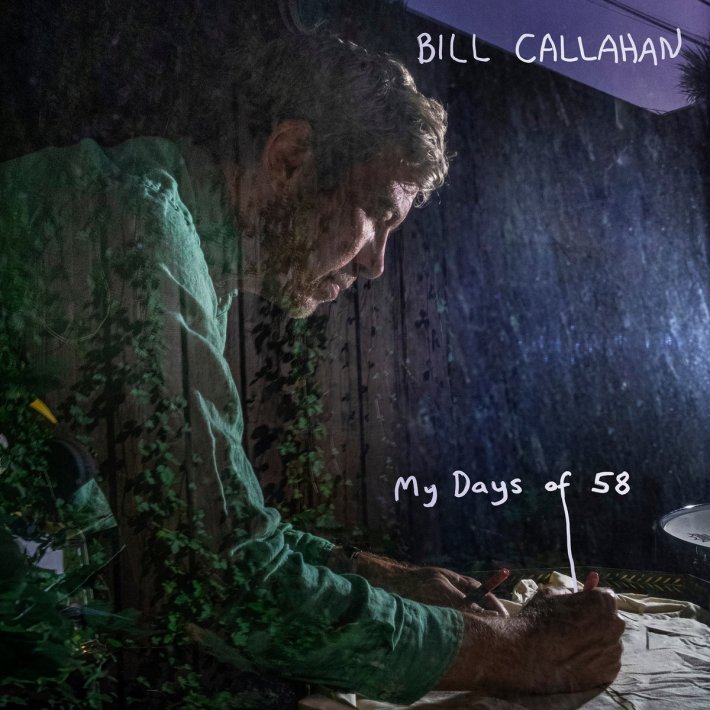
Bill Callahan has loosened up in middle age. Within the pantheon of inscrutable indie legends, the veteran singer-songwriter is a Mount Rushmore-worthy figure. From his early lo-fi releases as Smog to the rootsier records under his own name, he’s struck a delicate balance between heartfelt conviction and emotional distance. It’s a posture akin to towering figures like Bob Dylan and Leonard Cohen, and Callahan’s catalog deserves to be mentioned in the same breath. But domestic life has softened him.
Since marrying and becoming a dad, the Austin-based artist’s records have brimmed with a new warmth and candor. He returned from a long layoff with 2019’s brilliant double-LP Shepherd In A Sheepskin Vest, then quickly followed it with 2020’s Gold Record and 2022’s YTI⅃AƎЯ. He took a little longer with the next one, which finds him opening up even more.
My Days Of 58, out this Friday, is among Callahan’s most vulnerable works — not least of all on “Empathy,” a song addressed to his late father, and “Lake Winnebago,” with its lyrics about burying his parents. Callahan says the album’s frank songwriting was shaped by a cancer scare. Last year he had a medium-sized Stage One tumor removed, which fortunately had not metastasized. He’s OK now, but for a few weeks, he thought he might be on his way out, which kicked him into gear creatively. You can see how these songs might have worked as a last will and testament.
On tracks like opener “Why Do Men Sing,” with its vision of Lou Reed greeting him at the pearly gates, and the playful ramble “Highway Born,” he reflects on his chosen life as a performer. “Pathol O.G.” presents his thoughts on songwriting: “I don’t want to say that it saved my life, but it gave me a life.” Lead single “Man I’m Supposed To Be,” the first song Callahan wrote after his cancer diagnosis, digs even deeper into the core of his personhood. Even the songs best classified as cultural criticism — like “Computer,” a plainspoken treatise on the poisoning effects of modern technology — poke and prod at what it means to be alive. “It’s kinda funny, kinda sad,” Callahan’s leathery baritone posits, “how easily we take the question: Are you human?”
In keeping with that song’s embrace of flesh-and-blood flaws, Callahan sought a lived-in feel for these songs. He achieved it via free-flowing takes with his touring band of Matt Kinsey (guitar), Dustin Laurenzi (saxophone), and Jim White (drums) plus contributors Richard Bowden (fiddle), Pat Thrasher (piano), Chris Vreeland (bass), Mike St. Clair (trombone), Bill McCullough (pedal steel), Eve Searls (backing vocals), and Jerry DeCicca (tambourine). The result is a bunch of raw, lively readings of carefully constructed songs, sometimes stark and intimate, sometimes lush as a springtime forest path.
In a wide-ranging video chat last month, Callahan talked about My Days Of 58 then bounced around the nooks and crannies of his remarkable career. Read our conversation below.
My Days Of 58 (2026)
Being from Columbus, I’m friendly with Jerry DeCicca, who used to lead the band Black Swans when he lived here. I was excited to see him and his partner Eve Searlswere part of the creative process for this new album.
BILL CALLAHAN: Yeah. Jerry, he was kind of a sounding board. He was at the studio about half of the tracking days and half of the mixing days, and he’s got a really good — he’s got a producer’s ear.
The promo materials for the new album talk about how you wanted a “living room” feel. What appeals to you about that approach at this point?
CALLAHAN: To me, there’s basically two kinds of recording techniques. There’s the headtrip thing where it’s just like this universe that’s inside your brain, you know? That’s the way most records are recorded and mixed these days, and starting in the late ‘60s or ‘70s. I always call it airless, like you can’t really detect any room sound. It’s just kind of like in your brain. And I really like that. I’d say my YTI⅃AƎЯ record had used that technique. And then the other way is kind of like the old early jazz records where you could just hear people’s chairs squeaking and whatever. I can hear, feel the breath of the performer. The Michael Hurley records, he was really good at making records that sounded like he was just sitting right next to you. And it just seemed appropriate for this record.
You feel like the songs are more homespun? Whatever that means.
CALLAHAN: Yeah, I don’t know. It’s more like, I guess I just wanted it to be really human-sounding and approachable, and sometimes the other way, the cerebral implant way, it can feel a little too manufactured. I just wanted it to feel real, like no tricks. I just wanted it to feel like a real recording. I think I’m trying to keep it real on this record, so maybe it fit in with the theme of a lot of the songs.
One song that seems to be explicitly along those lines is “Computer.” You’re singing about “I’m not a robot, and I’ll never be,” and just the negative impact of going online all the time. And then just this morning I was re-listening to your lyric about how free speech is going away, and I just saw TikTok started censoring anti-ICE and anti-Trump messages. It feels more and more relevant every time I listen to it. Is that song a pretty comprehensive reflection of your thoughts on technology in society right now?
CALLAHAN: It’s kind of like at the moment, technology, especially AI, right now it’s changing every day and getting more complex and being used for more things. And I feel kind of like the song has a shelf life, like maybe in five years, it might be ridiculous-sounding. But I also think no one really talks about this stuff. I feel like we just accepted this technology and everyone just started using it, and then it became like impossible not to use it because now you can’t do anything unless you have a smartphone. And it’s really hard to do anything because it’s just the way that businesses want to do their business.
And the free speech thing is weird because I think it’s both sides. Neither side of the political spectrum wants people to have free speech. Both sides just want you to do what they say and not question it. So I figured that was a target that no matter what your politics is, you should be able to relate to that criticism.
But yeah, it’s mostly like, no one’s talking about this. We’re just taking an AI and, like, oh, I guess people can make a nude picture of me now if they want to with it, by entering a couple of words. You know, I wonder what’s for lunch? And that’s just like a novelty thing. I’m sure you’ve heard about musicians — people are imitating musicians and posting things [online]. And that’s just the start. It’s going to be a whole identity theft for even people who aren’t in the public eye. I have started to see some warnings about the dangers, but it’s quite small compared to the threat level, I think.
It’s interesting you mentioned that song might have a short shelf life because I was struck by how a lot of the songs on this album are rooted in this particular moment in your life. Even the title is kind of timestamped. You’re singing lyrics like, “Now I’m pushing 60.” It’s very personal. It doesn’t strike me as songs that somebody else would necessarily cover. Maybe some of them I could see covered, but they’re very distinctively Bill, and they’re very tied to this particular phase of your life. Does that feel accurate to you?
CALLAHAN: Yeah. I mean, I’ve wondered, is a 16-year-old boy going to pick up and buy an album called My Days Of 58? When I was 16, it’d probably be the last record that I would buy. But they’re going to be 58. Maybe they can buy it now and just hold on to it for 40 years, listen to it later. But yeah, a lot of the record does seem to have a shelf life. I just was like, I don’t care, this is what I’m making this time. Some people are probably going to appreciate it.
I was struck by how personal you got on some of the songs, especially “Empathy,” and “Lake Winnebago” a little bit as well. What compelled you to put this out there now in terms of singing to your dad, singing about your family?
CALLAHAN: Well, both my parents are dead, so I thought, I don’t have to worry about what they think when they hear it. But I realized that they’re probably hearing it anyway, you know? Since my parents have died, especially my dad, I feel like he’s here with me more than he was when he was alive, strangely. When he was an earthly being, he was very earthly and had a personality that kind of put a wall between us. But now that he’s in the spiritual realm, it’s like he’s pure spirit, and there’s no wall between us anymore, so he’s like — strangely, I find that he’s more present than ever. I talked to this psychic and she told me to forgive my parents. To look at a body of water and forgive my parents. And I started doing that, and It really helped. Kind of broke down that wall.
And then also, something like “Empathy,” that’s just something I had to get off my chest. I really just wanted to get it out there just to move on. Because as soon as I did that and it came out and then I started thinking about my dad I was like, well, there’s more to say than this, but I had to say the bad stuff first in order to later say more, to process it more. The song just felt like a necessary first step. Sometimes if you’re unhappy with someone, you have to first tell them you’re unhappy, and then you can move on from there. So I always look at the big picture. I’m not trying to ever sum anything up once. When I write a song, I’m just saying, this is as much as I can comprehend it right now, but stay tuned for part two, three, four, five, six, you know? I don’t ever think my songs are definitive about anything, it’s just where I’m at, at that particular moment.
When you released “Stepping Out For Air,” you mentioned it was originally going to be part of another album with Jim White and Warren Ellis years ago. Was that the first time that any of you have ever talked about that? Did you guys have a band name or anything? Or was it gonna be a Bill Callahan record?
CALLAHAN: I think it probably would have been under a different name. I think it’s the first time I’ve mentioned it in public. I made like a four-song demo for those guys and sent it to them, and Warren even threw down some violin on stuff, over the demo. Then everyone got super busy. He just like took off with Nick Cave, and Jim took off with Cat Power for years, and I just kind of… no one mentioned it again. [Laughs] So, yeah, just kind of faded away.
“One Fine Morning” Appears In HBO’s Station Eleven (2021)
Did you see that scene? I assume you had to watch it in order to approve it.
CALLAHAN: You know, it’s weird. I almost always ask to see a scene before I approve it, or at least get a written description or something like that. I didn’t do it with that for some reason. I don’t remember why. I’ve never actually seen it because my wife and I started watching that show — we watch TV before we go to sleep, that’s like the only time — and it was too scary for her, so we stopped before I got to the episode of my song. And I never watch TV by myself, so I haven’t seen it. I’ve heard it’s good.
When I did one of these interviews with Will Oldham, we talked about — he has really strong feelings about licensing his songs. He says once you hear a song in a movie, all of a sudden you’re no longer in the world of the movie, you’re toggling over to the world of the song, if it’s a song that you’re already familiar with. Do you have any qualms about having your music appear in film and TV?
CALLAHAN: When I was younger, I used to be a lot more selective, and these days I’m more open. I don’t really understand, even if it’s in a commercial, it’s ruining a song. I always think, what if you have the TV on with the sound off, and you play your favorite song, and you’re looking at the visual with the song playing? Does that ruin the — you know, it’s the same thing. Does that ruin the song because you’re looking at a commercial? So I don’t think a song can be ruined in context. If it’s a good song, then it’s going to withstand any light that you put it in.
I think Will’s point was not that even that it was ruining the song. It was more like ruining the movie. He was talking about Wes Anderson movies and stuff, like when you have these famous needle drops and all of a sudden it’s like, “Well, now I’m no longer paying attention to your movie, I’m listening to the Kinks.”
CALLAHAN: Yeah, I don’t know. I always think about the Scorsese movies where, like, people are getting their ass kicked, and he puts some doo-wop song on top of it, and it’s funny. So I think in music and film, they go together so well. They’re kind of melded. It’s not just like the screen goes black and you hear a song. There is an image, and it’s a whole. It’s the same as listening to music in different situations. The same song makes you feel different ways. Like, I had this crazy experience a couple of months ago. I was in the airport, and our plane was delayed, and I was like, “Fuck, what am I going to do for 2.5 hours?” And I just put my headphones on and put some music on, and the world was just beautiful and interesting. I was just watching the people in the airport walk by while listening to this music, and I just felt like I was in a beautiful dream. So, I think that’s what music in movies can do, it can really transport you. It’s the best. It’s like stacking two different drugs on top of each other.
Do you remember what you were listening to at the airport?
CALLAHAN: I do. It was Shida Shahabi. She’s an Iranian piano player and composer. Just beautiful, sedate, mostly instrumental music. I just discovered her a few months ago.
Collaborations With Will Oldham (1994-Present)
Speaking of Will Oldham, you two have a long history of collaborations, all the way back to the Sundowners. And then you guys did all those covers together during COVID. What stands out about working with him? What does he bring to the creative process?
CALLAHAN: His vocal skill is pretty impressive. It seems like for the first, I don’t know, 15 years of his career, he just kind of sang. He sang very well, but it seemed like there was the point where he blossomed into this multifaceted vocalist. For doing a duet record, the bar was set very high for me to push myself in different ways of singing. Because usually I just try to get the words out and move on. I don’t really push myself in technical ways, vocally. But this was like, a lot of the backing vocals and things in songs that were very different from what I would normally sing, so it was a real challenge. And also, it’s just a challenge to do covers anyway because they’re already usually good songs. The first question is always, “Why? What can I do to make this worthwhile?” To make it stand alongside the original, or close to it at least.
Do you have a favorite among the covers that you’ve recorded together?
CALLAHAN: I really like the Little Feat cover, which was very influenced by someone who had covered it in the ‘70s, I think her name is Judy Mayhan. Somewhat obscure singer, but she was inspiration for the way the song turned out in the end. It’s such a beautiful song, and yeah, I think that might be my favorite.
Collaborations With Noah Cyrus (2024-Present)
You’ve released a couple songs with Noah Cyrus: “Porcupine Tattoo” for last year’s Everything Is Recorded album, and then “XXX” for Noah’s recent album. The press release said that when Richard Russell asked you who you wanted to write a song for, you responded Noah Cyrus. Why is that?
CALLAHAN: She just stood out to me as a current songwriter, singer that really has a timeless feel to her. That was it, really. She really stood out from the pack. I could tell that she really knew what she was doing. She wasn’t just like, “Hey, I want to be a rock star,” you know? There’s no question that this is what she is supposed to be doing, and that’s just really rare these days, to my ears. Finding a singer like that these days is a rare thing.
Two songs have come out so far. Were those from the same session, or has it been an ongoing thing?
CALLAHAN: The Everything Is Recorded, that was just a demo that I did on my phone, and then they finished it in LA, pitched my voice down and stuff. But then I started talking to Noah, and we decided to do an EP together. And so I went out to LA and we did some sessions for that in the studio, just to get the ball rolling. And then she liked “XXX” so much that she was like, “Is it OK if I put this on my album instead of the EP?” So I went back out there to re-record it with the guy that she was recording her album with, just to make it cohesive with the sound of her album. But yeah, we have like three other songs that are sort of finished, and we’re planning on working on more sometime this year, I hope.
Covering Versus’ “Santa Maria” For The Merge Records 20th Anniversary Compilation Score! (2009)
How did you pick that song?
CALLAHAN: A good friend of mine used to date one of the guys in Versus and was also in a band with the brother of the guy that she dated, who was also in Versus. I think I kind of just did it as a surprise for my friend, like, “She’s going to be blown away when she hears me covering the song.” I don’t even know if she ever actually heard it because she’s never said anything.
Covering “Lapse” For The Chris Knox Benefit Comp Stroke (2010)
Can you tell me about your history with Chris Knox’s music?
CALLAHAN: The first time I played a show in Europe, it was in the Netherlands. They had this festival for home recording and lo-fi people. So a lot of the Flying Nun stuff. And Tall Dwarfs were there, and I met them. This is like ’94-ish. I met Chris then, and Alec Bathgate, and we just became friends. Chris was already a fan of my music and vice versa. So we did a couple of shows together in Europe, and then we did some shows together other places too, in the subsequent years. He’s also one of those guys that loves to write letters, and this is obviously pre-email, so we would exchange letters. He would make cartoons for me and stuff like that. And I visited when we played in New Zealand. They invited us to his compound. So we were just friends and saw each other occasionally on the road, or played together. Yeah, very sweet guy.
Guest Appearances On Old Fire’s Voids (2022)
Much more recently, you did a few songs with John Mark Lapham for his Old Fire album. How’d you get involved with that?
CALLAHAN: He is old friends with my friend Thor Harris, who you’re probably familiar with. Those guys are old friends, and I think John Mark is always looking for vocalists for his projects. I think maybe John Mark knew that we were friends and just asked Thor if he thought I would go for it, and he just put us in touch.
Are you generally pretty open to collabs, or are you pretty choosy about them?
CALLAHAN: There’s a lot of requests out there. I’m into the idea of actually getting together. The thing with Noah, I’ve always been kind of afraid the person’s going to squash my idea, and I’m going to have to attach my name to something. I’ve been very protective of my music ever since I started. That’s why I had to start at home, me pressing the record button. I never want my ideas to get distilled or watered down. I’ve always tried to do stuff myself, but working with Noah really showed me that you can still bring all you have, give all you have to give, and this only strengthens it, to have another person.
So I’m a lot more open to collaboration these days. Not so much the things where some stranger’s like, “Please sing on this,” and they send you the track. It seems like you’re working together, but you’re not really. You’re just dumping something on top of what they’ve already done in isolation. So that type of thing — although it is so easy these days, everyone’s doing that. It seems like that’s how the majority of like rap records are made these days. So that type of collaboration, depends who’s asking, but I’m not that interested in it. But like actually together in the same room, that is something that is finally starting to interest me.
I did just do, if you want a hot tip on an unreleased collaboration — I don’t know if you know Meshell Ndegeocello, do you know her work?
Yeah.
CALLAHAN: I met her at a festival a long time ago, and it was very cute. She was sleeping in a tent or something, and I don’t think she’d ever heard my music. But she had done her set, I guess, and went to sleep in her tent. Then I started my set, and she was like, “What is this voice?” You know, “Who is this?” And she just came out, like, half asleep, at the end and introduced herself to me. And then like 10 years passed, and she asked me to sing on one of her songs. It’s coming out, I guess, this year sometime.
Bob Dylan Narrates Cadillac Ad Set To Smog’s “Held” (2007)
Sometime in the 2000s, Bob Dylan talked over “Held” in a Cadillac Escalade ad. Is that an accurate retelling?
CALLAHAN: It sounds crazy, but it’s true.
I imagine that’s kind of a surreal experience. Some ad company was like, “Hey, we want to put your song with Bob Dylan” — was that the extent of it?
CALLAHAN: Yeah, I mean, I didn’t really ask why. They just described what the scene would look like, and it just seemed so weird that I had to say yes. But yeah, it is kind of a weird — like one of the most famous people ever listening to one of the least famous people ever in a car. A lot of people like that song. I think there’s just something about the way that it sounds, and the rhythm. The way the rhythm was recorded makes that song attractive to a lot of people.
What is it about the rhythm?
CALLAHAN: We were recreating the Queen song, “We Will Rock You.” We’re basically trying to recreate that, which meant stomping on these wooden pallets that were in the studio, I think is how Queen did it too. They were stomping on something. That’s just a very arresting sound. Stomp on a pallet and add some reverb to it. It’s a big part of the song. I think that’s what a lot of people hear, like ad executives would hear.
Have you heard the Spoon cover of that song?
CALLAHAN: I have, yeah.
Do you have much history with Britt [Daniel] from overlapping Texas time or overlapping time in the indie music world?
CALLAHAN: A little bit. I think the first time I met them, we opened for them somewhere in Arizona. I couldn’t get a headlining show, so I opened for Spoon. I used to go out a lot more when I wasn’t married, and so I used to see him a lot more, but not so much lately.
Guesting On Joanna Newsom’s “Only Skin” (2006)
I imagine that she has a very particular way of working. What was that experience like?
CALLAHAN: I’m trying to remember even where I did that. I think we did it in LA. I don’t really have much memory of it. It happened pretty fast. I was prepared and just kind of did it in — I want to say it was the first take. I just kind of did it, and it was done really quickly. I don’t think she had any notes or anything. She just wanted me to do it how I wanted to do it. I have no recollection of that day, though, really. I think it happened really fast, which often is the case when I do things on other people’s records. It’s usually just first take, and it’s just a little part of my day. It’s not like a big struggle or anything. But that was, what, 20 years ago?
The thing I remember from that session was, I was there for part of the time that Van Dyke Parks was doing his string overdubs, and there was a guy just sitting on the couch who he was calling Lee. And I didn’t realize till after he’d left that it was Leland Sklar, the famous session bassist. Just one of those things where you don’t realize you’re in the presence of greatness.
A similar thing happened, even more so, once when I was recording at Electrical Audio, Steve Albini’s place. Often when you’re recording there, Steve would be like, “A prospective client wants to take a tour of the studio. Is that OK?” And I’d be like, “Yeah, it’s fine.” They can come in, check out the equipment. And he did that, and I was working with a different engineer. And Steve brought this guy in, just like, “Hey, what’s up?” And we were kind of concentrating on the work. And the guy looked around and then left. And then I started thinking about the guy’s face, and me and the engineer looked at each other. I was like, “Was that Tom Verlaine that was just standing inches from us?” And we iced him out? You know, acted like we were doing him a favor by letting him in. And he’s like — I mean, Marquee Moon is probably like a top-five record for me. I just wish I could have told him so. But really what I wanted to do was, actually, I was like, fuck, I should have asked him to play guitar on my record. “As long as you’re here…”
My Days Of 58 is out 2/27 on Drag City. Pre-order it here.
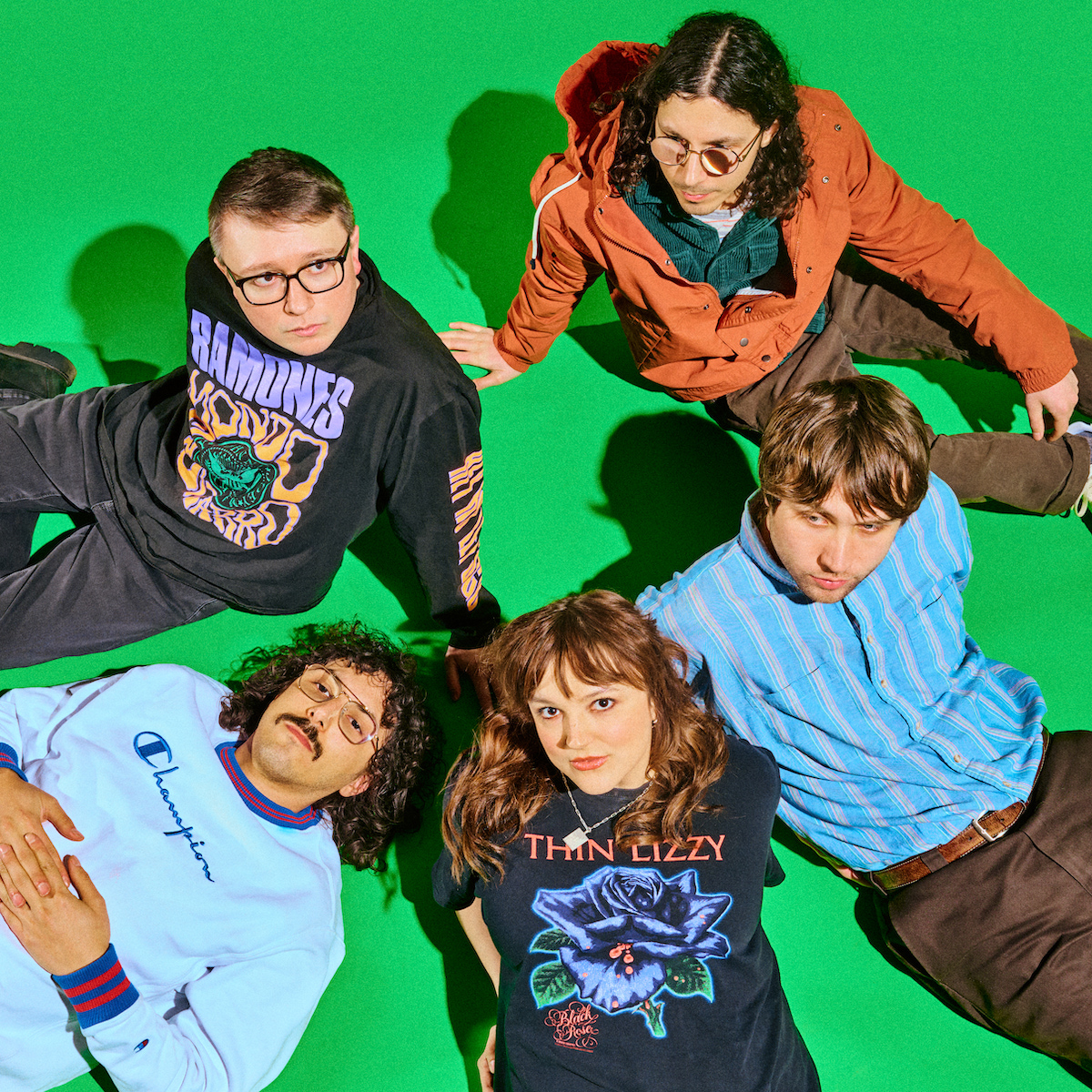
It’s a wintery Thursday night in Cleveland, Ohio — cold enough that I can see my breath, but not so cold that my nosehairs have stiffened and merged into one. We’re huddled inside a crowded Superelectric Pinball Parlor in Gordon Square. The walls are plastered with local sports pennants and kitschy knickknacks, and someone’s blowing a bugle into a microphone. I’m with the five members of Suitor, one of the city’s best and most exciting bands since their formation in 2020. Guitarist Chris Corsi suggests that the horn signals the start of a warmup round for the serious pinballers in the house.
It’s mildly amusing that we’ve ended up at a pinball bar, given that, for the almost six years I’ve known this band, I’ve always thought their guitar lines were pinball-esque — spring-loaded with a jerky post-punk staccato. Throw on nearly any song from their 2021 debut EP Communion, and you’ll feel like you’re in the famous tennis ball scene from Challengers, sensually and disorientingly being yeeted back and forth across the court.
Down the street is Happy Dog, a beloved hot dog joint and musician-run venue that’s ground zero for the city’s best guitar bands. Suitor played their first show there in August 2021, and I still remember being floored by their hypnotic sharpness and Emma Shepard’s dreamy coos. Suitor are returning to the Dog on March 21 to perform and celebrate the release of their first LP, Saw You Out With The Weeds, which comes out the day before on Cincinnati punk label Feel It Records. Following last month’s lead single “Factory,” the album’s pretty yet punishing closer “Dull Customer” is out today.
Suitor are Northeast Ohio heads through and through. Shepard grew up in Akron and Hudson and met her bandmates when they were attending college in Kent. Her mother and uncle played in Akron new wave bands (Unit 5 and the Bizarros, respectively), and her father owns Akron’s Time Traveler Records, a local staple for more than 45 years that’s still chugging along despite some health scares. Shepard met Corsi while working at a coffee shop in Kent, where they’d gab about early aughts indie rock bands like Clap Your Hands Say Yeah. Chris Corsi, his brother and bassist John Corsi, and guitarist Stephen Ovak all went to Brecksville-Broadview Heights High School, where they’d run into each other at football games and yap about hair metal. Drummer Ryan Matricardi hails from Lakewood, and Shepard distinctly recalls their first meeting in Kent when Matricardi swapped her PBR for a Lady Bligh and Coke and simply quipped, “Turn up!”
With roots that deep, it’s no surprise that they have deeply held — and often funny — opinions about the goings-on around town, from punk scene politics and college radio tumult to the Cleveland Cavaliers’ new bushy-bearded superstar guard. One recent nugget of Cleveland punk lore that reached locals and outsiders alike was the viral hardcore shows at a Taco Bell parking lot on West 117th Street. Though it’s not their scene, according to Suitor, what initially seemed like an organic bit of fun has since turned into a cursed affair, with a roughly $30 ticket price and an insultingly meager discount for low-income showgoers. “I love neoliberalism in the punk scene,” Chris jokes. “Is anybody scalping their West 117th Taco Bell hardcore fest tickets for, like, 300% profit?” Shepard asks.
In other news, and of far greater significance to Suitor, Ideastream Public Media, the NPR affiliate for Northeast Ohio, launched a shocking, sudden takeover of WCSB, Cleveland State University’s student-operated radio station and an important cultural linchpin for nearly 50 years, converting it into a professionally run jazz station. “The fact that Cleveland is a mid-sized city and had two really incredible radio stations with WCSB and WRUW was always a point of pride — that you could be in Cleveland city limits and hear weird post-punk, no-wave, and other weirdo shit on the radio,” Ovak says. “I would rather give a guy from Ideastream his coffee every morning than have my own radio show. That sounds like a much better opportunity,” Shepard says with a laugh.
As for the Cavs’ acquisition of James Harden, Suitor are stoked about his on-court skills — and off-court hobbies. “He’s going to bring strippers from around the globe to the Cleveland area,” Matricardi says. “Does James Harden have a stripper problem?” Ovak asks. “No, he has a stripper solution,” Matricardi retorts.
It’s obvious from their banter that these five are a tight-knit group, and their shared creative history goes beyond Suitor, having played in various configurations over the years, most notably in a trippy indie band, Small Wood House, who were active until 2020 and fizzled out shortly after. In the thick of lockdown delirium, Chris Corsi and Shepard decided to work on new material together, so they wrote some songs, grabbed a computer, aimed a microphone at a practice amp, and recorded what became Communion.
“I had really bad stage fright for a while, and Communion was my way of still pursuing music without having to be on stage anymore,” Shepard explains. “Then, when we started getting show offers and realized people liked the music, we were like, ‘Well, this could actually be something bigger.’ The first couple shows we played, I was scared to death, but it just started to become comfortable and I started to really face that fear.”
Playing Communion live didn’t just require an overcoming of performance anxiety, they also had to expand from a two-piece to a five-piece to do the songs justice. Once they recruited Ovak, Matricardi, and John Corsi, the clean, spiky sounds of their EP grew punchier and noisier, cementing Suitor as a must-see act and establishing the DNA of what became their debut album. By the time Kansas post-punk duo Sweeping Promises (Feel It Records, Sub Pop) rolled into town for a show in 2023, the opening act choices were a no-brainer. Suitor were tapped to open the gig, along with local punk supergroup Disintegration, and they impressed Sweeping Promises’ Caufield Schnug to the point that he offered to record the band in his Lawrence, Kansas home studio.
Though Suitor assumed it was just a polite gesture, they kept in touch and Schnug made good on his offer to track their album. Without much experience playing out of town, their drive to Lawrence in spring 2024 marked their first out-of-state road trip as a band. With a U-Haul weighing down their car, and Matricardi’s frequent stops to answer nature’s call, they estimate that it took a few hours longer than the planned 12-and-a-half-hour drive. But they finally arrived, and with the help of a grant from the Panza Foundation, they were ready to spend four days recording with Schnug and his Sweeping Promises bandmate Lira Mondal, who contributed vocals and synth — and baked goods.
“Every day, we’d roll up and Caufield was outside and really animated, talking on the phone,” Chris recalls. “Then, we’d start recording around 10, and it would go all day. It was really fun. I’ve never tracked a record like that — doing it all live and back to back. So, by the end of it, I remember we were exhausted — musically exhausted, at least. It was this big, sunny, open room, and I just remember getting really sweaty in there. But the room never lost its charm because it just sounded so good.”
While they reveled in the opportunity to work with one of their influences and laud the “intuitive” and “excitable” environment Schnug creates as a producer, they knew they only had two days to record the music and two days for vocals, so the pressure was on. But the bandmates agree that the quick pace also prevented them from overthinking things or sweating mistakes. “Meat Puppets had a rule that they only recorded a song like two or three times because if they messed up, that’s obviously how they play it,” Shepard says. “I feel like that was kind of the approach with this album.”
Unlike Communion, they already had the liberty of testing out album cuts at shows over the years, and their full-band, live recording setup resulted in an energetic, raw sound that embraced the bleed of the room. So, while it may be comparing apples to oranges, Saw You Out With The Weeds is definitely gnarlier than its predecessor. Matricardi’s cymbals crackle and itch, and Shepard’s gauzy vocals bob above and below the mix with spooky mystique. Their dual guitars zigzag with delightfully fractured tones and thrash with newfound bluster. Meanwhile, John’s tactile, low-toned bass throbs and slinks, grounding the whole affair. Their driving, distorted eeriness recalls the Chameleons and more recently, Robber Robber. Their guitars have an Omni-like twistiness. And Shepard’s dynamic vocals allow them to shapeshift from floaty drone pop and talky punk to wailing, melancholic post-punk and noise-rock.
“We had a playlist of inspo, and when I look at the things that were added at that time, there were bands with super clean production, like Interpol, who I’ve always loved, and Yeah Yeah Yeahs and those early-to-mid 2000s New York indie bands, but also Swell Maps and dirtier, punkier-sounding bands,” Shepard says. “We wanted it to sound big,” Chris adds. “When I was mixing it, if there was a number one priority, it was ‘big.’ I tend to like records that are maybe a little muddier, but you really get to feel the boominess of the drum kit and bass.”
As night falls on the pinball bar, it appears a full-on tournament is now underway. The casual players are migrating from the glowing machines, feeling the regulars’ eager breath down their necks, and the band has wrapped up their Tetris and Mega Man runs. Shepard laments that the Tetris machine doesn’t have her preferred controls, but lights up when explaining the joys of the “T-spin” move. Likewise, Ovak is somewhat disappointed with the limits of Mega Man free play, but enthuses about the Where’s Waldo? NES game he played growing up. Relatedly, the concept of a Where’s Waldo? live action movie is floated, and the band decides that Adam Friedland should be cast as Waldo. Matricardi bests Chris at pinball by roughly 10 million points—though totally unclear whether that’s a normal margin of victory. Chris clarifies that he’s merely average, but he has an app that tracks his scores, and his dozen-or-so milestone badges would suggest otherwise. Shepard concludes our outing with a final game of Ms. Pac-Man, we say our goodbyes, and I depart into the brisk darkness of West 65th Street—with the familiar urban symphony of a middle-aged man revving his motorcycle at a stoplight.
***
A few days before pinball night, I meet the band at Shepard and Ovak’s new house in West Park, just a short walk from the city’s finest punk dive, the Little Rose Tavern. The weather is stuck in the hellish limbo between rain and snow, so just before entering their home, I step in a puddle that submerges my entire sneaker and the bottom of my pant leg in melted snow. Their living room wall is emblazoned with Raincoats album artwork, their shelf stacked with VHS tapes. Their orange cat, Clarence, is calm and sweet, but always on the move — at one point, he jumps on the back of the couch behind my head, and I’m not sure I play it cool.
Eventually, our conversation turns to Shepard’s lyrics. While she’s historically leaned on abstract voyeurism, this new album finds her peeling back the layers and drawing more from her personal experiences. Saw You Out With The Weeds teems with tales of gritty world-weariness, financial strife, and nighttime debauchery, and like all the best noir, it’s rooted in real-life ache. Recurring motifs include religion, fire, and returning home, so for all its bleak references to guns, shampoo commercials, and cash loans, there’s a subtle theme of rebirth, however painful, that lurks beneath the surface.
“Maybe this sounds corny, but sometimes, when I’m in a creative rut, I need to feel something really strongly,” Shepard says. “I drove to my childhood home, which was kind of falling apart at the time, and now, it’s been bought by a developer and redone. Just sitting by my childhood house and having this flood of memories and feelings really helped me with a lot of the lyrics. My family’s very agnostic, but there was a period where my sister became really attracted to Catholicism when she was young — in middle and high school — and that was something that drove a wedge between us, and now, that’s not her experience anymore. I feel like that comes up a lot, feeling like, ‘Wow, I’m not gonna be able to talk to my sister anymore.’ So, it’s about religion, economic struggle, and the crowd of people that I hung out with when I was younger.”
Their propulsive, murky lead single, “Factory,” is Suitor’s most literal song yet, with Shepard repeatedly murmuring “Went out with some friends of mine/ We go down by the river, walk by the factory light/ Do you?” “I feel like it’s about these weird, dueling parts of my life,” Shepard says of the song. “The actual imagery of the factory and the river comes from living in Kent across the street from an old factory, and the nights my friends and I would go to the bars downtown and stay up all night — just those classic early 20s memories. But I juxtapose that with my first relationship, which was with a guy who was a lot older than me when I was a teenager, and images of slurring speech, the bruise around his eye, and fights. The first chapter of my life in Kent was with this person who was quite dangerous, so I was reflecting on that same backdrop later, having a group of friends that felt more safe and familial, and on the time in between. I was exploring the dread I felt when I was coming of age and trying to assert myself. Like, ‘Oh, I’m a grown-up’ when I really wasn’t, and I was having these experiences that were beyond my maturity level.”
Just as Shepard wears her Kent experiences on her sleeve, the band reps their Cleveland hometown in the “Factory” video. Directed by Choir Boy’s Adam Klopp, the clip finds Suitor wearing grotesque masks and a wedding dress in settings including an RTA train, the shores of Lake Erie, and the aisles of Ohio grocery chain Marc’s. “The RTA was really funny because there were only a couple people on the train, and when we stopped, the RTA driver asked to get a picture with us,” Shepard says. “Another funny thing that happened was when Chris was in the dog mask and he got on all fours and was crawling down the aisles of the train. After he did that, Adam was like, ‘Oh, I wasn’t recording,’ so we had to do that a couple times.”
“Also, there are some shots of us down on the lake, and we filmed the video in February, so I think the ‘feels like’ was negative 20,” Ovak recounts. “We were just suffering, and Emma was crying.” “I wasn’t crying, he loves saying that,” Shepard insists. “I was in my mother’s wedding dress with no coat, and it was really cold.” But perhaps their most absurd run-in occurred at their local Marc’s, which appears to be living up to the chain’s self-described unpretentiousness. “People at Marc’s did not give a fuck,” Shepard says, laughing. “The manager on duty literally walked by us and just said, ‘Hi.'”
For Clevelanders, Saw You Out With The Weeds is the culmination of years of jolting performances, and after countless euphoric nights and beers guzzled, I wouldn’t fault any rando for feeling like a part of the record, despite not playing a single note. For newcomers, this album should be nothing short of an explosive introduction to Suitor’s thrumming, dizzying soundworld. And for Suitor, the LP is, first and foremost, a manifestation of five friends who’ve rocked out for over a decade, from high school jam sessions and solo bouts of “quirked-up Regina Spektor worship” to shows with some of the best bands in America and beyond. They’ve made a full-length album that bares the wide scope of their experiences, emotions, and talents.
“It’s this great back-and-forth situation where having this mutual creative goal makes our friendship stronger, but then having this great backbone of trust and friendship makes our music stronger,” Shepard says. “This is the experience I’ve always wanted to have as a person who’s very extroverted and friend-oriented and also thrives off of creative energy.” Ovak adds, “Being in a band with your favorite people in the world that you’ve grown up with and being proud of the work that they’re doing and you’re doing feels really cool, like, ‘That’s us doing the thing!'”
“Time makes you feel as if wanting’s enough,” Shepard intones in the album’s final line, on “Dull Customer.” After the years-long wait for this album, if Saw You Out With The Weeds proves anything, it’s that desire isn’t enough — chasing the real deal is worth it. But unless you’re clocking hours at the pinball bar, maybe leave the pinball dream to the people blowing bugles in public on a weeknight.
Saw You Out With The Weeds is out 3/20 via Feel It Records. Pre-order it here.
Last year saw the release of Ash, a sci-fi film Flying Lotus directed and scored in isolation in New Zealand. Afterward, he went straight to work on Big Mama, his first full Flying Lotus release issued solely through Brainfeeder, the label he founded in 2008.
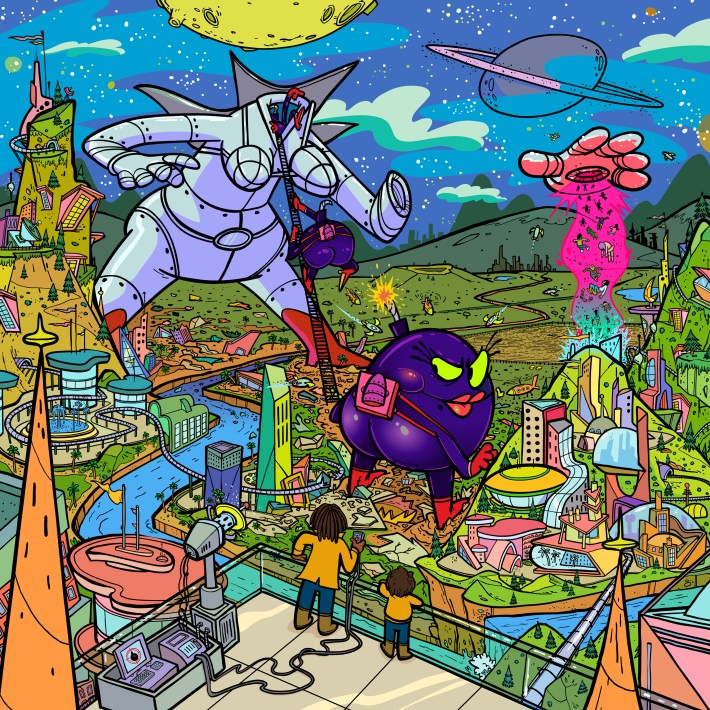
FlyLo made the EP with no loops, creating just 10–15 seconds of music a day before stitching it together into what he calls an “experimental, maximalist, hyperfast electronic burst of energy.” The project’s cartoonish vibe extends to its cover by Christopher Ian Macfarlane, an artist who shares FlyLo’s love of ’90s animation like Ren & Stimpy.
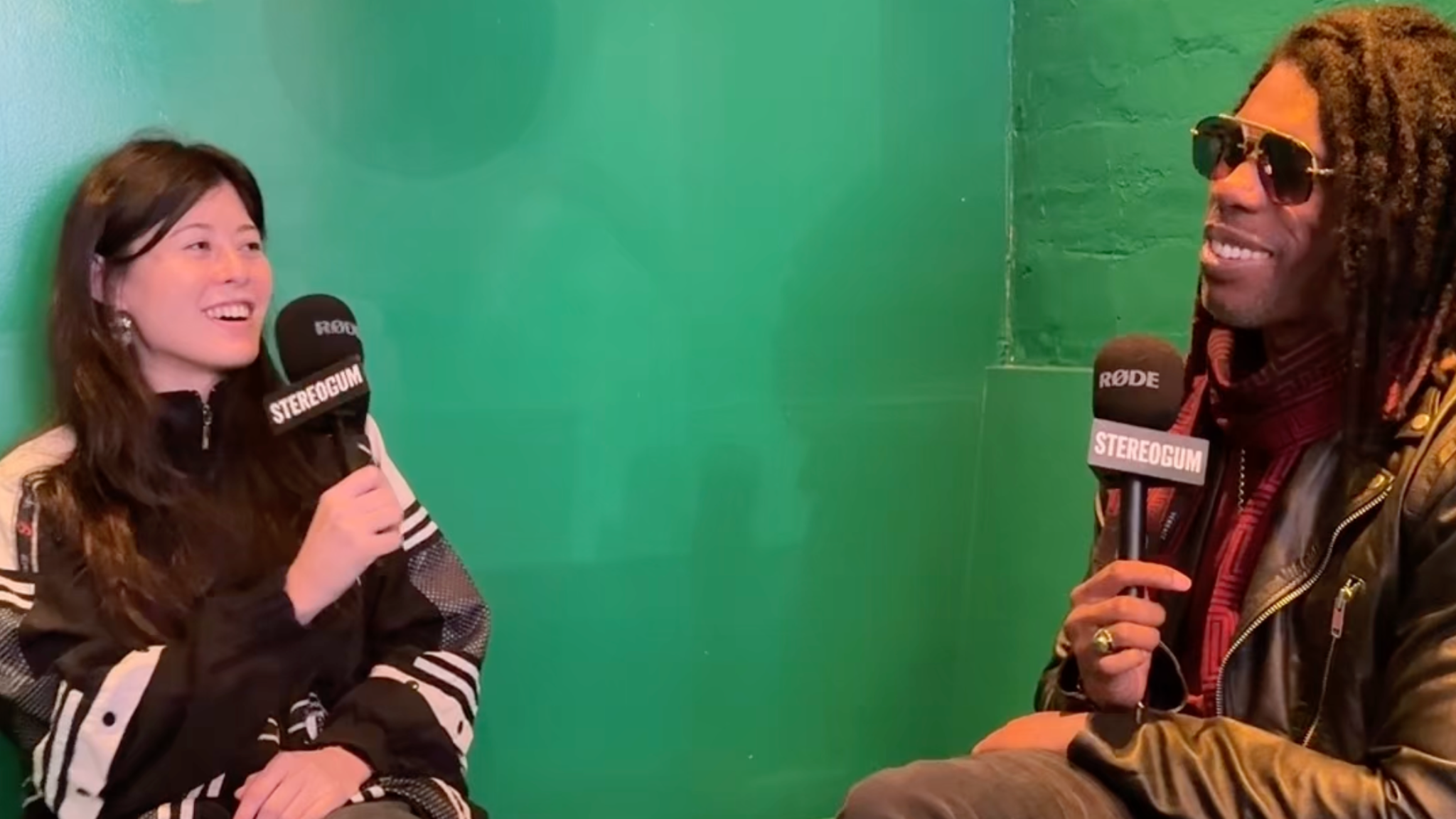
Flying Lotus recently sat under a disco ball with Stereogum aviation correspondent Rachel Brown to discuss Big Mama, Brainfeeder, and more. You can check out the Q&A below.
There are magical objects scattered around Danny L Harle’s studio in Hackney. A small dark silver knight wedges himself between speakers and computer monitors; a star-cloaked figurine of Merlin holds a bright orange flame aloft. Nearby are relics from the producer’s own pop mythology: a black baseball cap from Caroline Polachek’s Pang, a red cornucopia of plastic grapes recalling her “Billions” video, a CD of Dua Lipa’s Radical Optimism, a wooden box that reads “Azimuth Circle,” and a black trench coat hanging with a white buoy. The two latter objects nod to Harle’s official debut album Cerulean, out now via XL.
I meet Harle here to talk about the album four years in the making. He’s dressed in black, animated and warm, taking a brief pause from a commission for London Fashion Week. For over a decade, Harle has been a fixture in the industry, honing his pop maximalism as a co-founder of PC Music, and then going on to collaborate with countless avant-pop innovators like Polachek, Charli XCX, Yeule, and Oklou. As much as his heavy collaborative work might have kept him from prepping a solo album sooner, most of the ideas for Cerulean would not exist if not for his work with other artists like Polachek, Lipa, and Julia Michaels.
And even though Harle has already released a solo album, 2021’s Harlecore, that was billed as more of a “multimedia experience.” Harle considers Cerulean as “a musical manifesto of what I want my music to sound like.” Cerulean has been pieced together over the past four years, but the most intensive work has happened within the last year. Whereas Harlecore was a hyperfixation on happy hardcore, Cerulean is a mad scientist hybrid of classical and dance music obsessions. He describes it as his “lower concept.” Although there’s an accompanying film and recordings of the ocean that make Cerulean feel grounded in its own unique world, it’s a music-first album.
Cerulean is a mighty achievement. It’s endlessly captivating — portal-like, yet emotionally precise, capturing the incomprehensibility of superlative feeling. He loves to reference euphoric melancholy as a cornerstone of his sound. And he brilliantly captures the restlessness between emotions, oscillating between searching and serenity. There’s constant shimmering, tinselry, and a sense of climbing and reaching out.
When you hear someone’s voice, do you already know how you want to use it within your music? Or do you have to move through their artistry before you understand how to apply it?
HARLE: No, it’s much more a visceral response to their voice, and then I get a vision of what I want from it, what I would love to hear it do. Then that’s all I can offer. There has been the case with some artists where I’ve offered that and they haven’t liked it.
Your vision?
HARLE: Yeah, exactly. The stuff that everybody’s heard that I’ve done is stuff that’s obviously gone well. We recorded it and then it’s come out. There’s been lots of sessions where I’ve offered what I can and it’s not what’s required, but the thing about me is that I can only offer what I do. I’m not very versatile. It’s pretty clear if it’s going to work or not.
Do you sit and reflect on those moments?
HARLE: No. [Laughs] Cause it’s so simple. I showed them what I can offer them, and they want to go another direction. The thing that I know through experience, if I try to help them in that other direction, I just know there’s someone else who could do it better than me. So it’s actually slightly insulting, maybe selfish on my part to try and do that. I just believe that one should be in pursuit of making the best music possible. And the way I can do that is by working towards what I want to listen to.
When you said this album is a manifesto, what do you mean by that?
HARLE: This is what I want to stand by.
Is it stupid to ask you to sum that up into words?
HARLE: I guess what I mean by that is — I feel like all my other releases have been like glimpses and fragments of a sort of a certain world. I wanted to find a way of connecting up all of these different musical expressions that I’ve made in the different directions of my career.
I think a good example is when I was working with Caroline Polachek on the Pang album. It was quite revelatory to me when I was experimenting with Bruckner-styled chords from my classical training and sort of transcribing, modulating, suspending sequential chord sequences that I then, just as a pure experiment, put to the EDM supersaw sound. I realized that it created a very specific atmosphere. It took the chords that I love, and then put them through a sound that I love. I had extracted exactly the thing that I liked about the classical music and exactly the thing I liked about electronic music, and combined them in a way that didn’t detract from either. When you try and combine things, it’s more often than not, that you lose the thing that’s good about the thing in the combining, but what I wanted to do is to retain just the thing I liked and then combine it with something else.
That in itself was a step towards this album. That’s an example of the kind of experimenting I was doing for this album. I did a lot of transcribing and harmonic study and experiments to see what textures worked, to see what chords could work, to see the extent to which I could put the kind of classical things I like against the kind of dance things I like. Sometimes it doesn’t actually work to have these shifting chord sequences over dance beats, because to let dance music do its thing you kind of need a repeating chord sequence. That’s what led to the conclusion that actually maybe you could do these sort of clouds of harmonies. Like the “O Now Am I Truly Lost” track. Then with “Te Re Re” you can hear I’m doing the same kind of chord sequences, but there’s a repetition element that makes it work in dance music. So you can hear me kind of like reusing the same material over the album in different ways.
When I wrote the track in “Laa” — which is the best lyric on the album, in my opinion — that track most clearly expresses that relationship, because it starts with clouds of harmonies that are constantly modulating and then when the pan flute comes in, it sort of tames the shifting harmonies and starts repeating itself. That track is a sort of marriage of the two things that I was trying to, of the two most difficult to combine styles. When that track was done, I knew the album was done.
That’s your daughter on “Laa,” right?
HARLE: Yeah, Nico.
What was the seed of that track? You had the recording of Nico, and that inspired the world around it? Or was it another aspect that triggered it?
HARLE: That was actually my friend Matt Copson and Patrick North from XL, who advised me to have a production showcase track on the album. They said, “What about a track that focuses more on you?” So I wrote that. I wrote those chords, I wrote this sort of rock section and doing all that. But then there was a throughline missing for the track. [Plays the original recording of Nico.] That’s the one. And that was it. And I love “La” as a lyric. I love it. It’s love that it’s a child singing it as well. There’s a lot about that track that’s sort of the birth of the album in a funny way. It was almost intended to be the first track at one point.
With lyrics, is that something that’s stream-of-consciousness writing?
HARLE: Yes, completely. Completely.
It was incredibly charming to hear your daughters in your music. But then it was also really interesting reading about your music and the intense background in classical and concepts and then to have some songs that transcend words or language — it’s a cool tension.
HARLE: I mean I’m a big fan of words, but I need a certain level of distance to feel emotions a lot of the time. I really like hearing things in languages I don’t understand, for example, and also lyric-less stuff, like Meredith Monk’s Atlas. But also the track that first got me interested in Caroline Polachek’s music was the Japanese version of her song “I Belong In Your Arms.” And yeah, lyric-less, or just not understanding for some reason, draws me closer to the emotion.
Yeah, sometimes the words get in the way. Working with Caroline, how did “Azimuth” come about?
HARLE: “Azimuth” and “On & On,” they were both started during Caroline’s album process. And, as with all of my collaborations with Caroline, they were much more 50/50. Some of the tracks on the album I wrote the whole thing or most of it and then sent it off to the vocalist and they sang and sent it back or whatever. With this and all of Caroline’s stuff, she’s always completely involved and advising me with ideas. “On & On,” it was her idea to extend the second drop and have that kind of fakeout drop towards the end. It’s one of the highlights of the album.
I think she knew they were for my album before I did. But I think that’s the case with quite a lot of these songs and the artists involved. I hadn’t actually previously considered them to be part of the album, because I guess maybe when I originally envisioned the album, I quite liked the idea of having no features on it at all and having that kind of old-school dance music tradition of just having the producer’s name as a thing. But then on consideration, I realized, not only is that so unfair, and dare I say, a bit of a misogynist tradition that I’d be harking back to, [it’s also] maybe not a good idea. I realized pretty quickly that I should feature people.
Were there any tracks that were meant to be featureless and then it changed?
HARLE: Maybe in my original conception, it was more like session vocalists and stuff. But the issue was that I like very particular melodies, and there are certain singers who are the only people who can sing them. And that’s what led me to the truth of the fact that, yeah, if I had somebody else singing “Starlight,” it would sound like an imitation of Pinkpantheress. And maybe with every artist that I work with, I always try to write a song that no other artist could sing other than them.
Does it become very clear when you’re in a session with an artist and you’re like, “Okay, this is mine and this is theirs?” Or do you have a long chat about it?
HARLE: With “Azimuth,” that was the case. Yeah, it was very clearly my sort of thing that Caroline really saw something in it, and saw a reason to sort of initially outline the melody. We spent a very small amount of time just writing that melody together, and then we just went on to writing something for her project. And then we returned to it.
With Dua, we wrote that track in the first ever session I did with her. When I found out I was working with her, I wrote the instrumental for “Two Hearts” and I thought, “This is the kind of music I want to hear Dua’s voice on.” We wrote the song, me, Dua, and Andrew Wyatt. Dua loved it, but she already had the vision for her album at that point, that turned out to be Radical Optimism. Then at the end of the album, she returned to “Two Hearts” just to finish it. And it must have been because she thought it was going to go somewhere. Obviously her time is very valued, and to spend that time finishing up a song like that was much appreciated.
Were Clairo and Julia Michaels very different?
HARLE: With Clairo, that song I originally wrote to DJ as a trance song. When I wrote that chorus it really felt like there was something to be unlocked through slowing it down and letting the material breathe a bit more. And I decided that I wanted Vashti Bunyan to sing it. And then I tried to get her, and I got no response. I don’t even know if she ever heard the song. But I was sort of moaning about this backstage to Clairo at one of her shows and she said, “Ah, send it to me,” and so I sent it to her. She offered to sing it and sent me her vocals, and it was mind-blowing. Clairo is so reverent to Vashti Bunyan. I think she has a tattoo of one of Vashti Bunyan’s daughter’s designs. She so resonated with that. Clairo could have only done that track because of that very understanding.
Julia Michaels is such an incredible vocalist. That happened during one of Dua Lipa’s sessions. There was a moment where she was just humming a melody, sort of as an aside. She made a sound that never really appeared in her music — this sort of quivering, very fragile yet very, very focused melodic style that was heartbreaking even though it was lyric-less. It was so sad but in a beautiful way.
I wrote those lyrics very instinctively. She had the melody. She executed this melody perfect the first time, the sort of essence of what I’m trying to convey with the album — euphoric melancholy — which shows that she understood exactly what my musical intent is without having to talk to me about it. And It was piercing, is what it was. It showed such an understanding of what I’m after. That’s a very cool thing, and a form of communication that music allows for beyond words.
I’d never heard her sound like that.
HARLE: But in that track, it’s just quite monochromatic with sadness, which is not really like the vibe she usually goes for. She usually finds a take on sadness or an angle, but there is no angle of it in that song.
Speaking of monochromatic: Cerulean, where did that come from? Was the lyric in “Azimuth” —
HARLE: That came after. I already knew the album was called that. When I sat down to write the album, one of the tasks that I had in front of me was to draw a throughline between all my influences that go back hundreds of years to very modern stuff. Euphoric melancholy, other ideas like alien beauty and like escapism are all present in the music I love. But specifically euphoric melancholy I really associated with that cerulean color. It was also a necessary abstraction in a title that sort of hit home in the fact that it’s a music-first project, not a high-concept project. And also, I just kept on throwing, like, all my voice notes at the tracks. The ones that really stuck with me were recordings of the sea that I’d done, putting it through all these various processes, processing. And so the fact that it was also the color that’s associated with the sea, just like poetically aligned too well with the album to not call it that.
I want to hear more also about the film world and how that works into the music as well. The world that’s created has such a sci-fi, dystopian element to it. Is that a world that happens in reality, or is that taking place outside of time?
HARLE: It’s less where the album takes place, and more representing a way of listening. To me that’s a very important thing. I feel like the way one listens to music is very connected to the music one makes. The way I listen is seemingly much more internalized, and the way most of the actors is more internalized than the way I think most people do. Although that’s not necessarily true. Usually, like, journalists and fans have a similar relationship, where it’s like, headphone listening is really like the ultimate form of listening. But that’s not the case with most people.
But I just felt like it was somewhat necessary to express this feeling of individual reaction in this group setting, this feeling of alone together with people and as a reaction individually to music. That’s something I really treasure as an idea. My most profound musical experiences have been through listening on headphones or in a very dark club around other people, where it’s very much allowing me to have my own personal reaction.
I was also really inspired by the Prodigy video for “No Good.” There’s a moment where Liam Howlett is leaning against the wall like that, and then there’s someone dancing next to him like mad. I thought, “Yeah, that’s the vibe.” It’s that sort of freedom to receive music in different ways at the same place and time.
That makes a lot of sense, that push and pull between isolation and community, trying to be in your head and outside of it.
HARLE: I think that there is a special form of community that is formed through that sense of being alone together, and a recognition of people being allowed to react in their own way apart from everyone reacting the same way. I always think about the Dark Souls games as a very good example of that.
I don’t think I’ve played, but have definitely heard about them.
HARLE: They’re one of the greatest works of art, I think, of our generation. But there is a sense of you going on this single fair quest, but that you see phantoms of all these people. They’ve all left you notes as well. They’ve gone through the same journey, and you can see someone was trying to help you, someone is trying to thank you, you can see someone dying directly in front of you. Okay, so I think there’s something dangerous in front of me. It’s like, maybe an archer or something. And there’s this sense of lots of people going through the same thing over time, and you leave a note to help somebody else, but you’ll never see them. That spirit of cooperation is a very positive thing.
I wanted to ask more about working with your kids.
HARLE: Oh yeah!
Especially if you look at the core of your music as this weird tension of sadness and euphoria, and then you have something like a child’s perspective is so pure and innocent…
HARLE: When I first had children, when they were very young, I really didn’t feel any kind of profound impact on it, but then as they started to grow up and sort of wake up into the world, I started to actually realize that there was a way in which they reframe time. And it gets undoubtedly profound, just the way it makes you have to think.
And also — I mean, I’m sort of glossing over being responsible for another human life. This is from a very selfish perspective on my psyche, my creative brain — my process is actually very influenced with a sense of childlike wonder and that childhood is a very meaningful thing for me and related to my practice. And I realized that through, when there was a clear Venn diagram between elements of my children’s life and then stuff that I’m interested in as well. It’s this sense of reality being on a threshold to a dream. But children live in this world where they can totally be taken into a fantasy. They’re not even sure of what is real and what isn’t. And they’re very open to, just like, talking about mythological things and speculating about any sort of fantastical beast living around the corner or whatever. And there is that excitement, maybe that it is actually true, and that that sense of transportation and escapism really relates to the sense of transcendence quite directly that I look for.
I remember when we were in Disneyland, I was basically on the verge of tears the entire time, because there was that sense of transcending reality, really the entire time, because that’s sort of what it’s designed for. There’s these moments where the child was hugging Winnie The Pooh or whatever. There’s a moment you can tell where they just think they actually are hugging Winnie The Pooh, that threshold is crossed between reality and fantasy. And just for me, when I get a glimpse of that, yeah, it just brings me to tears every time.
Do you have moments of that when you’re creating?
HARLE: Oh, yeah, definitely, definitely. That’s how I know I’ve done my job.
Can you recall specific moments?
HARLE: When I worked out how to bring out what I wanted out of the “Facing Away” track. I slowed it down and allowed the material to kind of breathe a bit. I knew I’d done it when I’d started crying.
Is that kind of like the finalizing moment when whatever makes you so emotional?
HARLE: [Laughs] It’s very useful. It did happen to happen then, but it’s not always that simple. Sometimes it’s much more like a sort of crafting process to get to that stage, and at that point your head is so far into the craft of it that you’re not emotionally listening. But it came together quite quickly, that.
It’s so funny because that one is so minimal compared to the rest of the songs. Is it really difficult for you to be that stripped down?
HARLE: No, that’s the dream is to write at that level from simplicity. That’s the dream. I remember Sophie used to bring up all the time, the idea she’d want to write monophonic music. I immediately understood because to express yourself so clearly through monophony is the ultimate form of composition with that level of consistency.
Can you explain monophony?
HARLE: It’s like one thing — not a bassline, drum, and voice. It would be just one melody —a solo piece.
Something so pure.
HARLE: Yeah, and if you heard that, you’re like, “Oh, that’s Sophie.” That’s the ultimate form, to have such a voice that you can write in monophony.
She kind of did that.
HARLE: She certainly did! That’s why there are these things that happen — in her music you can hear the kickdrum is a bass synth in “BIPP,” she’s distilling her musical voice with the purest sounds necessary.
What do you think of cheesy music?
HARLE: I’ve never understood what that means, really. And I actually had a real dilemma when I started going to LA for the first time. [Laughs] I would have ideas, and a lot of the LA people that I collaborated with, like very mainstream pop people, were recommending things that I would consider quite cheesy or like in a way that I kind of wanted to be a part of. I never thought cheesy was bad. But then I would share an idea with them, and they’d say, “Oh no, that’s a bit corny,” which to Americans is cheesy. That blew my mind that somebody who I already thought was cheesy thought that my idea was cheesy. I just had to understand that everybody — there’s a multidimensional idea of what’s cheesy.
I was reading something, and that came up the other day and it really threw me. It made me think of, I couldn’t find the interview, but there’s some quote that’s speculating about you getting emotional over the hamster dance.
HARLE: Oh yeah, the instrumental section of “Hamster Dance.” Well, there’s a thing that I think is one of the greatest artistic achievements is to conceal something that is beautiful within something that’s goofy.
It just made me think of how I really love the Crazy Frog song. But I don’t know, it also makes me think a lot about what is good and bad taste. I don’t really believe in that, but…
HARLE: Yeah — it’s hard to know at the end of the day, though, because maybe the bad taste of it is actually a protective shield that allows you to hide in it and feel the emotions or something. I was talking to Hudson Mohawke about this kind of music that’s from where he lives, and I love a lot as well — UK hardcore music, which inspired the Harlecore project. He was talking to me about how it’s actually really aggressive dance music that has a very, very emotional melody and chord sequence. But the fact that the drum is so fast tempo kind of allows men, like masculine men, to basically listen to really emotional music without sort of fearing for their masculinity. It provides a defense shield against — they’re not listening to softer music, they’re listening to hard dance music.
I don’t need that, obviously, but it does make me think about maybe my version of that would be like, I love the feeling of there being a slight distance between me and the music, almost like the song is singing to me than the song is singing through me.
You don’t consider yourself a vessel?
HARLE: No. I consider myself a craftsman of objects.
BONUS ROUND: If you had a small miniature museum or altar showcasing yourself, what 10 objects would you choose to display?
copy of Piranesi by Suzanne Clarke
physical model of the “rubbish with no value” from Dark Souls, with placard description
painting of St Michael’s Mount that I have in my studio
one of my three-year-old daughter’s psychedelic pictures of our family
very intricate Paul Laffoley-style diagram of all the chat and WhatsApp threads I have and their interrelation, there are frequently “casual” chats that run alongside the “serious” ones, symphonic compartmentalization
large pile of black entangled cables
MIDI transcription (all rectangles) of Monteverdi’s “Duo Seraphim” engraved into a 3D glass sphere
the vinyl of “Neckbreaker” by Scott Brown given to me by DJ Buenri during my b2b with Pastis and Buenri in Barcelona
Cerulean Receiver 2 (a device that picks up melodic transmissions – available soon)
Editor’s Note: Our Album Of The Week column is running one day late this week. Sorry!
When it comes to Frankenstein, you can probably sort the majority of the literate, English-speaking population into two major categories: Those who’ve spoken something along the lines of “Frankenstein is the doctor’s name, actually” and those who have received that correction. One might think that in the two centuries of English classes, Halloween costumes, and screen adaptations since Mary Shelley first published her groundbreaking gothic horror novel, we might have a little more consensus about who is — or, rather, are — considered the story’s true monster. But I like to think that Shelley would’ve delighted in the ambiguity between what comprises a human and a monster. I think Mx Lonely probably get a kick out that, too.
Vocalist Rae Haas got the idea to name their band Mx Lonely because that’s the nickname they gave the shadowy figure that would appear during their bouts of sleep paralysis. The Brooklyn band’s debut full-length All Monsters arrives this Friday, and it’s a comprehensive introduction: The album’s eight songs signal the band’s reverence of ‘80s indie rock, contemporary noise rock, and all the pedal-loving guitar bands they bonded over when they first met in Alcoholics Anonymous just ahead of the pandemic.
With a lot of its lyrics rooted in the Jugnian practice of shadow work — achieving self-acceptance by prodding at the more shameful, suppressed facets of our personalities — All Monsters, like Shelley, argues that monsters are more often found in subtle, everyday encounters. Oftentimes addiction, whether to substances or bad habits, has a hand in creating the monstrosities Haas sings about, and All Monsters roots them in lived experiences. The steady build-up of “Blue Ridge Mtns,” for instance, finds Haas “freaking out in the back seat” on the way to a rehab facility, while the nü-metal chug of “Whispers In The Fog” posits anxiety as a crutch that can be galvanizing one moment and debilitating the next.
Meanwhile, on the stellar early single “Shape Of An Angel,” Haas reckons with juggling co-morbid dependencies. “I’m in love with Adderall and validation,” they belt over stylistically muddled guitars. A sense of isolated helplessness looms when they allude to the Virgin Mary, who appears not as a saint but as a flaky acquaintance who asks to bum a cigarette immediately before leaving the kickback. And speaking of saints, All Monsters also grapples with the notion that the binary fates often promised to us tend to flatten the human experience: “All monsters go to heaven, and all the bad shit you did here was fine,” Haas proclaims with almost a Courtney Love-style snarl on “All Monsters Go To Heaven.” It’s a comforting notion, until it sinks in that the same rule would apply to the most truly heinous of us.
All Monsters doesn’t excuse the depraved and the immoral, but it does argue in favor of treating our own depravities and immoralities with compassion if we ever want to purge them. On the sludgy, sultry “Big Hips,” Haas invokes puberty growing pains from their transgender perspective, employing some subtle dick jokes in the process: “I know you want to explain to me/ How you know I got/ Big hips for a boy.” The sing-along hooks of “Return To Sender” offer a refreshing, cathartic take on one-sided obsession, written by Haas from the perspective of someone who was simply indifferent towards them.
There’s a throughline of grounded optimism on All Monsters, particularly on the sweeping “Anesthetic,” which Haas has explicitly described as “a love song to the addict. “I don’t wanna live in a world without you/ I couldn’t recognize the truth/ I know your heart is cold and smart.” Anesthetics, it’s worth pointing out, aren’t used to cease the onset of pain — they’re administered before pain is even detectable. Pain isn’t usually pleasant, but it’s useful in locating where damage might’ve been done. Then, the healing can start.
All Monsters is out 2/20 via Julia’s War.
Other albums of note out this week: • Mumford & Sons’ Prizefighter • Baby Keem’s Ca$ino • Larry June, Curren$y, & The Alchemist’s Spiral Staircases • Peaches’ No Lube So Rude • Liz Cooper’s New Day • New Found Glory’s Listen Up! • Lil Tjay’s They Just Ain’t You • Hilary Duff’s luck…or something • Bryce Vine’s LET’S DO SOMETHING STUPID! • Lucid Express’ Instant Comfort • Spill Tab’s AngieAngieAngie • Mirah’s Dedication • Olivia Belli’s Daimon • Bella Litsa’s Drasticism • Rob Zombie’s The Great Satan • Sports’ Sports • Leigh-Anne’s MY EGO TOLD ME TO • Phew & Danielle de Picciotto’s Paper Masks • Michael Monroe’s Outerstellar • Steven Brown’s In This Very World • Nicole McCabe’s Color Theory • Abronia’s Shapes Unravel • Hen Ogledd’s DISCOMBOBULATED • The Band Of Heathens’ Country Sides • Midori Hirano’s OTONOMA • The Goldberg Sisters’ When The Ships Of My Dreams Return • Naïka’s ECLESIA • Nathan Fake’s Evaporator • Marielle V Jakobsons’ The Patterns Lost To Air • Hemi Hemingway’s Wings Of Desire • Tammy Shine’s Ok Shine Ok • The Veer Union’s Reinvention • Altin Gün’s Garip • Apparat’s A Hum Of Maybe • Toys That Kill’s Triple Sabotage • The Enemy’s Social Disguises • INCANDESCENCE’s Hors Temps • Laughing Hyenas’ That Girl – Live Recordings 1986-1994 • The Messthetics & James Brandon Lewis’ Deface The Currency • Lightning Stills’ Lightning Stills • Eric Hilton’s A Sky So Close • Coscradh’s Carving The Causeway To The Otherworld • Exhumed’s Red Asphalt • Dominique Fils-Aimé’s My World Is The Sun • Viic Woods’ Unravel Time • Gabriela Richardson’s ISOLA • Ally Evenson’s SPEED KILLS • Moby’s Future Quiet • Rusty Santos’ Psycho Horses • Abstracted’s Hiraeth • Adam Goldberg’s When The Ships Of My Dreams Return • Borokov Borokov’s World War Two • Isabel Pine’s Fables • Chris Garneau’s In Reverse • Absolutely’s Paracosm • The Setting’s The Setting • Sylosis’ The New Flesh • CVCHE’s Get Fluffy • Sukpatch’s Thin Skin Driver • Kerrin Connolly’s Simpleton • Beggar Weeds’ Tragedy In U.S. History • David Hillyard & The Rocksteady 7’s Home For Dinner • Jobi Riccio’s Face The Feeling • Elvis Presley’s EPiC (Elvis Presley In Concert): Original Motion Picture Soundtrack • Mozzy & EST Gee’s Not A Chance In Hell • Killing Pace’s HCPM • Mimi Webb’s Confessions: An Unexpected Turn Of Events (Deluxe) • The Neighbourhood’s (((((ultraSOUND)))))+ (Deluxe) • Babyfxce E’s Da Realest • Trauma Ray’s Carnival EP • Sydney Quiseng’s That’s My Baby! EP • Mothica’s Somewhere In Between EP • Life Aquatic Band’s Stuck In The Mud EP • Worm Shepherd’s Dawn Of The Iconoclast EP • Charm School’s Skadenfreude Ploy EP